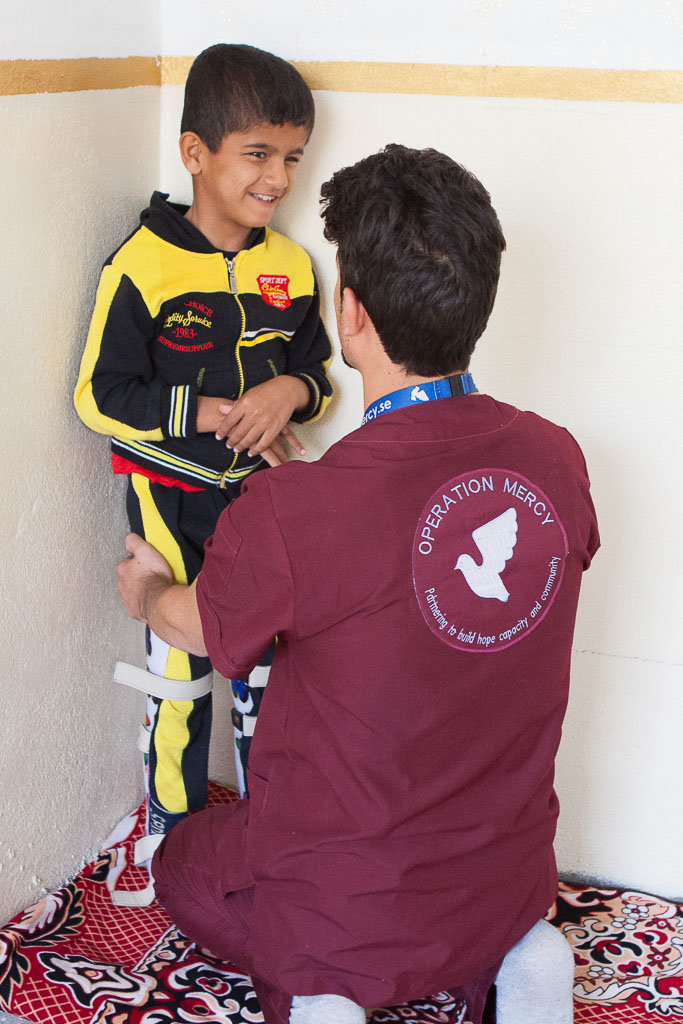
![Fady in "the outside world" he seldom gets to see]()
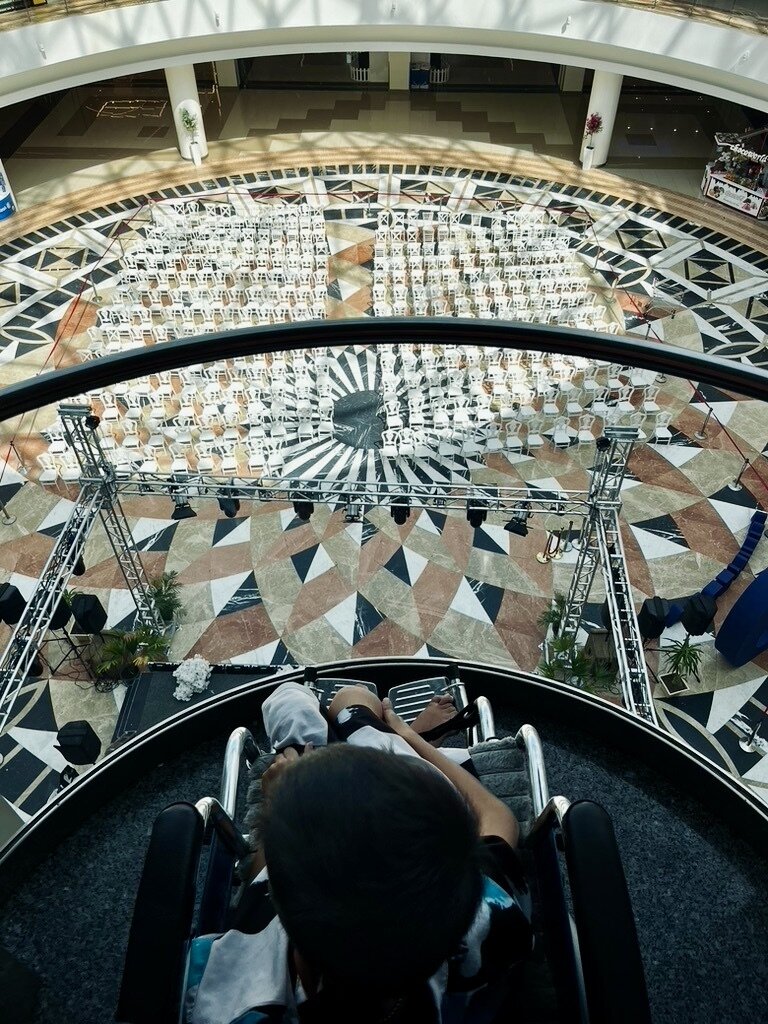
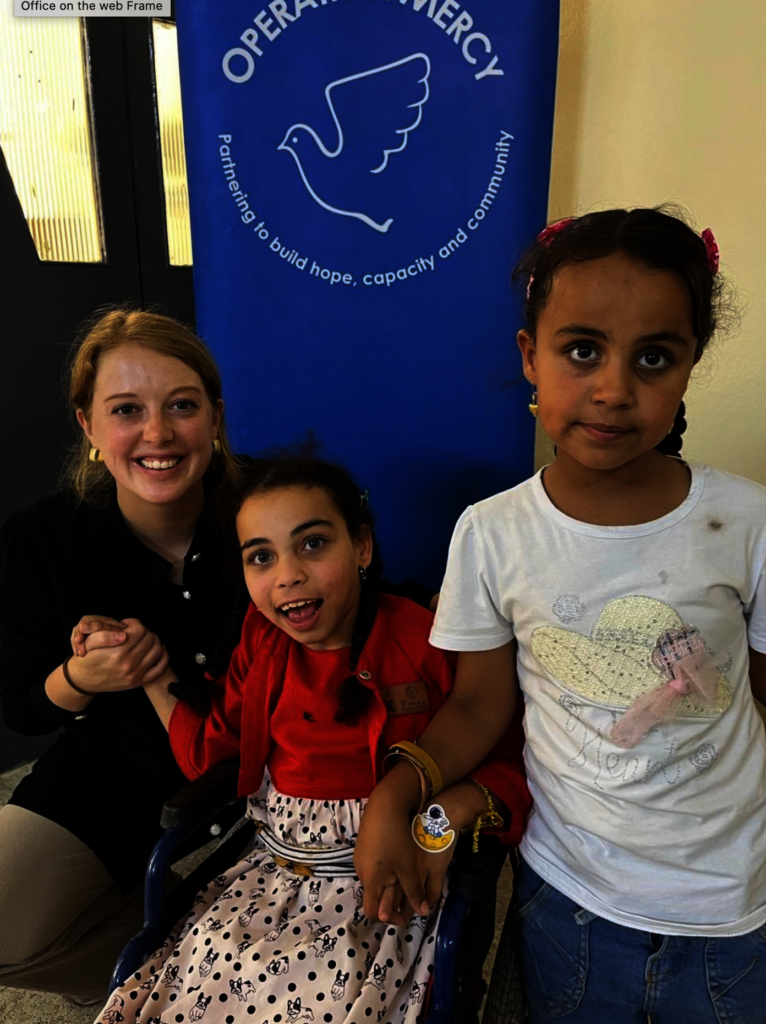
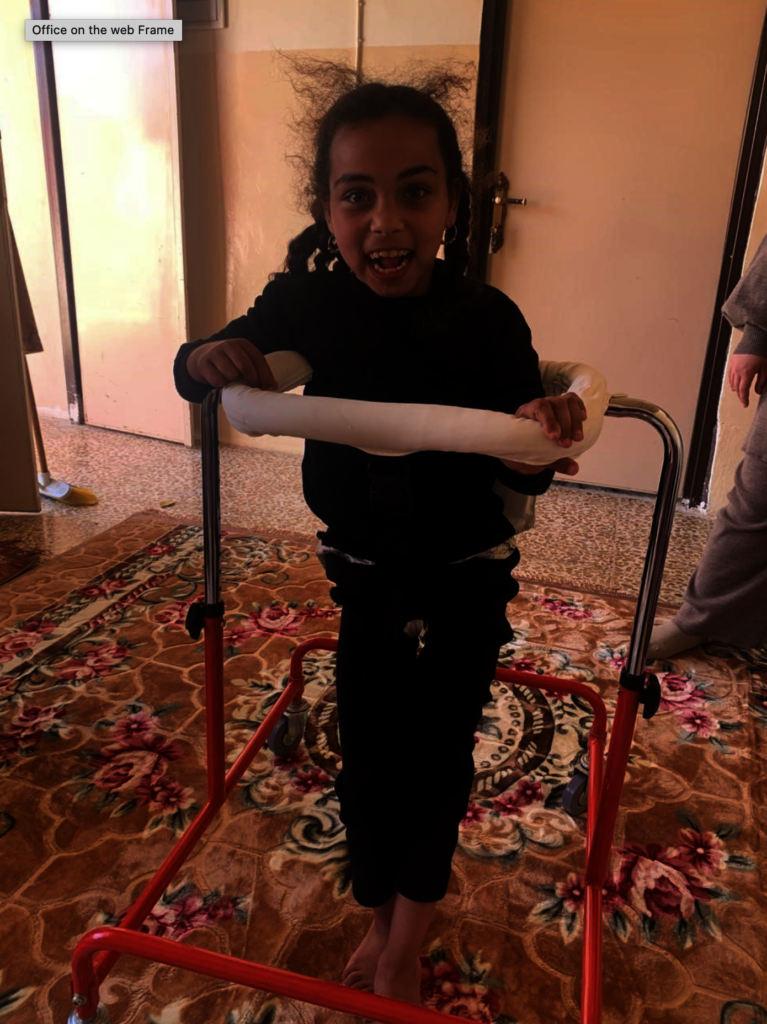
Fady in "the outside world" he seldom gets to see
There is a famous saying in this part of the world:
“The Kurds have no friends but the mountains.”
It captures a deep truth about a people’s struggle to find their place amid the region’s shifting politics. The Kurds remain the largest ethnic group in the world still waiting for a homeland.
Amid this people group lives a 13-year-old boy. Depending on who you ask, he too is Kurdish—though he belongs to the Yezidi community, who suffered greatly under ISIS and are often looked down upon in Iraqi society.
Not only is this boy in a minority people group, but he is also an internally displaced person, driven from his home by ISIS when he was just two years old. Since then, he grew up first in a thin tent in a refugee camp, and now in a small, run-down house.
But above all these difficult circumstances, the greatest challenge he faces is his disability. Born with a severe case of cerebral palsy—a condition caused by lasting brain damage during pregnancy or birth—Fady is quadriplegic. He can barely move his arms or legs and relies completely on an electric wheelchair. He depends on others for nearly everything, including being taken to the bathroom.
That is a lot to carry for a 13-year-old boy in a country that does not care for people like him.
And yet, this boy has a name.
His name is Fady.
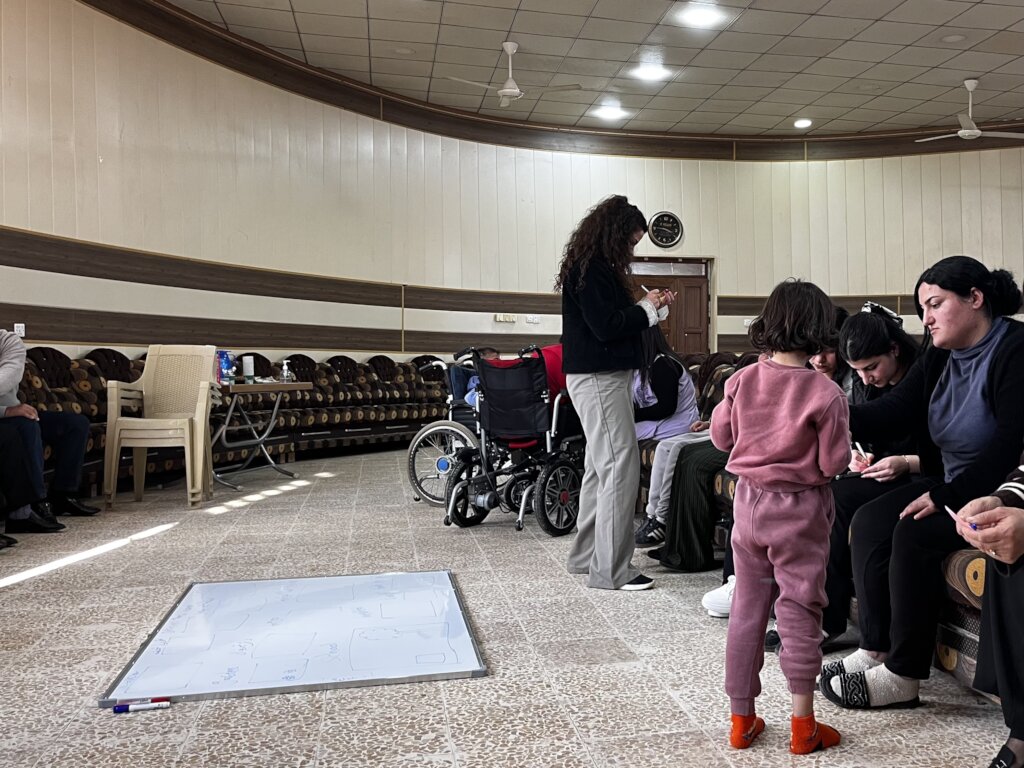
I (Steven) met Fady at a center for children with special needs that we partner with, where I do physical therapy once a week. I soon learned about Fady’s difficult life story—the one I’ve just shared. I also discovered that his father, like his uncle, has disabilities as well. His mother, disowned by her family for reasons I have yet to understand, left Fady in the care of his grandmother, who now shoulders the heavy responsibility of caring for everyone in the household alone.
When I returned from our summer home assignment in August and saw Fady again, I was shocked. His face was pale, his body was thinner than ever, his hair unkempt, and— worst of all— the joyful spirit that once defied the odds seemed shattered.
Shame, as you may know, is a major force here. One does not talk about emotions—especially the hard ones.
So Fady lay there on the therapy bed like a ragdoll, unable to move, completely dependent on me to turn him as needed. Only this time, his frail, scoliotic body felt lifeless in my hands. The air carried a smell that made me wonder if he had once again been left too long without help to reach the bathroom.
The boy had been neglected.
My heart ached. When I shared about Fady’s state with my wife, we felt that we needed to prioritize spending time with Fady and supporting his grandmother. He is a bright boy, who taught himself English even though he’s only been to school a handful of days in his life. We wanted to show him that he is valuable and has potential!
On our third weekly outing, we planned to take Fady to the mall. Fady loved the mall—especially the toy shop on the second floor that sells model cars that teenage boys love. But on our way there, we got stuck in a traffic jam and decided instead to bring Fady to our nearby apartment, which wasn’t affected by the gridlock.
As we lifted his wheelchair together up the set of stairs to the elevators, we saw just how in-accessible buildings are here. Befriending someone whose movement depends on accessibility opened our eyes to feel the obstacles people with disabilities face as though they were our own.
When we entered our apartment, it was clear Fady had never been in a place like it. He gazed in pure joy at the dimmed lights, cozy couch, and scented candles. When we asked him what movie he wanted to watch, Fady shouted in glee “Shriiik!”
“What?” I asked, both confused and amused.
“Shriik! I want Shriik movie!”
So the next 90 minutes featured the contemporary classic, Shrek, about a green ogre and his loyal sidekick donkey. Eventually, Fady’s head drooped onto his armrest. His neck muscles, worn out from the day, could no longer carry the weight of his head. Gently, I lifted him onto our couch and laid him down. There he stayed until the credits rolled—content and at peace. So much so that he asked if he could spend the night.
With heavy hearts, we told him we had promised his grandmother to bring him home that evening. As we drove him back to his village, my mind was full of questions.
What would it be like if boys like Fady could go to school and get jobs?
What if the roads of Iraq had proper sidewalks and ramps?
What if people with disabilities were seen and valued as sons and daughters, not as curses or sources of shame?
What if this country became known for advocating for its weakest, yet valuable citizens?
What if Northern Iraq became the most inclusive place in the region?