By Amna Hassan Kazmi | CEO
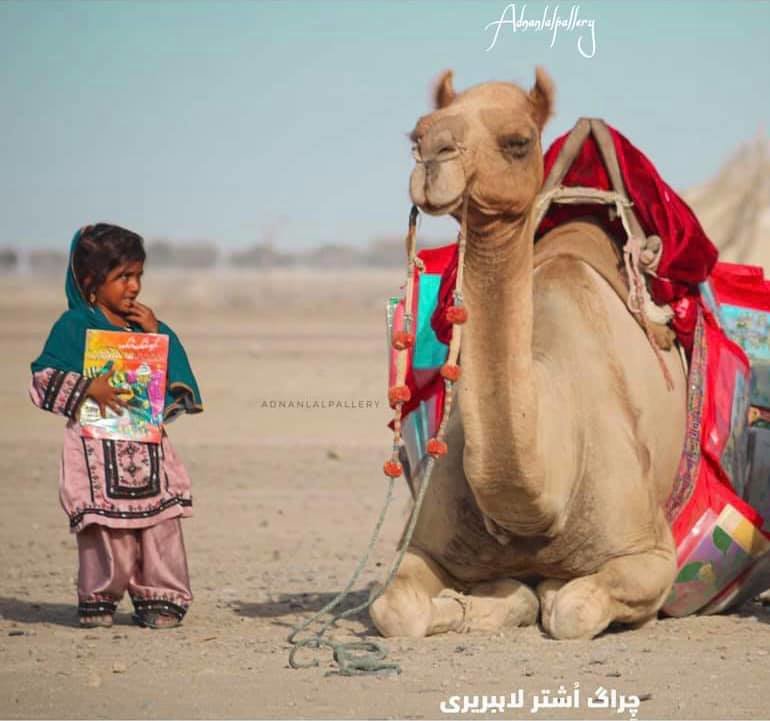
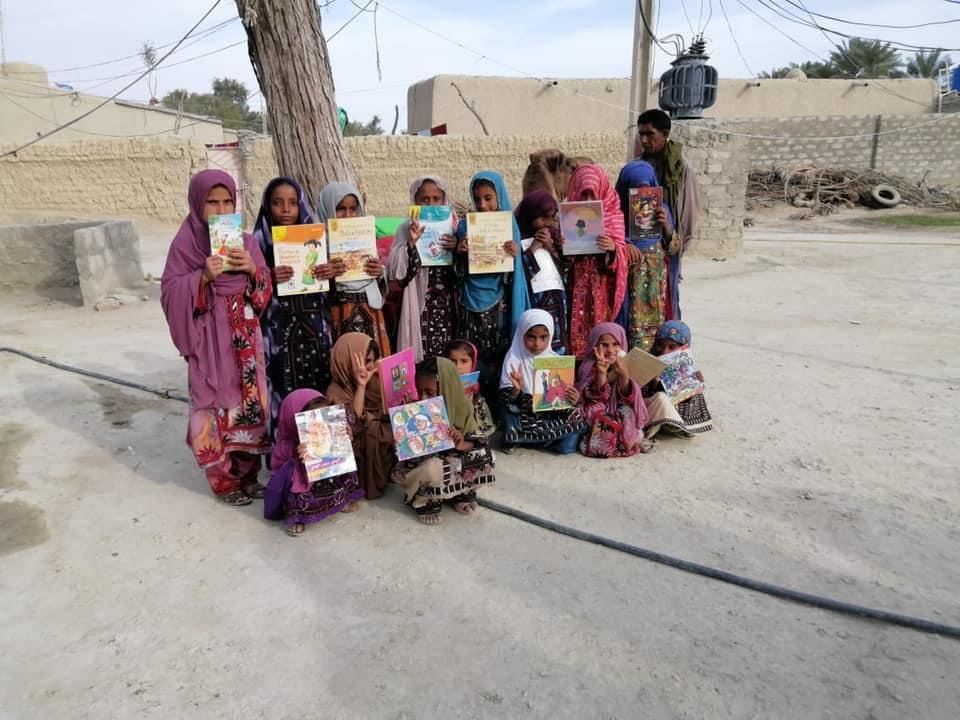
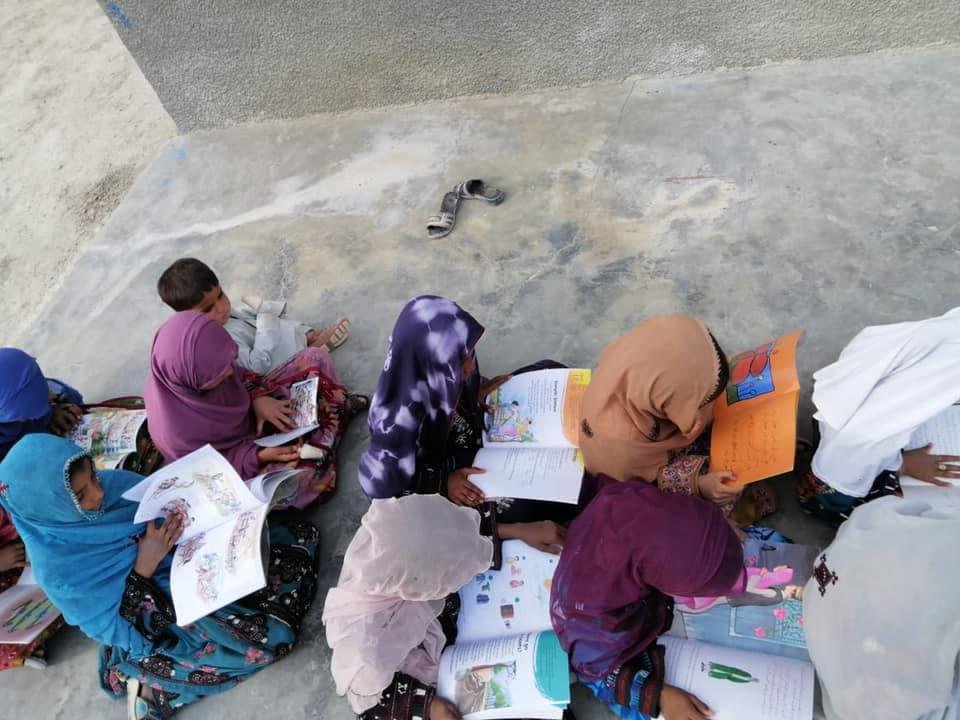
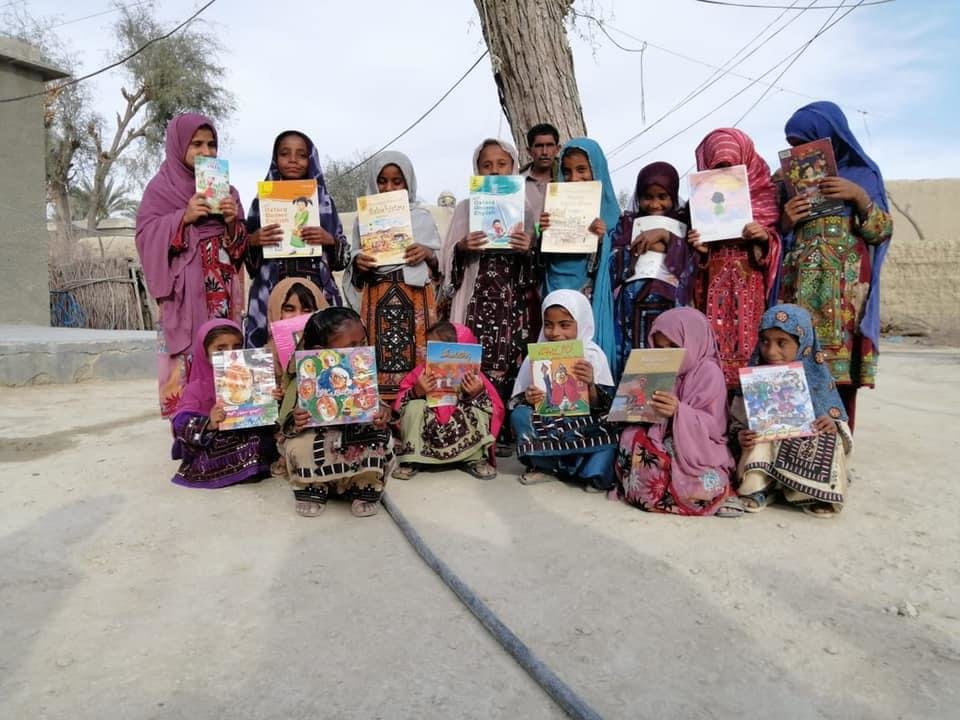
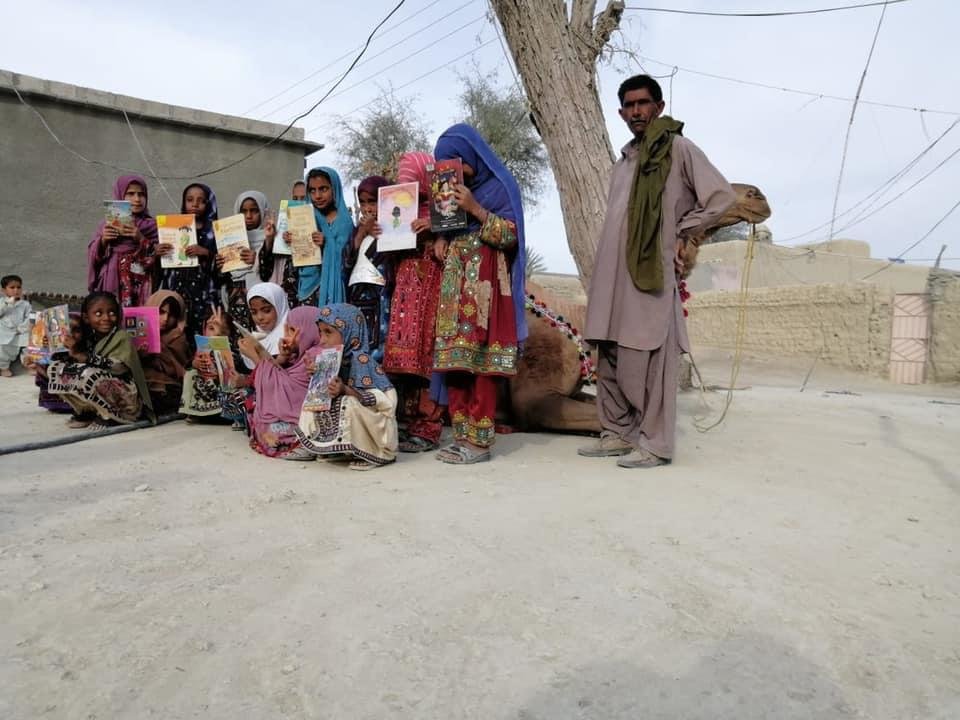
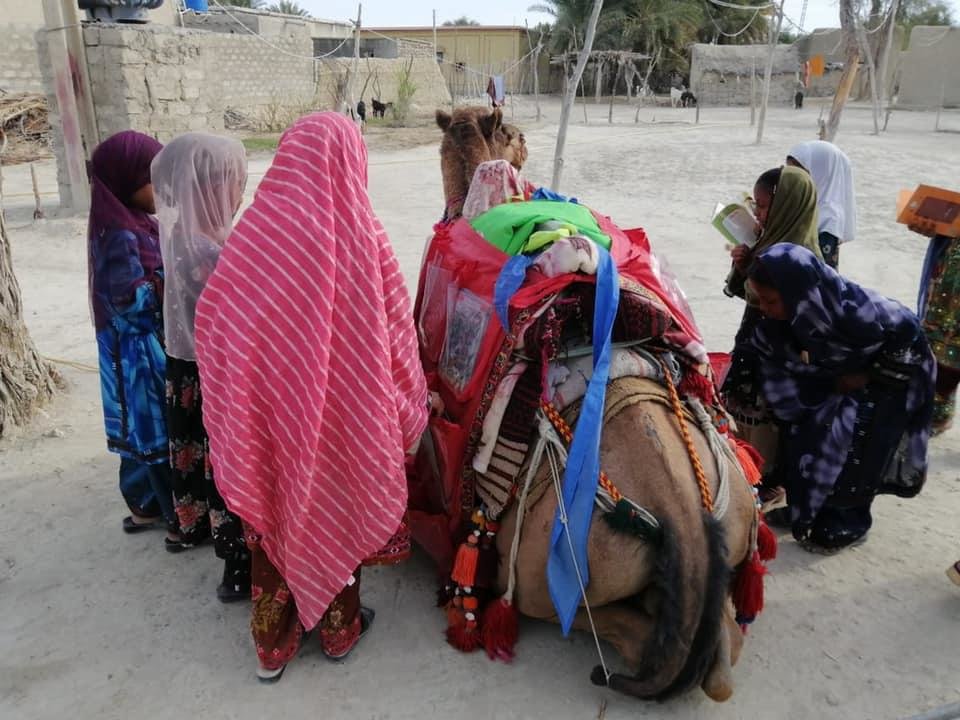
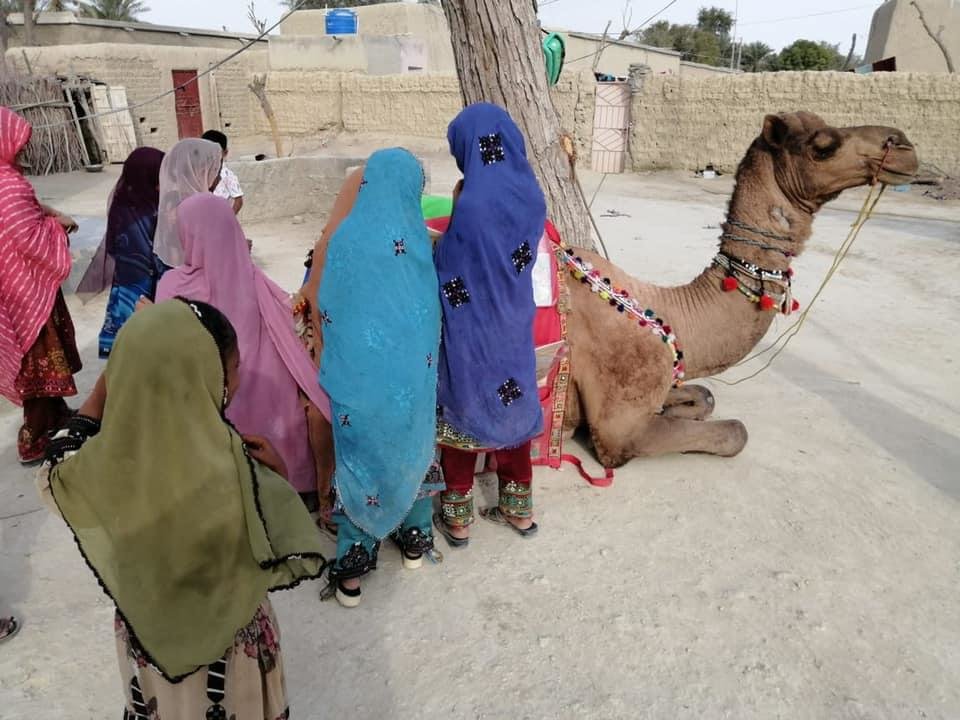
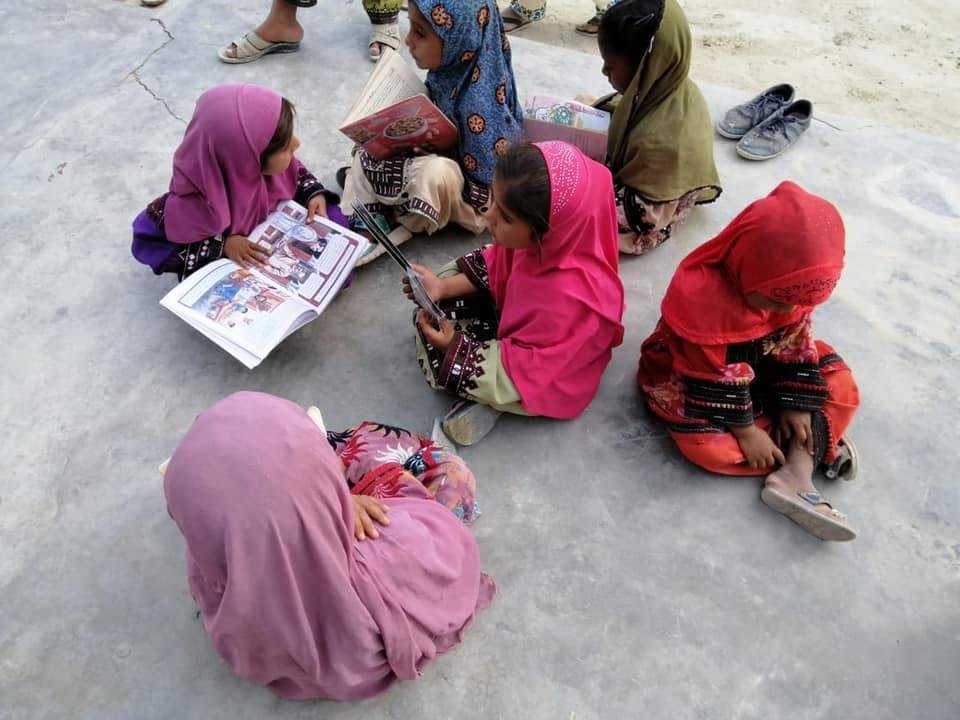
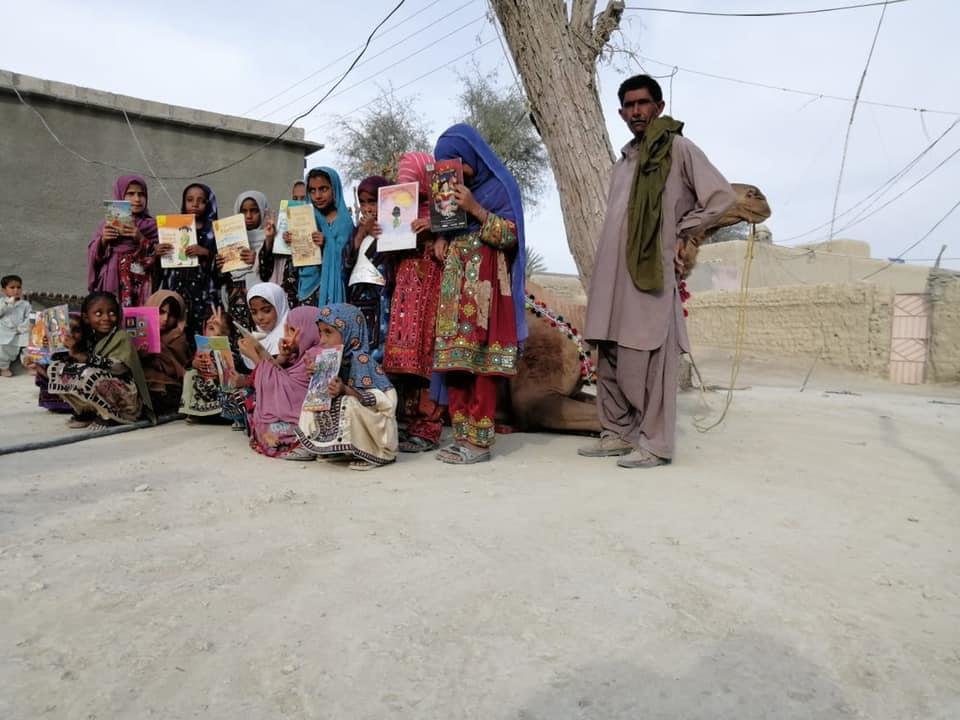
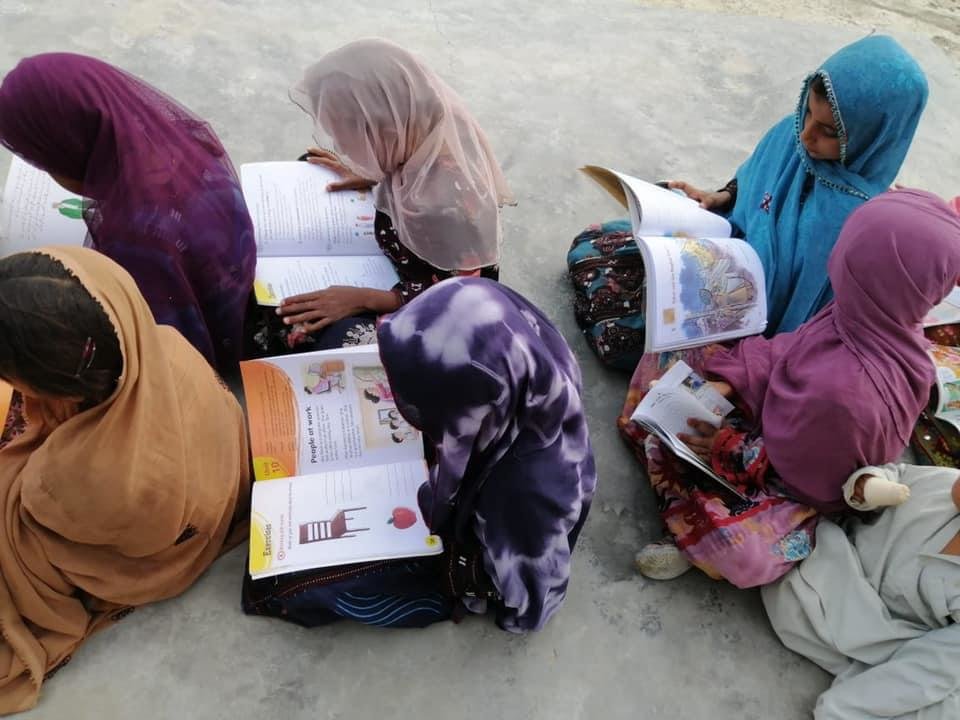
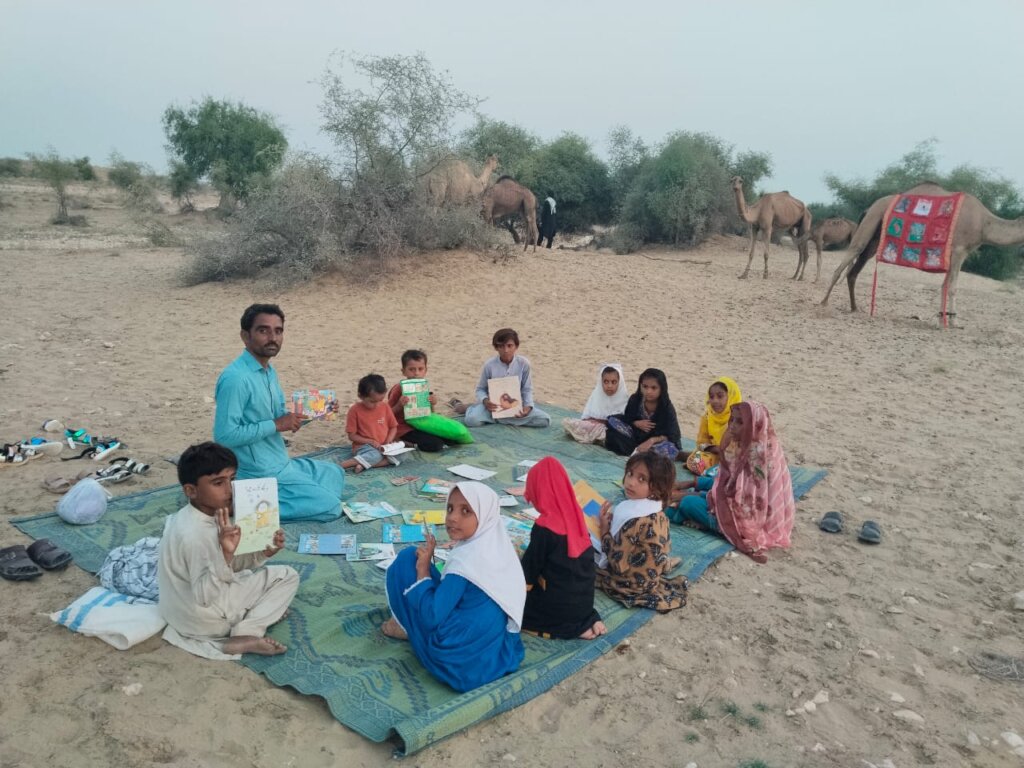
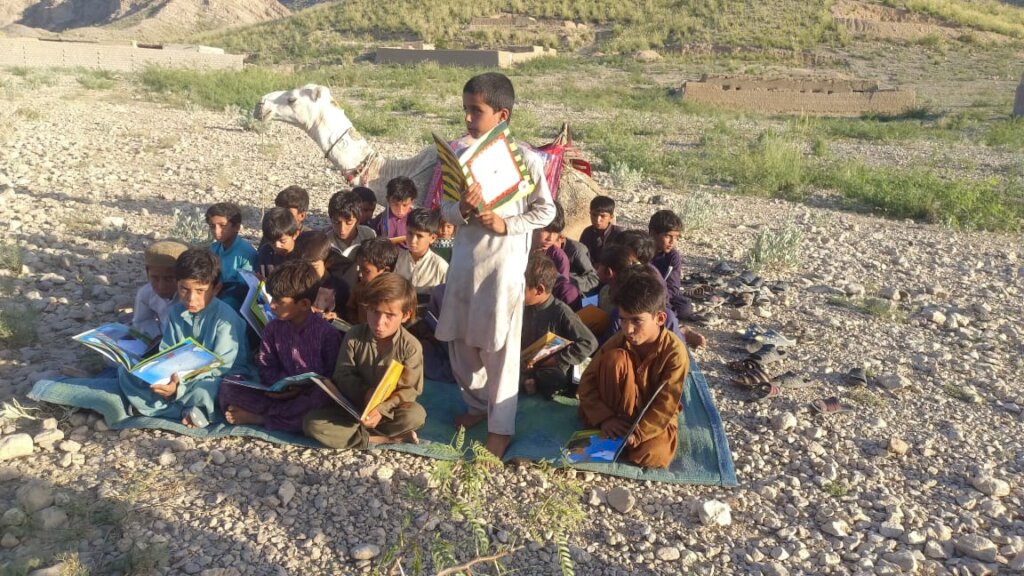
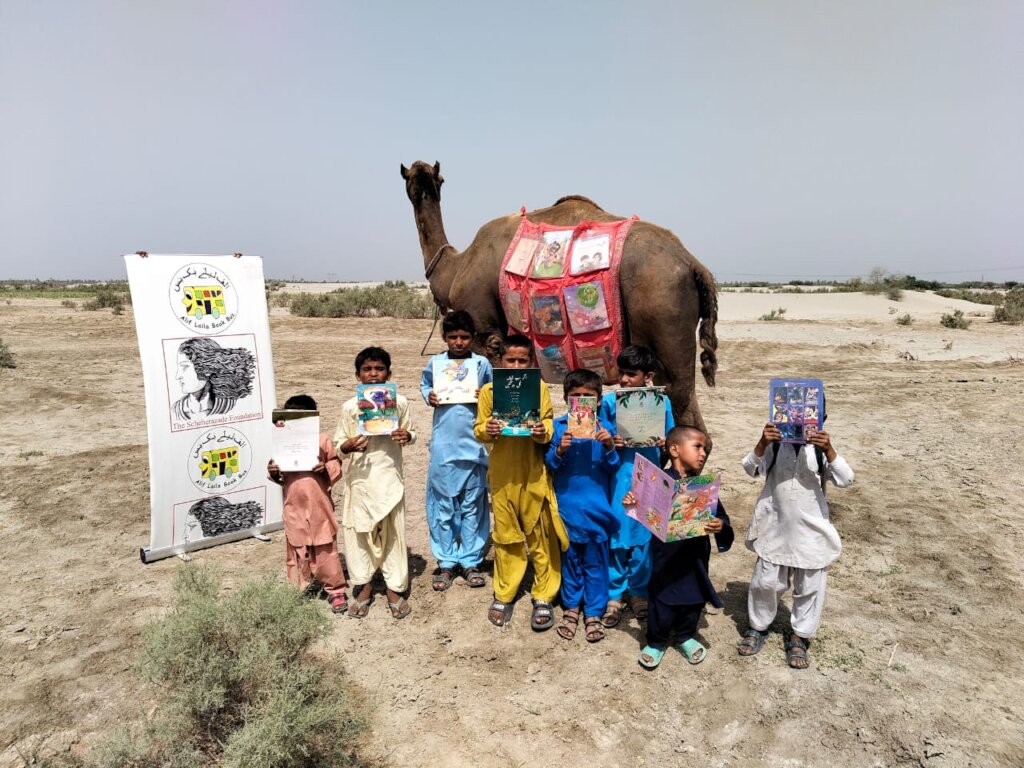
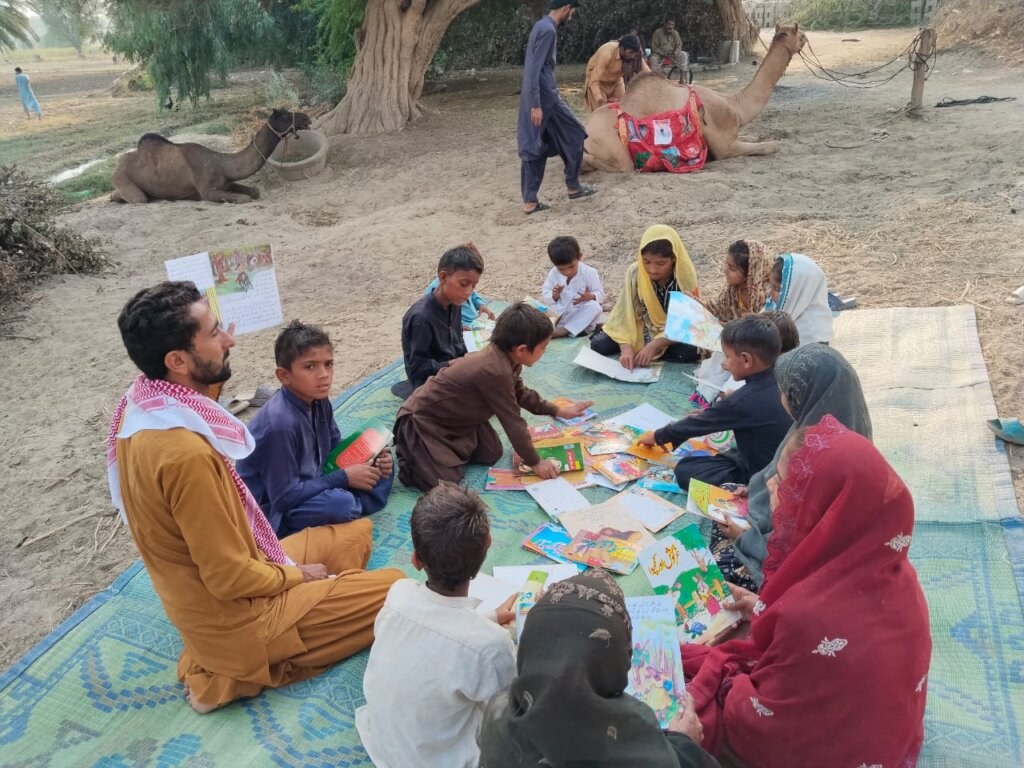
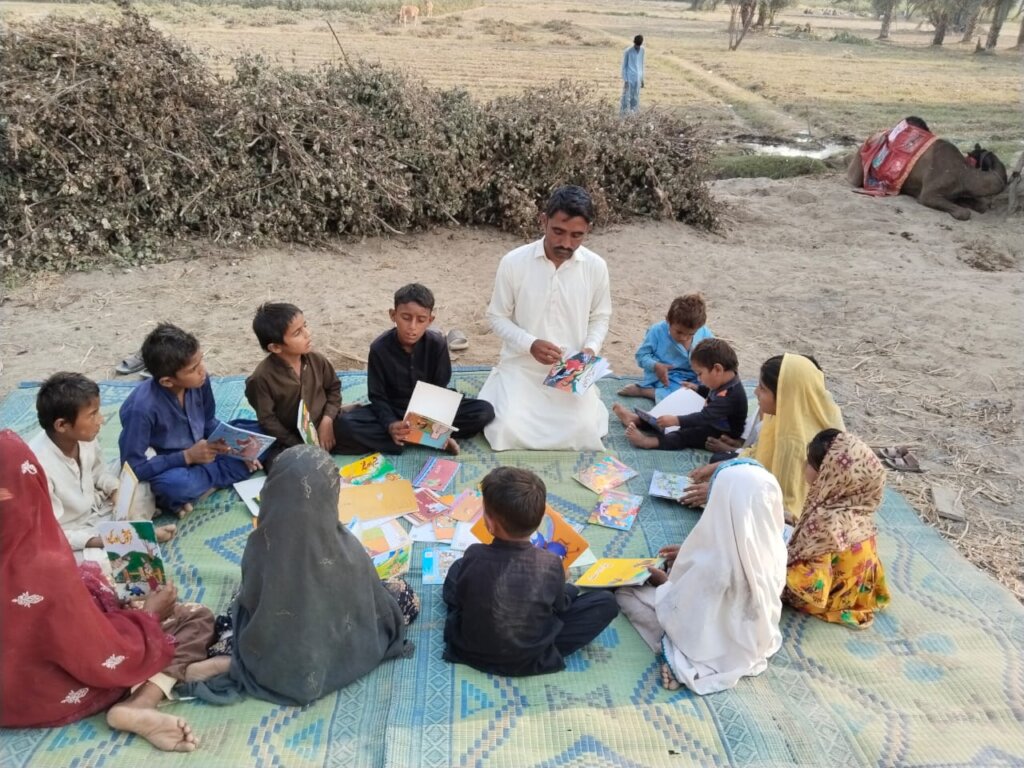
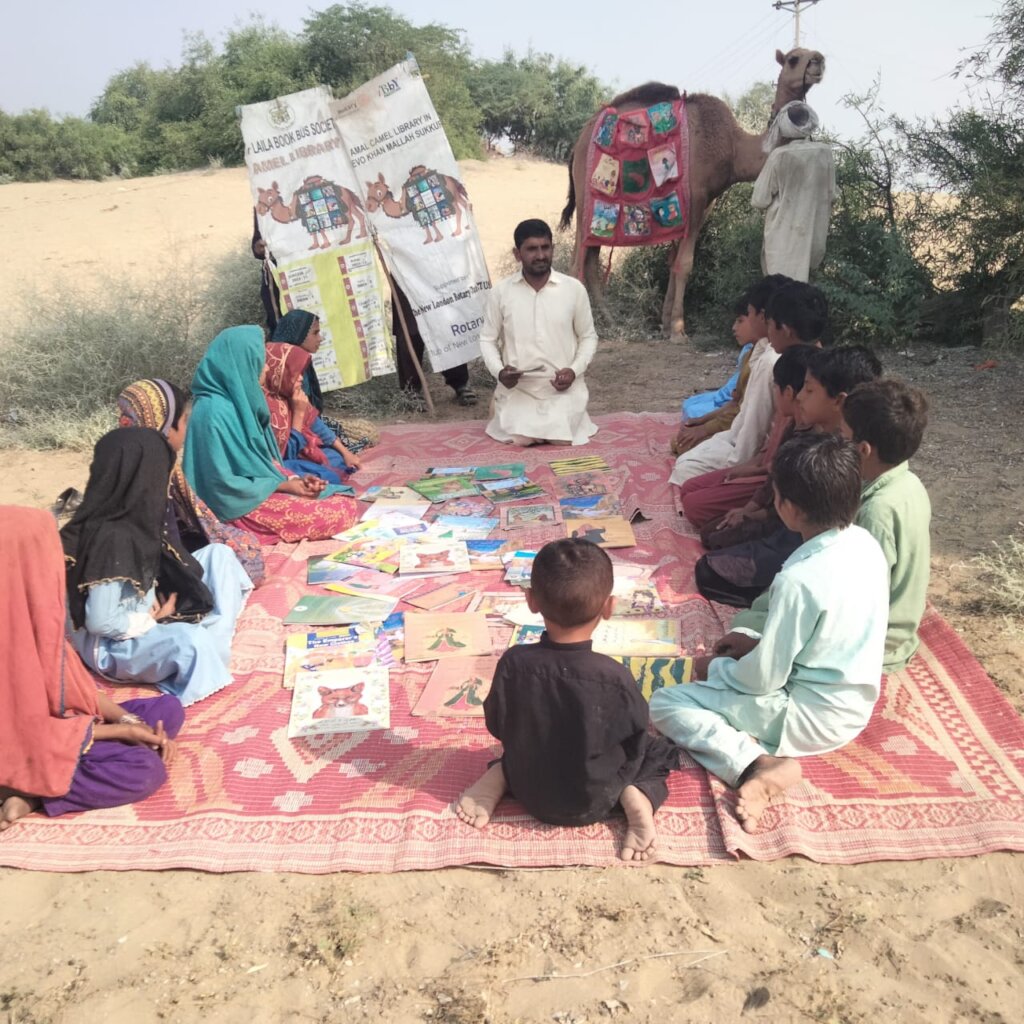
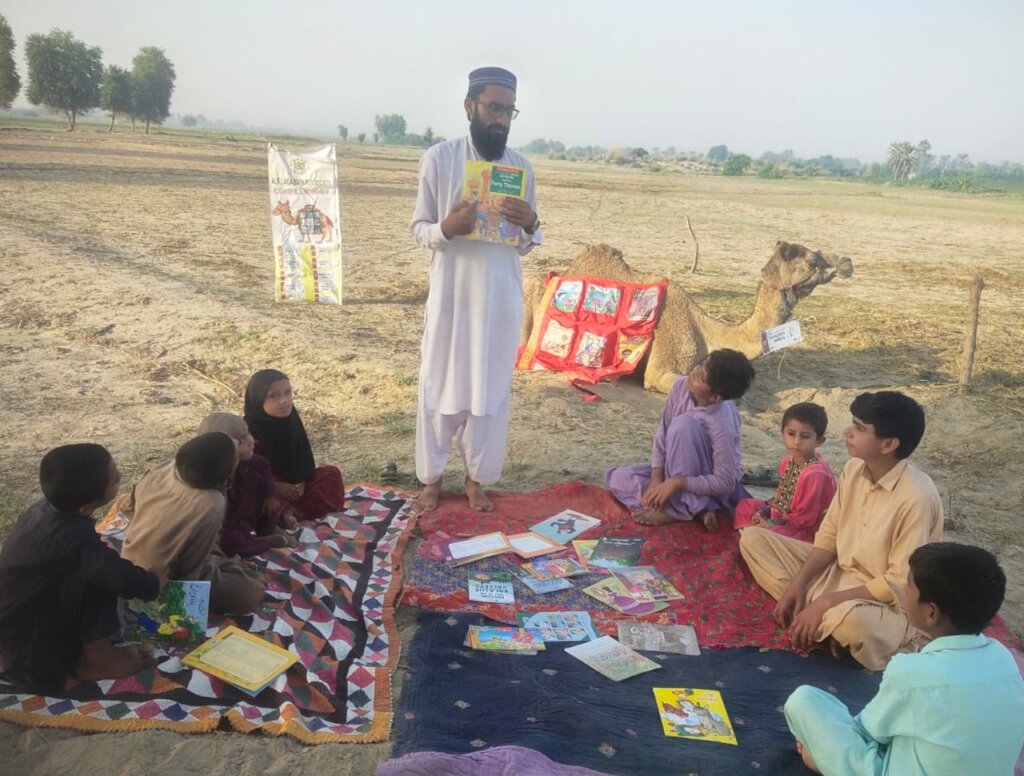
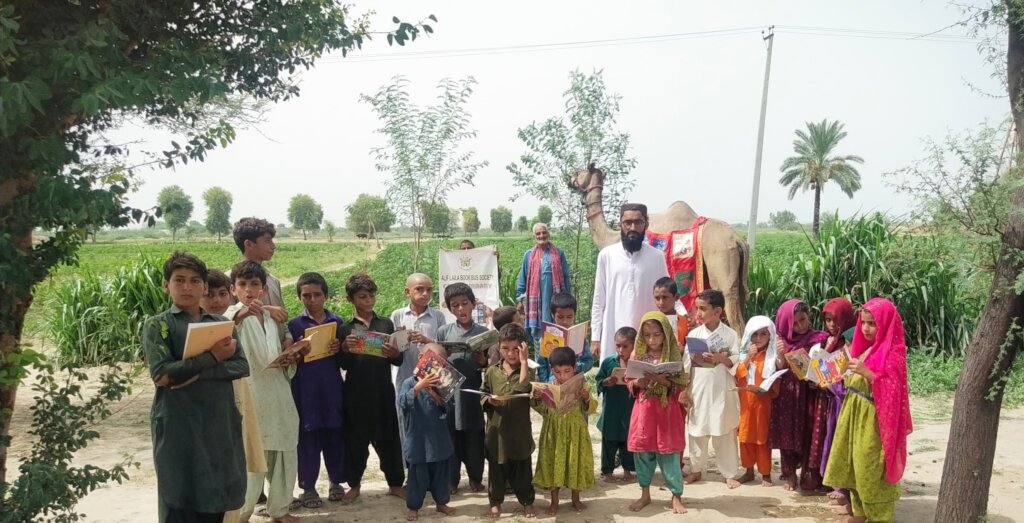
Bringing Stories Where Roads End Across the vast deserts of Sindh and Balochistan, where schools are few and distances are long, the Camel Library Initiative continues to carry the gift of knowledge on four gentle hooves. What began as a dream, to reach children in Pakistan’s most remote regions, has grown into a symbol of hope and imagination. Each week, camels loaded with colorful books, storytelling materials, and a world of wonder trek through villages where children wait eagerly to greet them. For these young readers, the sound of the camel bells means joy, stories, and the promise of learning. “When the camel comes, I feel like my best friend has arrived,” says Maria, 8 years old from Raunaq Library. “I love reading to my little brother now. He listens like it’s magic!” Between August and October 2025, seven Camel Libraries, Nayab, Amal, Sakoon, Khushi, Mashal, Raunaq, and Umeed, completed hundreds of visits across scattered desert communities. Despite harsh weather, floods, and long distances, the teams reached over 2,500 children every month, ensuring consistent access to books and creative learning experiences. The libraries not only deliver stories; they bring continuity, excitement, and hope. In several villages, children formed their own “reading circles,” taking turns to read aloud to one another under trees or beside their mud homes. “We used to wait for rain,” says Shehbaz, 13, from Umeed Library. “Now we wait for the camel. Because the camel brings stories, and stories make our hearts rain.” Every visit of the Camel Library transforms a quiet afternoon into a festival of curiosity. Children run barefoot alongside the camels, waving eagerly as facilitators set up reading mats, art corners, and storytelling sessions. Many of these children have never been to school. For them, the Camel Library is their classroom, playground, and gateway to the world. • Fozia, 10, from Nayab Library, proudly says, “I can read my favorite fairy tale all by myself now.” • Samina and Fatima, sisters from Mashal Library who never attended school, now read storybooks to their friends. • Qasim, 11, from Sakoon Library, loves science stories: “I want to be a doctor for animals one day. I want to help camels too!” • Maira, 12, helps her family with house chores but waits every week for Amal Library’s visit: “It’s my time to learn. I feel happy when I read.” These stories are proof that even in the most isolated places, access to books changes lives. Literacy is not just about improving; it is inspiring confidence, creativity, and connection. The Camel Libraries have become more than reading spaces; they are now community hubs. Parents and grandparents often join storytelling sessions, listening as their children read aloud for the first time. Local artisans and elders share folktales, keeping cultural traditions alive while embracing the joy of learning. The presence of the library camels has also sparked conversations about animal care and empathy, as children learn to love and protect the animals that bring them stories. In many villages, camels are now affectionately named and treated as community members. “Our camel is called Sakoon because it brings peace,” said a child proudly during a reading session. This transformative work has been made possible through the continued partnership of organizations such as Female Education Trust, IPDP, Welfare Association, IRC, Bamsaar, Dream Welfare Organization, and others who share the same vision, to ensure every child, no matter how far, has the right to read and dream. Together, these partnerships have helped us strengthen our book supplies, train facilitators, and extend the reach of our mobile libraries even after environmental challenges like floods and heatwaves. Operating in desert regions brings its share of challenges, unpredictable weather, difficult terrain, and limited resources for new books and creative learning materials. However, each challenge reinforces our commitment. When floods paused two camel routes in September, facilitators and volunteers worked together to rebuild paths, ensuring children would not be left waiting. In the next quarter, Alif Laila Book Bus Society aims to expand the Camel Library model to five new villages and introduce a Desert Reading Festival, a celebration of stories, art, and culture designed especially for desert children. Plans are also underway to equip camels with solar-powered learning kits, including tablets and story projectors, allowing children to experience interactive lessons and digital storytelling for the first time. With your continued support, we can add more camels, more books, and more smiles to the journey, reaching children still waiting beyond the dunes. The Camel Library Initiative stands today as a symbol of what compassion, creativity, and community can achieve together. Each book carried across the sands is a message of hope. Each story read aloud is a step toward a brighter future. “I want to teach my sister what I learned from the camel books,” said Fatima, 11. “When I read, I feel like I can go anywhere, even if I never leave my village.” Your generosity has already transformed hundreds of children’s lives. With sustained support, we can reach thousands more, children who are waiting with bright eyes and open hearts for their turn to read, to imagine, and to believe in their own potential. Because when a camel walks into the desert with books on its back, it carries more than knowledge, it carries the future.
Project reports on GlobalGiving are posted directly to globalgiving.org by Project Leaders as they are completed, generally every 3-4 months. To protect the integrity of these documents, GlobalGiving does not alter them; therefore you may find some language or formatting issues.
If you donate to this project or have donated to this project, you can receive an email when this project posts a report. You can also subscribe for reports without donating.



Support this important cause by creating a personalized fundraising page.
Start a Fundraiser