By Tempa Wangdi | Communications (Programme) Officer
Being change-maker in democratic setup
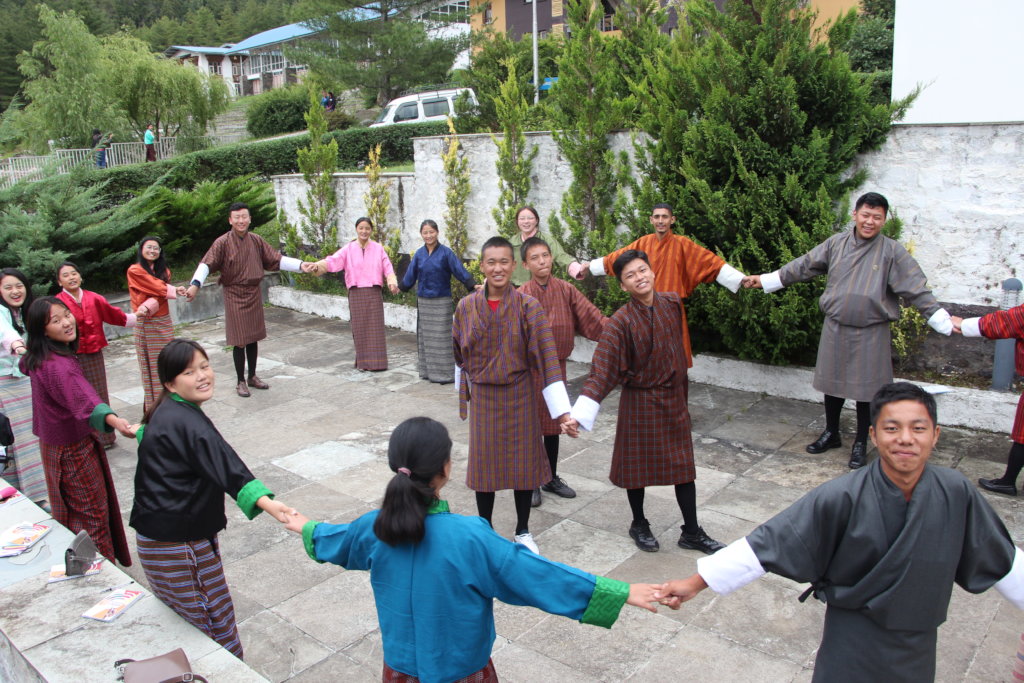
Thimphu, 14 July: Participants of 4th Youth Summit (YS) proposed a number of projects to tackle rural-urban migration, promote the waste management, empower women, and promote organic food production in their communities. Students will try to implement these projects through fundraising in their respective project site
The Youth Summit is BCMD’s annual event to engage young minds during summer vacation to supplement the government’s efforts to nurture socially conscious and responsible citizens.
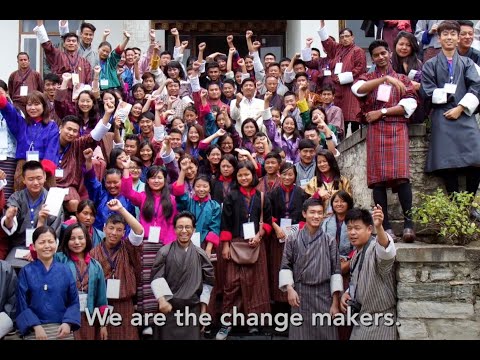
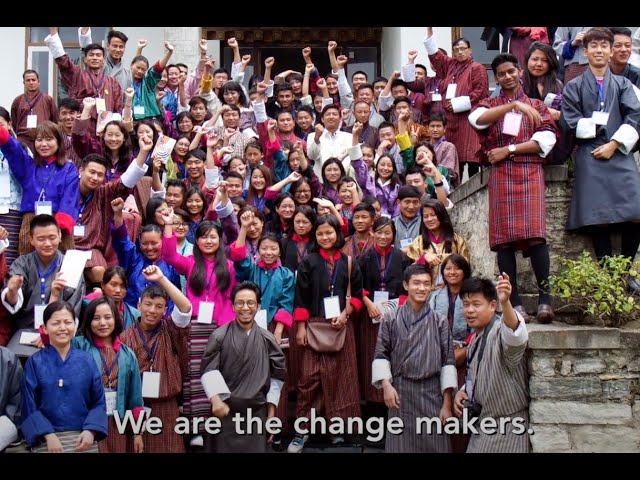
This year, over 115 students and teachers from a number of schools colleges in the country attended the Summit with the theme: “Be the Change” held at Royal Thimphu College from 11-14 July. Among them were recent graduates and out of school youth. BCMD also trained 12 youths to facilitate the summit with support from four teachers.
Many students from Gomtu Middle Secondary School (GMSS) in Samtse and Yebilaptsa Central School (YCS) in Zhemgang were in the capital, Thimphu, for the first time. Some of the students from the two schools come from villages without access to roads. Six of the total 10 students from GMSS are also single-parent children from economically challenged families.
“We brought students from these places since we wanted to give an opportunity to the underprivileged,” said a teacher from YCS Ratna.
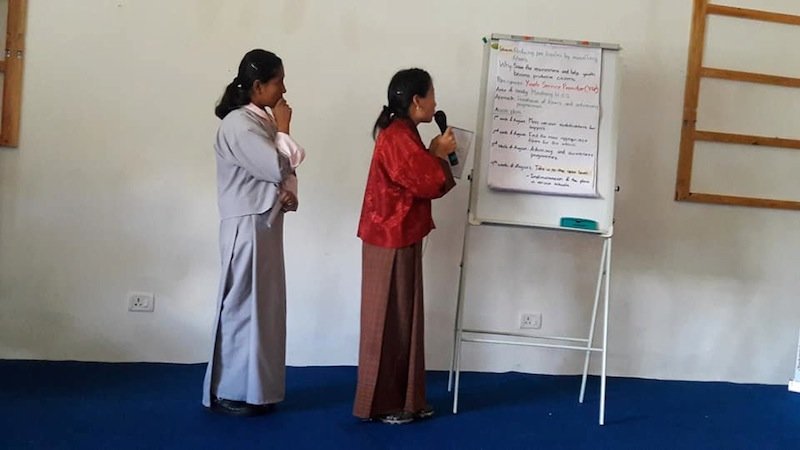
On the final day of the summit, participants including a number of students from YCS and GMSS presented projects their groups planned to tackle issues in their communities. Two groups including Yebilaptsa Central School from Zhemgang proposed production of compost from food waste in schools and colleges. “If making compost from kitchen waste in schools and colleges is successful, we can expand the project to the national level,” said one of the group members.
The other groups will work on reducing rural-urban migration and women empowerment through advocacy on women health and hygiene and distribution of sanitary pads. Another group will advocate waste reduction through the use of filter water to bottled mineral water.
“We will also bring success stories of people who have returned to the villages to inspire and encourage young people to live in the rural backwaters,” said the group’s presenter, Kinley from Motithang Higher Secondary School.
Speaking to BCMD, both students and teachers agreed that Youth Summit really helped youths reflect on their role as a young citizen. “Through interaction with National Commission for Women and Children director I came to know that I can be instrumental in reducing child abuse in my community,” Tsheyang said.
Laxuman said that he’s seen a dramatic improvement in students from his schools. “These are children I have never seen participate in debates or quiz while in school and four days after bringing in the summit – they were making presentations to over 100 people. That’s the greatest achievement they have achieved,” Laxuman said.
Apart from learning to exercise voice, participants learned to explore the values of diversity, inclusiveness, and the role of citizens in a democracy. We thank UNICEF Bhutan for being a valued partner and for supporting this workshop. Catch some of the action at the Summit on a short film soon on BCMD’s YouTube.
Youth Initiative Summer Camp
Thimphu 5 July: In a move to enhance the knowledge and skills youths acquired during the winter Youth Initiative (YI) Camp last year, 24 youths from various schools and colleges participated in Summer YI Camp from 5-7 July at Media Lab in Nazhoen Pelri Complex.
Last winter the youths from different schools and colleges with diverse backgrounds attended seven-day residential training to reflect on their role as citizens. In the following months of the training, the participants initiated and implemented a number of Local Action Plans in their schools, colleges, and communities.
This year, the three-day camp focused on News and Media Literacy and news report writing. They also presented their Local Action Plans on the first of the camp.
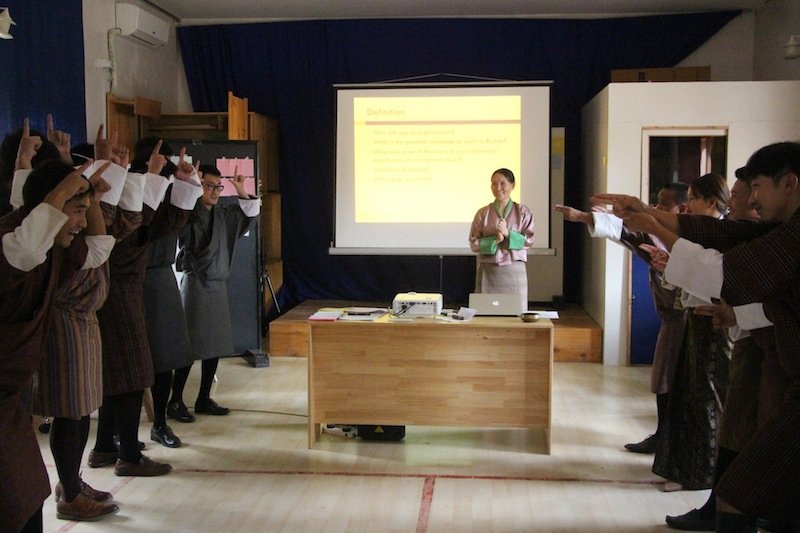
One of the sessions of the summer training guided the participants through an interactive activity to reflect on what it means to be a good citizen. At least 21 of the total 24 participants agreed that the activity helped them understand their strengths and weaknesses better. “I learned that I have the capability to accept all diversity of people and love them for who they are,” said a graduate from Sherubtse College Shanti.
Participants most of who are media savvy also found News and Media Literacy useful and educative to learn about online behaviour. A student from the College of Natural Resources (CNR) Pema said that after attending the Media Literacy he will always ‘think’ before posting or sharing anything on social media. “Besides that, I can also now distinguish news from the fake news,” Pema said.
Another participant from Gaedu College of Business Studies said that he learned that not all the information such as promotion and the raw information is news. "The Media Literacy taught me that we should not buy everything we read and see online and on television but use our judgment to discern the credibility and reliability of information," Yeshi said. BCMD would like to thank UNICEF Bhutan for funding the YI Summer Camp. The participants also learned news report writing. UNICEF Bhutan supported the summer YI Camp.
Youths and Teachers Learn Peer Facilitation
Thimphu, 9 July: A group of 11 Youth Initiative (YI) members from schools and colleges and four teachers underwent training on Peer Facilitation at Media Lab to help Bhutan Centre for Media and Democracy (BCMD) in facilitating 4th Youth Summit.
In a two-day training, YI members mostly youths from schools and colleges learned appreciative inquiry to facilitate Youth Summit slated for July 11-14 using positive probing questions to prompt reflections, imagination, and story sharing. The participants also learned the use of a contextualised version of Palmer’s Habits of the Heart to generate reflections and discussions around values of citizenship.
Besides learning coordination and co-facilitation, the peer facilitators learned the use of icebreaker, grouping, debrief, and organisation of ideas. Following the training and successive facilitation of Youth Summit participants was positive about their experience. They discovered a lot of new things about themselves and teamwork. “I learned to patiently engage with a variety of children of different age groups without sharing my personal opinion to influence them,” said a high school graduate, Pema.
A 2nd-year student from Sherubtse College, Tenzin said that the training and opportunity to facilitate YS boosted her confidence. “I discovered that I have the capability to interact with new people and work well in a team. I feel confident enough to lead sessions for youth in the future,” said Tenzin. BCMD would like to thank UNICEF Bhutan for supporting Peer Facilitation.
Women want to improve online behaviour
Women from Gomtu in Samtse who underwent a two-day News and Media Literacy from 11-12 August at Gomtu Middle Secondary School wanted to improve their online behaviour.
“I want to reduce the time I spend online and want to limit how much my children can be with their phones,” Tshering said, adding that she now knows that there is a difference between news and information shared online especially social media.
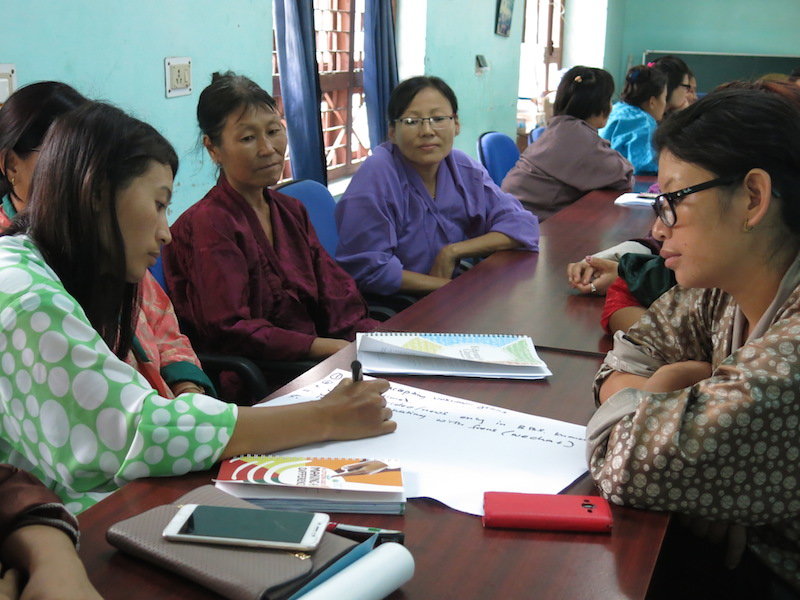
Gomtu is located at a two-day drive from Thimphu towards the southwest of the country via India. During interaction with 30 women participants, most found the News and Media Literacy relevant, timely, and useful. According to most participants, the training was an eye-opener about social media – its benefits and harms.
One of the participants, Pema, said that she would now be more mindful when commenting on social media. “I will think before posting anything about others, which I never thought before,” Pema said.
Kinga, who also participated in the training, has asked her WeChat group friends to refrain from sharing and posting disturbing images of accident and rape victims. “They have also agreed to refrain from sharing such images and videos in the group,” Kinga said.
Bhutan Centre for Media and Democracy (BCMD) conducted the training at Gomtu following a proposal from the Royal Bhutan Police since the small town of over 1,000 has been seeing an increasing number of social-media related domestic violence. EU and Helvetas Swiss Intercooperation supported the News and Media Literacy.
Nuns to be smart on use of social media
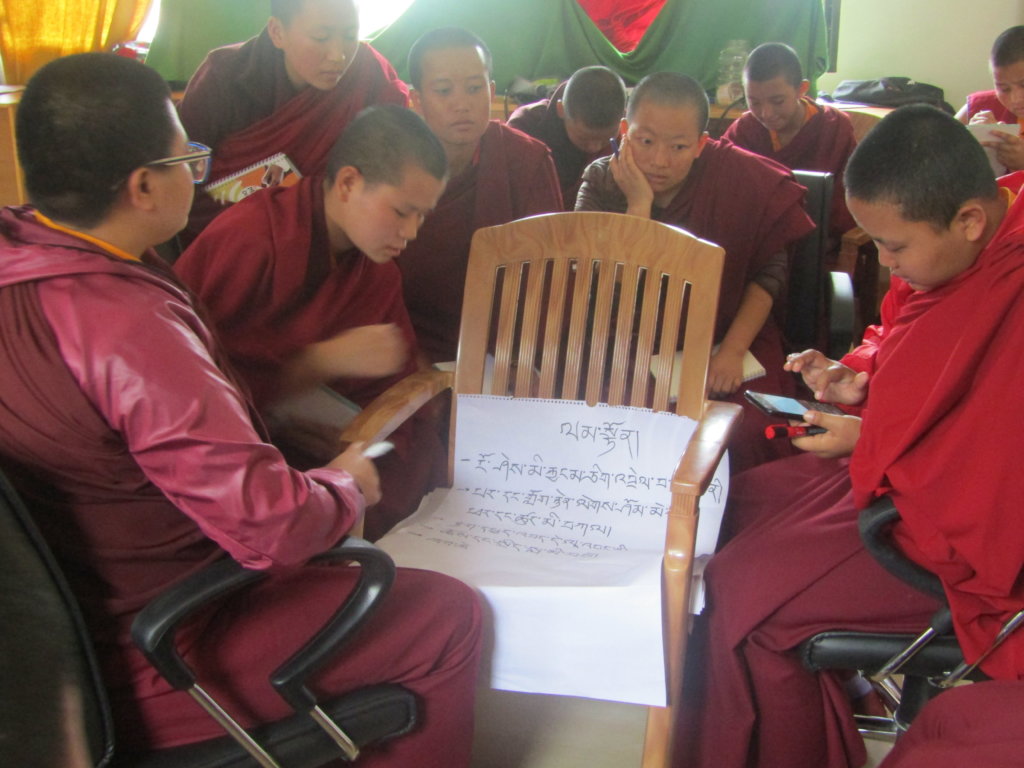
For the first time, 16 nuns from nunneries in Thimphu attended a three-day News and Media Literacy Training from 30 August – 1 September at Bhutan Centre for Media and Democracy’s Media Lab at Nazhoen Pelri Complex in Thimphu.
The nuns were trained in News and Media Literacy to help them become smart consumers of information and news since increasing number of nuns and monks many are highly active on social media like Facebooks, WeChat, and WhatsApp. Following the training, nuns wanted to improve their online safety and privacy. “I want to deactivate my existing Facebook account that has over 3,000 friends and start a new one. Then I will add only the people I have met and I know in real life,” said Choden.
Sonam Choden from Bhutan Nuns Foundation said that she would be more careful about what she likes, posts or shares on social media. “I will not like or share everything on social media without thinking about its consequences,” Sonam said.
Another participant, Rinchen, from Drubthob Thangtong Dewachen Nunnery said that she now knows the importance of being critical while sharing and reading information and news. “I will now check whether the news is real or fake,” Rinchen said.
EU and Helvtas Swiss Intercooperation supported the training.
Dewathang Mappers construct vegetable shed
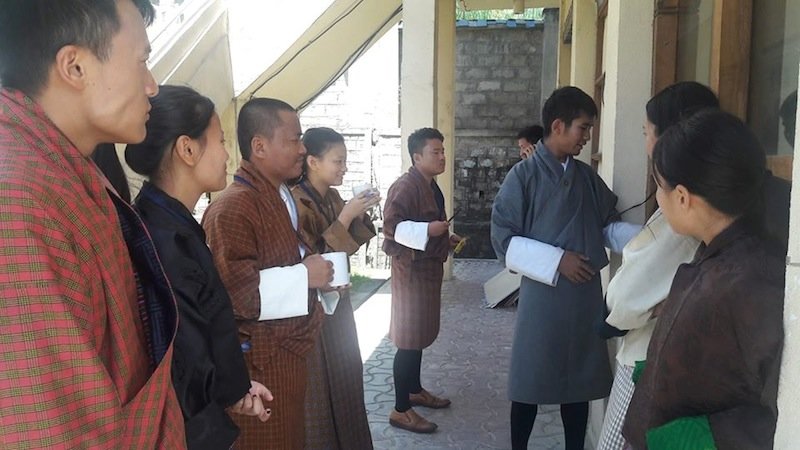
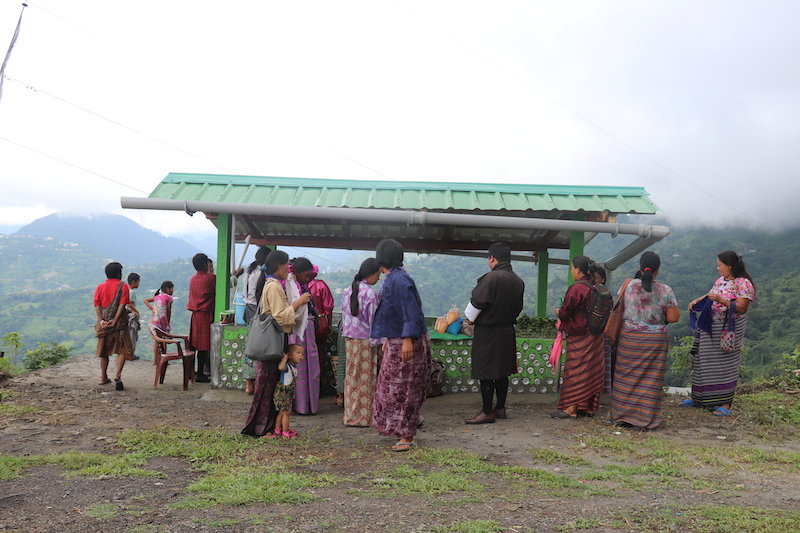
Mappers of Dewathang in Samdrup Jongkhar constructed a vegetable shed at Rekhay following the Community Mapping programme in early 2018.
The vegetable shed has been handed over to the community after drafting a guideline on its management and maintenance. Construction of vegetable shed was one of the three local action plans proposed during the Community Mapping from Dewathang, which is located in the southeast of Bhutan. Dewathang is a two-day drive from the capital city Thimphu.
Bhutan Centre for Media and Democracy implemented the project with support from UNDP in collaboration with Samdrup Jongkhar Initiative. Yangchenma Private Limited, Sonam Drukpa Eastern Bhutan Coal Company Limited, Samdrup Jongkhar Initiative, and Chokyi Gyatso Institue in Dewathang also contributed to the construction of the shed in kinds and in money.
Ranjung Central School Launches News Letter
Featuring events within its campus, Rangjung Central School (RCS) launched its newsletter, ‘The Lens of Rangjung CS’ in September this year.
The coordinator from RCS, Yeshey, said that he was very happy with the efforts the students invested in producing the newsletter. “Media club is a good platform for those genuinely interested students in media to learn media and multimedia skills,’ Yeshey said.
A media club member Kinzang said that he was very proud to be involved in the making of the newsletter.’ “I learned photography and news reporting in the media club,” Kinzang said.
The newsletter featured stories on Women’s Day Celebration, Social Forestry Day, academic awards, Teachers’ Day, and International Children’s Day, among others. CISU supported the production of the newsletter.
Students Maps Communities in Paro
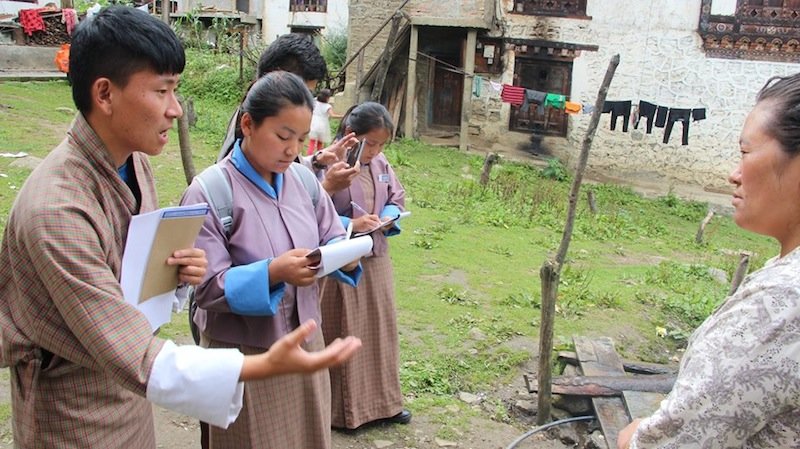
The students of Utpal Academy in Paro visited the nearby communities – Lango, Drugyel, and Satsham to understand people and the communities they are living in.
During the community mapping - young people to talk to community people to understand their issues and design and plan simple local actions to help resolve issues plaguing the communities. The step-down training is a part of Building Community Initiative in Paro.
Through community mapping, young mappers learn to interact with people and enable them to work in a team, and to realise their potential to bring about changes in the communities. A class 11 Arts ‘C’ student Tandin attending the training for the first time said that the training helped him overcome nervousness when talking to other people.
“I realised my confidence level was growing. I still have more platforms to face and work on it,” Tandin said. International IDEA funded the project.
Project reports on GlobalGiving are posted directly to globalgiving.org by Project Leaders as they are completed, generally every 3-4 months. To protect the integrity of these documents, GlobalGiving does not alter them; therefore you may find some language or formatting issues.
If you donate to this project or have donated to this project, you can receive an email when this project posts a report. You can also subscribe for reports without donating.



Support this important cause by creating a personalized fundraising page.
Start a Fundraiser