By KENCHO TSHERING | Programme/Communications Officer
Youth Initiative X Camp RUF: Co-Creating a Vision for the Gelephu Mindfulness City from the Perspectives of Bhutanese Children
One hundred and eight children, some as young as eight and many from the most remote and underserved communities in the country, came together to do something they are rarely asked to do: imagine the future of their nation and propose solutions about the challenges they face everyday in their community.
The Youth Initiative × Camp RUF was not a conventional youth camp. It was a investment in children as thinkers, analysts, and contributors to national development. Over several days, children from seventeen districts engaged in structured, participatory learning to examine social, economic, environmental, digital, and legal issues affecting their lives, and to co create solutions for Bhutan’s ambitious Gelephu Mindfulness City vision.
For many participants, this was the first time they had been invited into a serious conversation about governance and development.One child shared quietly during a discussion on sanitation,
“In my school, we do not have access to proper sanitary products, and there is no safe or dignified place to dispose of them.”
Another reflected on inclusion, after learning basic sign language for the first time,
“There is no access to sign language training in our school, which limits inclusion. I am grateful for this camp, where I was able to learn basic sign language.”
These were not abstract complaints. They were lived realities, articulated with clarity and courage.
Through age appropriate, activity based methods, children analysed issues ranging from unsafe roads, water scarcity, and school overcrowding, to digital addiction, misinformation, and human wildlife conflict. Importantly, they did not stop at identifying problems. They proposed solutions.
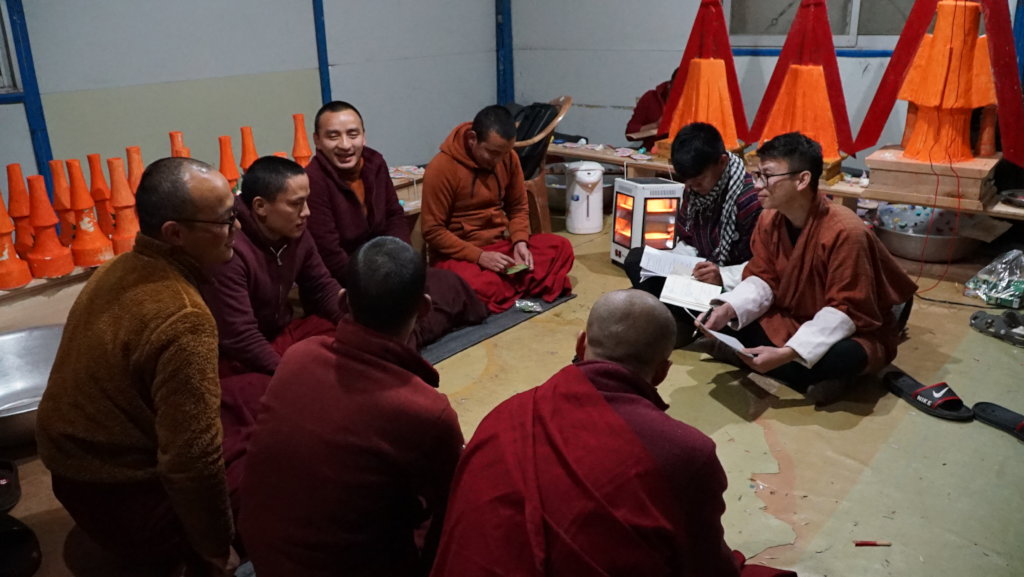
They spoke about inclusive infrastructure, better waste management, safe online behaviour, accessible education for children with disabilities, and economic opportunities that would allow families to thrive without leaving their communities behind. Older youth facilitators, themselves products of similar programmes, guided discussions and documented insights, ensuring peer leadership and continuity.
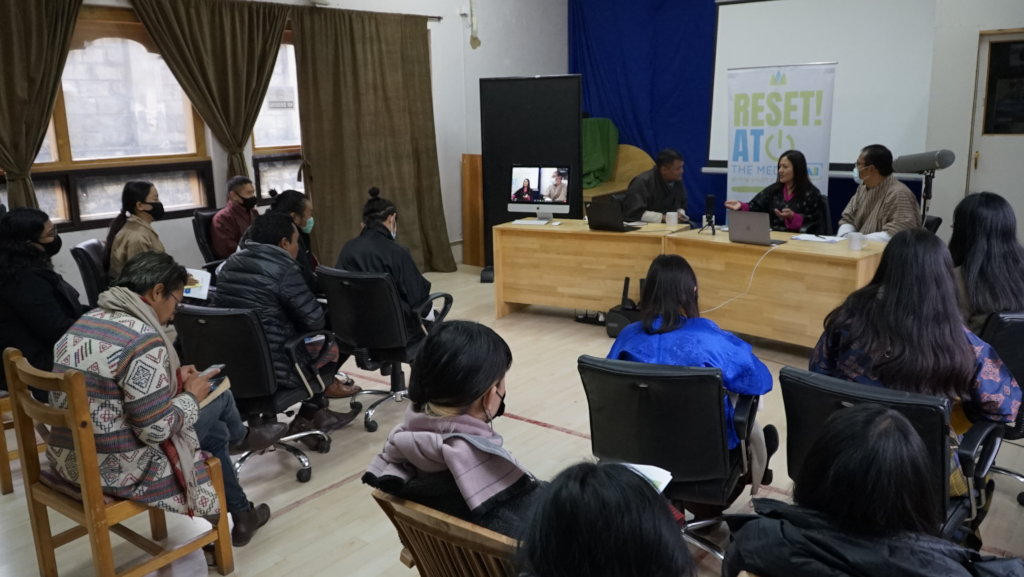
By the final day, children presented their findings and visions directly to senior decision makers, including the Governor of the Gelephu Mindfulness City. Standing confidently before officials and parents, participants demonstrated that when children are trusted and supported, they rise to the responsibility.
One young participant captured the spirit of the camp when she said,
“I want to understand what it truly takes to become a Prime Minister, so that one day I can contribute directly to the future of the Gelephu Mindfulness City.”
Too often, children are treated as passive beneficiaries of development. This camp challenged that assumption. It showed that children possess insight, empathy, and the ability to think systemically about complex issues when given the right space and tools.
Social Analysis
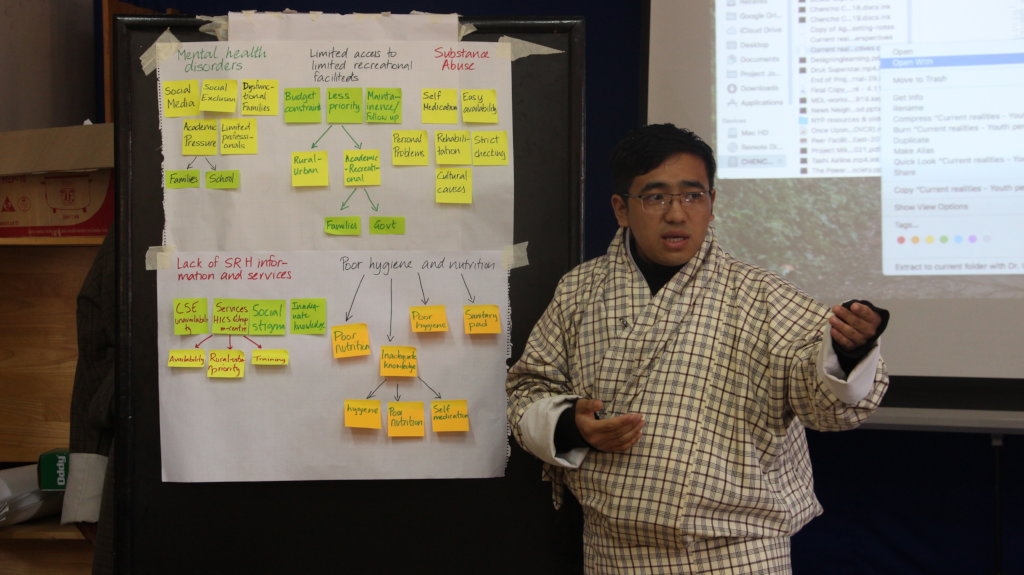
Participants engaged in social mapping exercises and structured discussions to identify key social challenges in their schools and communities. Among the issues highlighted were gaps in infrastructure and learning facilities, including overcrowded classrooms, limited access to ICT labs, poorly maintained school buildings, and unsafe footpaths and roads during the monsoon. As one student from Sherab Gatshel School reflected, “Our school has very limited classrooms. One small classroom often has to accommodate at least 50 students.”
Participants also discussed safety, peer pressure, and behavioural concerns. Bullying, substance use, and unsafe road conditions were raised as serious issues. One participant described peer pressure at school: “Some students pressure us into drinking and smoking. Peer pressure is being used as a weapon against us.” Road safety concerns were echoed by students from Tala: “The road in Tala is very narrow, and it puts students at risk every morning. When trucks and heavy vehicles pass by, it feels frightening and unsafe.”
Economic Analysis
Economic analysis engaged participants in mapping local economic assets, challenges, and household-level concerns. Children highlighted family financial constraints, unequal access to resources, and limited skill development opportunities, noting the high rate of school dropouts due to a lack of marketable skills. They also observed gaps in local infrastructure and economic linkages, including weak transportation systems, a lack of proper markets for farmers, limited access to banking facilities, and insufficient guidance on saving. One participant shared, “There are no proper markets for farmers to sell our produce, and farm goods have a very short shelf life,” reflecting concerns about the economic barriers facing rural families. Others noted issues such as the lack of greenhouses for farmers, limited local vegetable markets, unfair pricing, and challenges in exporting high-value products like cordyceps.
Environmental Analysis
Environmental activities at Youth Initiative X Camp RUF encouraged participants to critically explore the relationship between human activity and nature, and to identify challenges affecting their communities. Children highlighted a wide range of environmental concerns, including water scarcity affecting drinking, washing, irrigation, and school facilities; unsafe water supply; waste mismanagement; food waste; deforestation and shifting cultivation; mining impacts; pollution from factories; over-reliance on wood for cooking and bathing; landslides and lack of rehabilitation in affected areas; and human–wildlife conflict. Harsh weather in highland areas, limited grazing land, and long distances to school were also raised as challenges, demonstrating a nuanced understanding of environmental stressors across diverse contexts.
Media and Digital Literacy
Digital and media literacy activities at the camp engaged participants in exploring the opportunities and risks associated with extensive exposure to digital platforms, social media, and artificial intelligence (AI) tools. Children discussed challenges, including phone addiction, excessive screen time, early exposure to social media, cyberbullying, misinformation, and the pressures of AI use in school assignments and homework. They also recognised the risks of sharing content without consent, underlining the importance of respecting legal digital rights and adhering to child online protection guidelines set by the competent authorities.
Through guided discussions, group analysis, and scenario-based exercises, participants demonstrated a sophisticated understanding of digital harm and proposed practical solutions. These included setting screen-time limits, encouraging parental supervision, integrating digital literacy education in schools, promoting offline activities, and fostering responsible use of AI tools. Children also suggested leveraging influencers for positive impact, such as raising awareness about healthy screen habits, responsible social media use, and ethical online behaviour.
Participants emphasised the importance of promoting safe online spaces, understanding their digital rights, and critically evaluating online content. One child reflected, “We use AI for schoolwork, but sometimes it makes us lazy. We should learn to use it wisely.” Another noted, “Influencers can teach us good things, like not wasting time on our phones.”
The impact goes beyond a single camp. Participants left with stronger confidence, deeper civic awareness, and a sense that their voices matter. The programme generated rich evidence and practical recommendations that will inform future youth responsive programming and policy engagement. It also laid the groundwork for sustained engagement through mentorship, peer learning, and integration of youth perspectives into local planning processes.
Project reports on GlobalGiving are posted directly to globalgiving.org by Project Leaders as they are completed, generally every 3-4 months. To protect the integrity of these documents, GlobalGiving does not alter them; therefore you may find some language or formatting issues.
If you donate to this project or have donated to this project, you can receive an email when this project posts a report. You can also subscribe for reports without donating.



Support this important cause by creating a personalized fundraising page.
Start a Fundraiser