By Meagan Silencieux | Engagement Director
The recent period marked the "preparation and selection" phase for the seventh group (Cohort 7) of our program. During these three months, we focused on two main goals: building a team of local experts and conducting a rigorous, door-to-door search to find the most vulnerable amongst families facing extreme poverty.
By adhering to a thorough verification process the program ensured that resources will be exclusively directed toward the most vulnerable households in the Palma, Titans, and Pikmi communities.
An in-depth approach to launching a new cohort is essential, as our program lasts 21 months and provides significant support and resources to participating families—including livestock, agriculture training, home repairs, and healthcare—we must ensure that we are choosing the families who have no other source of help.
Building a Strong Field Team
A program is only as good as the people running it. In August and September, we focused on getting our "boots on the ground" ready.
Recruiting Local Mentors: We hired three caseworkers and a nurse. These aren't just office workers; they are mentors who walk hours every day to reach remote mountain homes and communities. We chose people who had worked with us before because they understand the unique geography and culture of Lagonav.This ensures continuity and leverages deep community and social knowledge.
Mastering New Tools: The team underwent training to use a tool called "Impact Atlas." This is a digital system on handheld tablets that allows us to take photos, record GPS locations of homes, and track data at every single visit. This means that for every family we have a digital record of exactly where they live and what their starting point was.
Building Local Partnerships
Success in the communities of Palma, Titans, and Pikmi depends on the support and involvement of local leaders.
Community Conversations: A series of roundtable meetings were held with pastors, local officials, and other influential neighborhood leaders. We explained how the selection process works and asked for their help in protecting our staff as they travel with supplies. This "buy-in" from the community ensures the program is welcomed and safe.
The Search & Selection Process
The main impact during this period was the execution of a multi-stage, scientific selection process. This type of investigation is designed to minimize inclusion error (selecting those who are in less need of help) and exclusion error (missing the most vulnerable).
Community Mapping: We started by looking at "social maps" created at roundtable gatherings by community members. These maps identify who in the neighborhood is struggling the most.
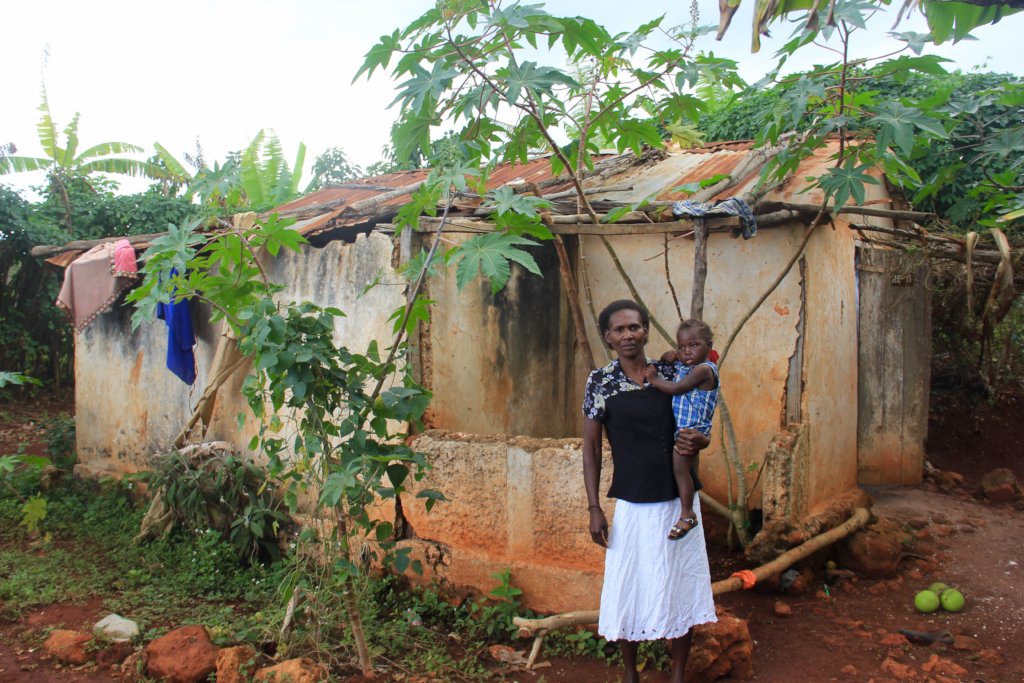
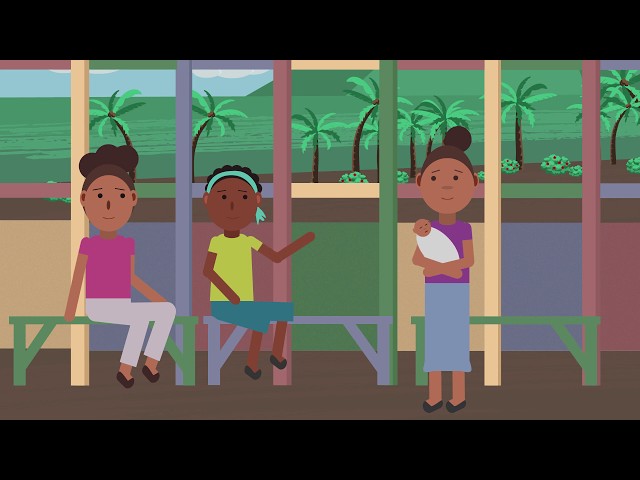
Initial Visits: Our caseworkers visited 144 potential families in-person across the sections of Palma, Titans, and Pikmi. These visits serve as the first line of assessment to verify viable income sources, living conditions, housing status, and asset ownership. Caseworkers sit down with parents to discuss their daily lives seeking to identify specific "red flags" of extreme poverty, such as:
Final verification: To prevent favoritism or data errors, a second team goes out to double-check the information collected for all potential families during follow-up/verification visits. Out of the 144 families visited, 87 families were officially cleared to join the program. The second round of visits confirmed that 24 families had recently improved their lives, often with help sent from relatives abroad. While these families are still struggling, our program aims to serve those without any other possible support.
Facing Economic Hardship Together
The economic situation in Haiti was a major hurdle in this period. Prices for basic goods are rising almost daily. This price inflation is driven largely by the ongoing security crisis on the mainland, which has blocked major supply routes and made transporting goods to La Gonave island extremely dangerous and expensive. Additionally, the value of the Haitian currency continues to drop against the US dollar, meaning that even when supplies are available, their cost is out of reach for most families
Summary of Impact
The July–September quarter was not about giving out animals or setting up small businesses yet—it was about finding the right people. By being this careful and taking these three months to verify every detail, we ensure that your investment in our work will have the greatest possible impact. We have found 87 families who were on the brink of despair, and we have prepared them to begin their journey toward a life of dignity and self-sufficiency.
We are deeply grateful for the generosity that allows us to walk this path together. Your support does not just provide resources; it serves as a powerful catalyst that empowers our local Haitian staff and the resilient people of Lagonav to lead their own transformation.
By coming alongside, you are fueling a community-led movement where families take the lead in building their own journey toward dignity. We value your partnership immensely—not just as donors, but as allies standing shoulder-to-shoulder with Haitians who are working every day to create a brighter, more self-sufficient future. Thank you for believing in the strength of this community and for joining us in this vital work.
Project reports on GlobalGiving are posted directly to globalgiving.org by Project Leaders as they are completed, generally every 3-4 months. To protect the integrity of these documents, GlobalGiving does not alter them; therefore you may find some language or formatting issues.
If you donate to this project or have donated to this project, you can receive an email when this project posts a report. You can also subscribe for reports without donating.



Support this important cause by creating a personalized fundraising page.
Start a Fundraiser