By Ariella | IsraAID Humanitarian Fellow in Kenya
Due to the tumultuous climate of war in the region, Kakuma Refugee Camp has become a home to 187,000 refugees. IsraAID currently focuses its efforts on empowering women and youth, including new arrivals, offering support to the most vulnerable within the camp. A lack of proper sanitation and hygiene education, along with violence and poverty, make Kakuma a difficult place to live. Ariella is currently attending Kenyon College in Gambier, Ohio. She is one of two IsraAID Humanitarian Fellows volunteering in Kenya for summer 2019.
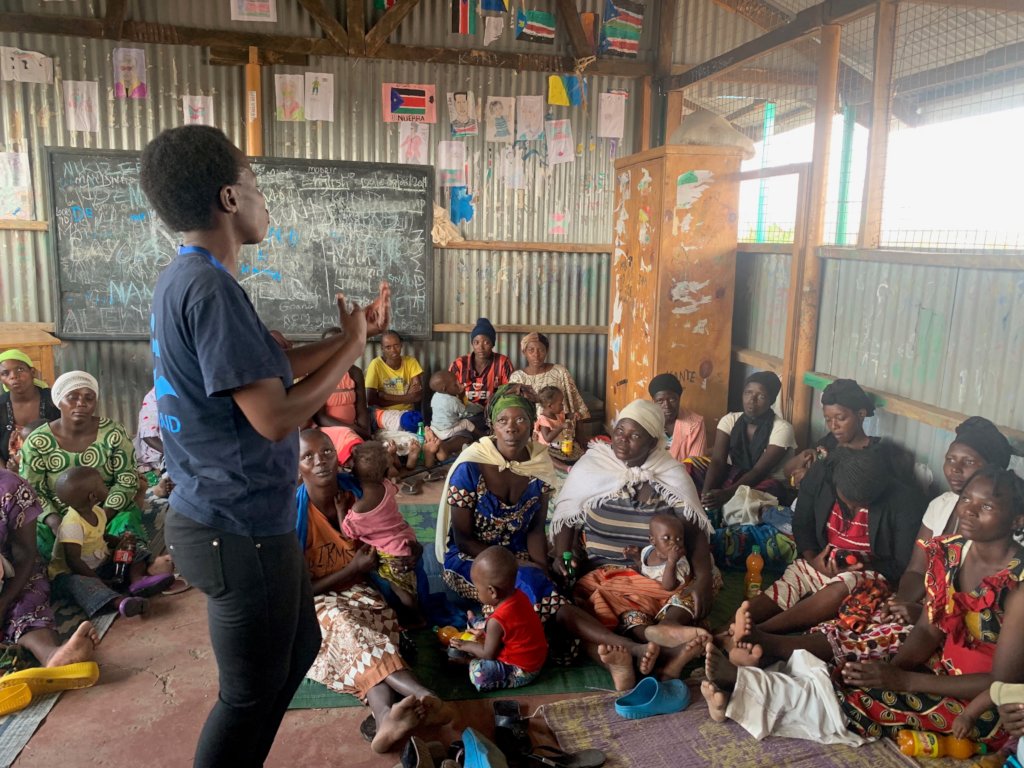
In Kakuma Refugee Camp, IsraAID-trained facilitators hold diagrams of women’s reproductive systems as they stand in front of an attentive class of forty-four.
This isn’t a typical classroom. The students are refugee women aged twenty-five and above, and for several of them, this is their first time learning about menstrual health. Many of the women cradle months-old babies in their arms. The classroom is broken into three informal groups according to language: Swahili, Arabic, and Kirundi. Each facilitator teaches the lesson to students in the language with which they are the most comfortable.
The facilitators, who are refugee women themselves, begin their lesson by passing around charts and diagrams that depict the process of menstruation. IsraAID trains refugees in Kakuma to lead workshops, promoting sustainability and independence in the community.
“In many communities, we are not told about this,” Amandine, one of the participants, tells me in Swahili. She explains to me that topics of women’s reproductive health and menstruation are not spoken about comfortably, and are frequently considered taboo. As a result, women often lack awareness of vital changes in their bodies and proper self-care for reproductive health.
It is essential that the workshops start with the basics — many of the women have different levels of understanding when it comes to menstrual hygiene. The training covers basic principles of menstrual hygiene management, including the biology of menstruation and aspects of reproductive health. Women are also trained in proper self-care during menstruation, including how to relieve pain and discomfort.
“By having more trainings like this one, we can begin to share the knowledge,” Amandine adds.
She says that she has never attended a class on menstrual hygiene and health before, but found this one very useful. She tells me that such training is important to the refugee community in Kakuma because it encourages women to gain a deeper understanding of their bodies. Their newfound knowledge also serves to support other women in the community who did not attend the class.
One of the older participants in the room tells me that the information is a good refresher. For her, the most important part of the lesson was learning about different reproductive and menstrual complications. Infections destabilize home life, she shared, because women often don’t know what is causing the issue and are unsure of how to seek treatment. By learning about prevention, women can take the initiative when it comes to their health.
“Women need more trainings,” insists Riziki, one of the facilitators. Riziki tells me that there are still many obstacles facing female refugees when it comes to these issues. Even purchasing menstrual supplies can be a challenge. Some women simply do not feel comfortable doing so, while others struggle to afford them.
The facilitators tell me that Kakuma’s environment poses a serious challenge for women seeking contraception. The overwhelming heat can cause birth control in the form of implants to fail, resulting in complications for many women. Tragically, issues surrounding bleeding and a lack of treatment often result in a woman’s death during childbirth. Risks associated with pregnancies are crucial for women in the community to understand. “If we educate more women, there wouldn’t be so many complications,” Riziki says.
IsraAID recognizes the need for further workshops to educate women in the community. An additional Menstrual Hygiene and Health training, specifically for adolescent girls, was also organized.
Thank you for your support!
Project reports on GlobalGiving are posted directly to globalgiving.org by Project Leaders as they are completed, generally every 3-4 months. To protect the integrity of these documents, GlobalGiving does not alter them; therefore you may find some language or formatting issues.
If you donate to this project or have donated to this project, you can receive an email when this project posts a report. You can also subscribe for reports without donating.



Support this important cause by creating a personalized fundraising page.
Start a Fundraiser