By Taylor Bates | Project Leader
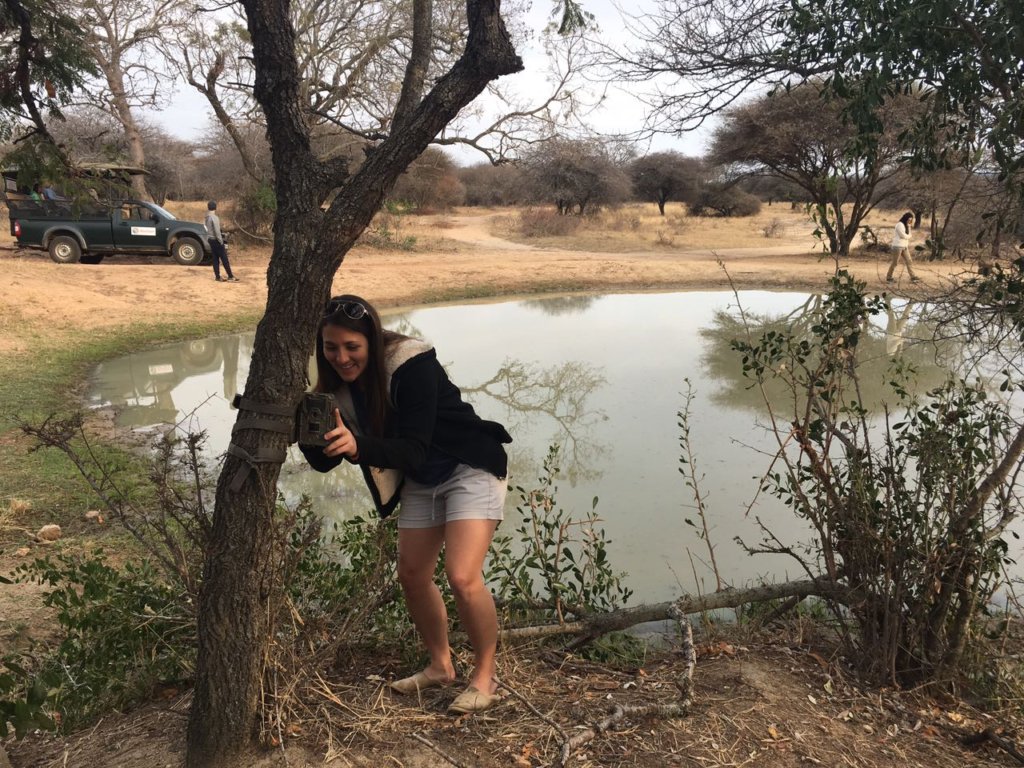
Thanks to generous donations through GlobalGiving and individuals, we have been able to purchase more camera traps and we have been able to expand our leopard survey onto 2 additional properties. By adding new properties to the leopard survey we have been able to “connect the dots” of our leopard movements and expand the reach of the survey. These properties all have different land uses which leads to different variations in human wildlife conflict threats, food availability, and habitats. Leopards are one of the most adaptable species and are present in a wide range of habitats. By seeing which areas the leopards are passing through we can begin to build corridors, or passages through different properties, which the leopards use to move through their territories.
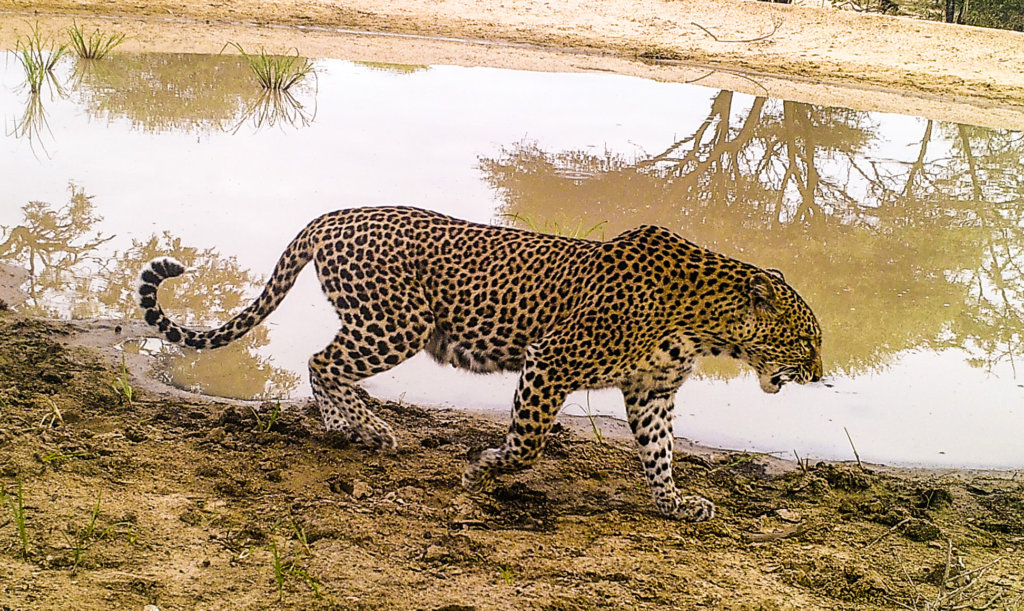
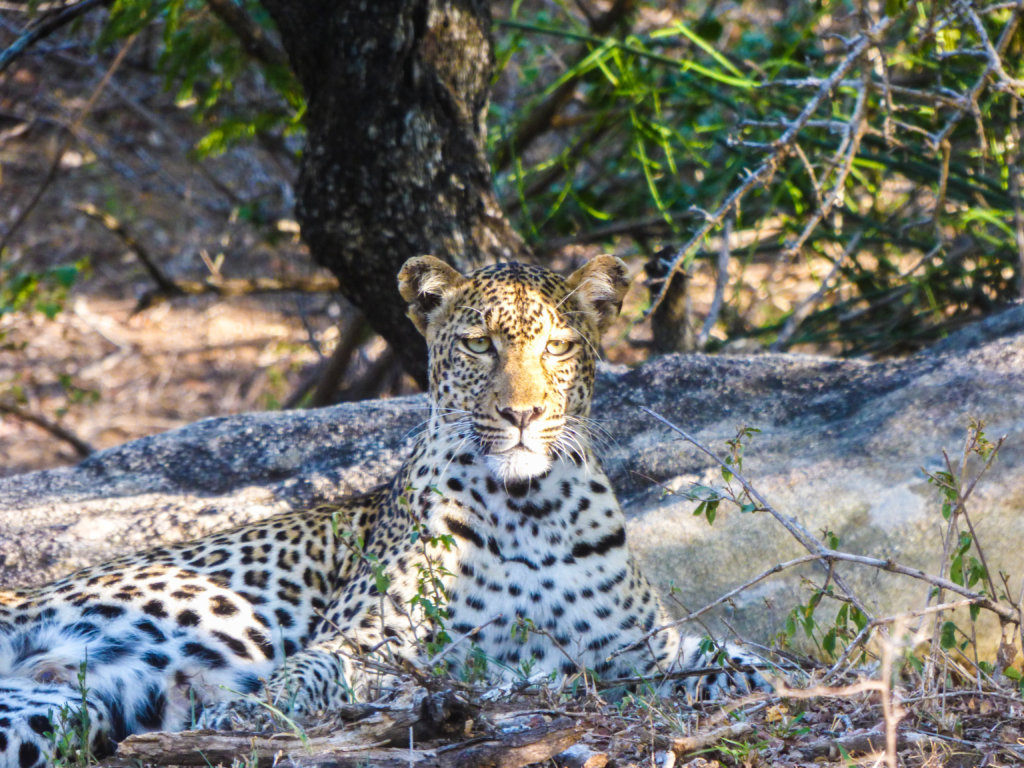
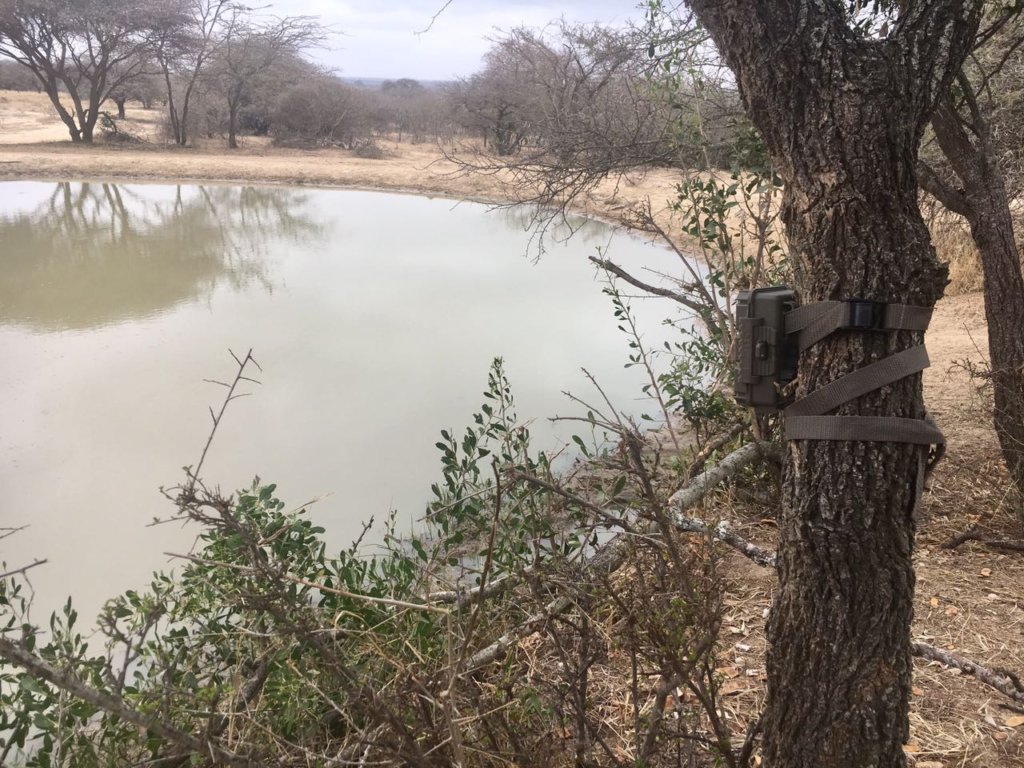
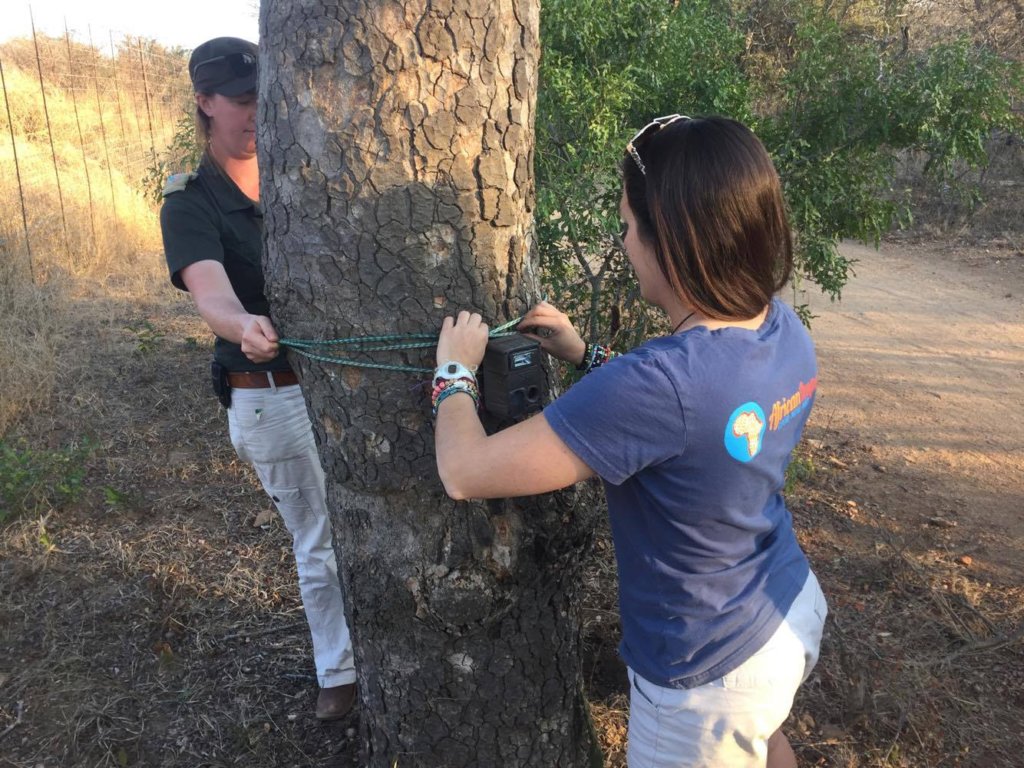
One of the most exciting new developments in the leopard project was made possible from the new camera traps donated. After the first new camera trap arrived we set it up on our own property in hopes of capturing some long awaited leopards on camera. We didn’t have to wait very long! Less than a week after we set this brand new camera up we were rewarded with not one but two leopards. We have been searching for these leopards for years now without knowing exactly which individuals were passing through our backyard. Any camera trap photos we had received in the past from our old cameras had been blurry or indistinguishable. But with the new cameras the rosettes began to appear! We were able to identify the first leopard seen as our longtime resident female Ncila Wo Lea or as we call her Long Tail.
The second leopard was a huge male which we couldn’t believe was passing through right in our backyard! At the time we couldn’t identify him because the only photos available were of the opposite flank. This is the reason why it is vital to have 2 cameras at every location in order to capture both flanks of every individual. This helps to ensure we know exactly which individuals are moving through each property and can create their territory boundaries to follow their movements.
A few weeks later we had exciting news as a male appeared again on the cameras. And this time using both additional sightings and camera trap photos we were able to identify him as the new guy in town, Moyo, or MBL5. Now we have both flanks and many more camera trap photos captured.
As we get more cameras we hope to be able to expand the survey further into other properties in order to do comparative surveys on multiple unprotected areas.
Due to the generous donations from our supporters we have been able to accomplish so much in our leopard survey project and are learning more and more every day about these elusive animals.
Project reports on GlobalGiving are posted directly to globalgiving.org by Project Leaders as they are completed, generally every 3-4 months. To protect the integrity of these documents, GlobalGiving does not alter them; therefore you may find some language or formatting issues.
If you donate to this project or have donated to this project, you can receive an email when this project posts a report. You can also subscribe for reports without donating.







.jpg)




