By Ann Leslie Riley | HAF Intern, University of Virginia Student
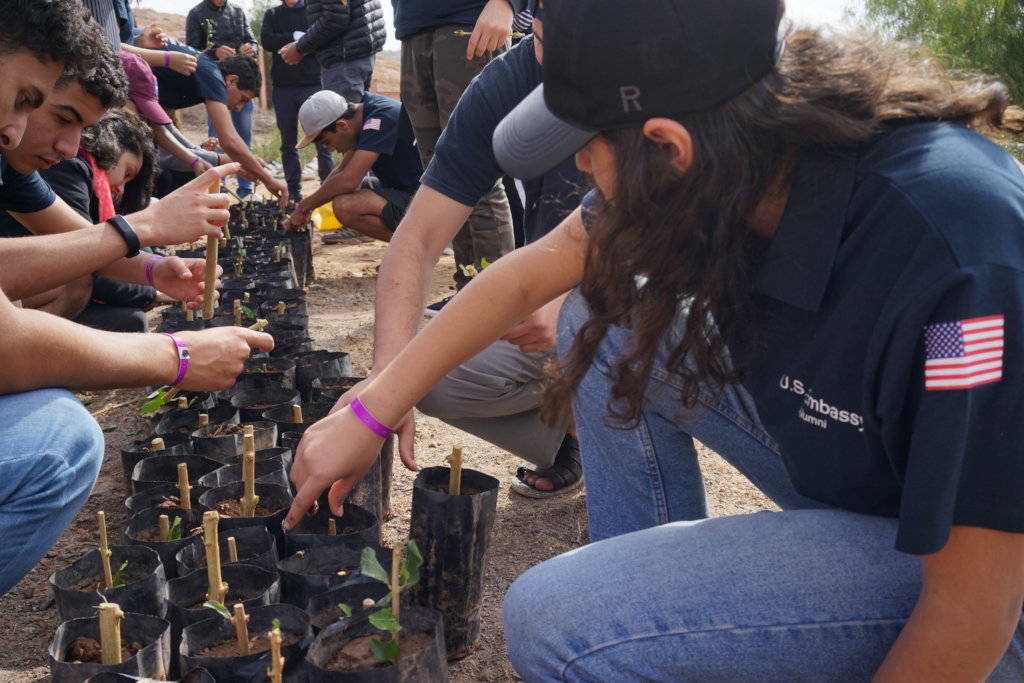
development projects in Morocco like tree-planting, building irrigation systems, and forming thriving women’s cooperatives.
But most importantly, these improvements are rooted in cross-cultural dialogue and cooperation that can only occur with a foundation of trust and respect.
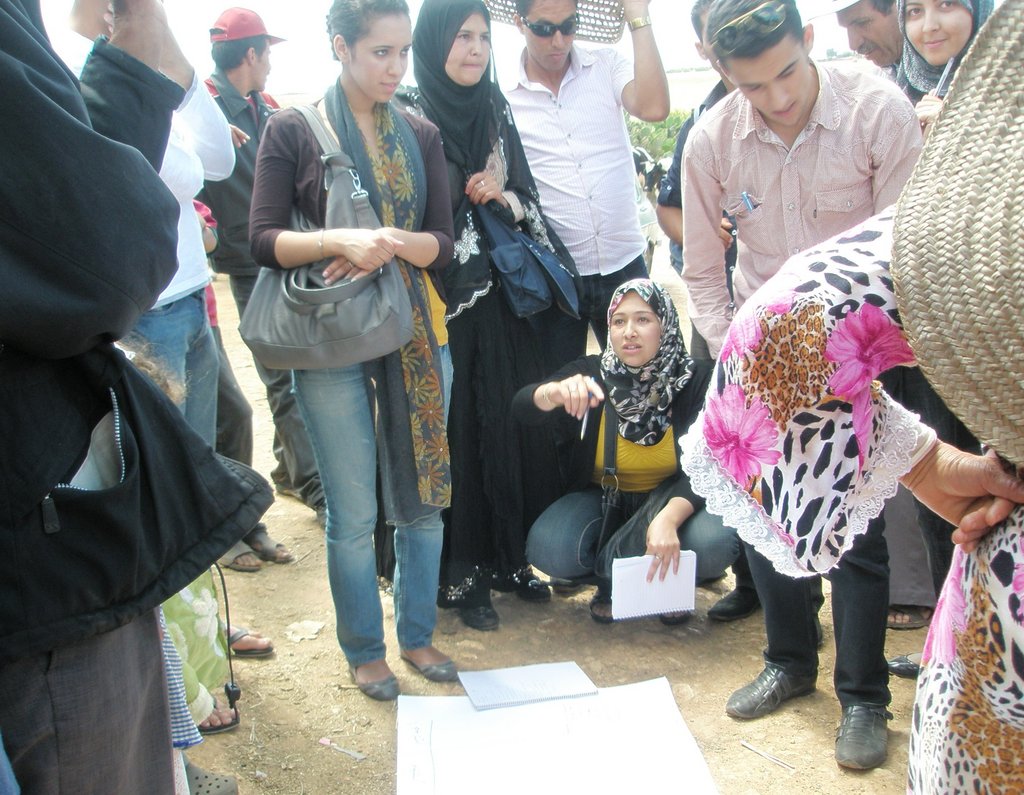
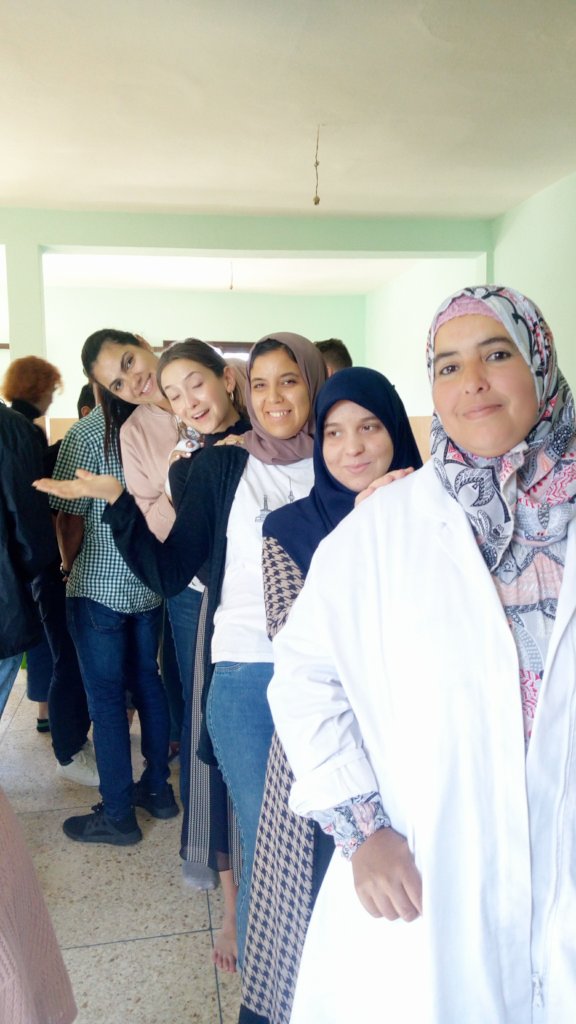
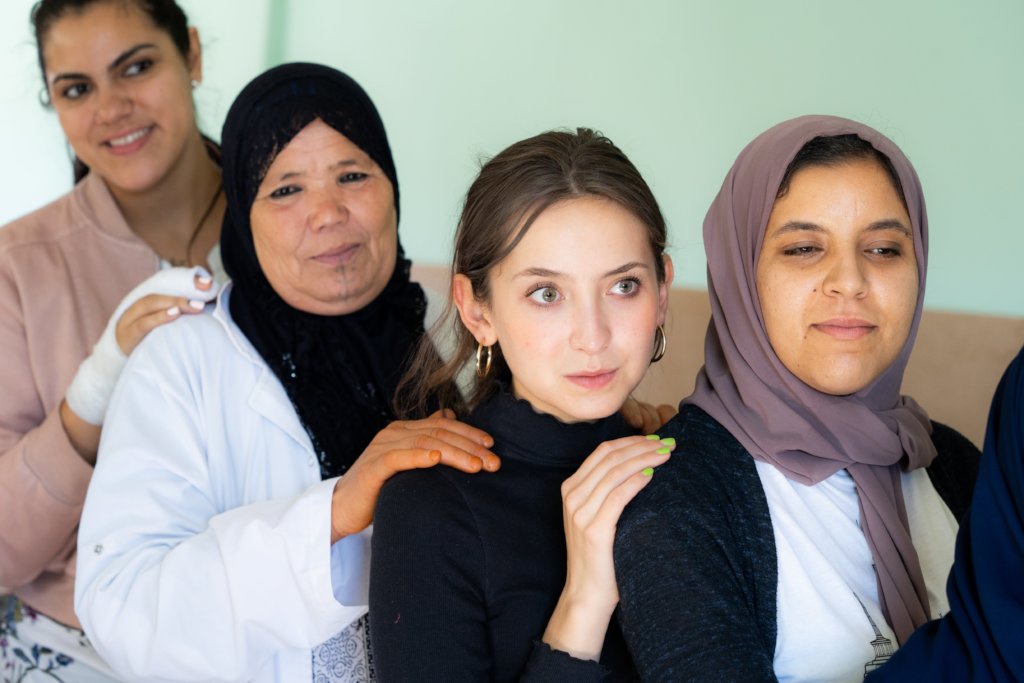
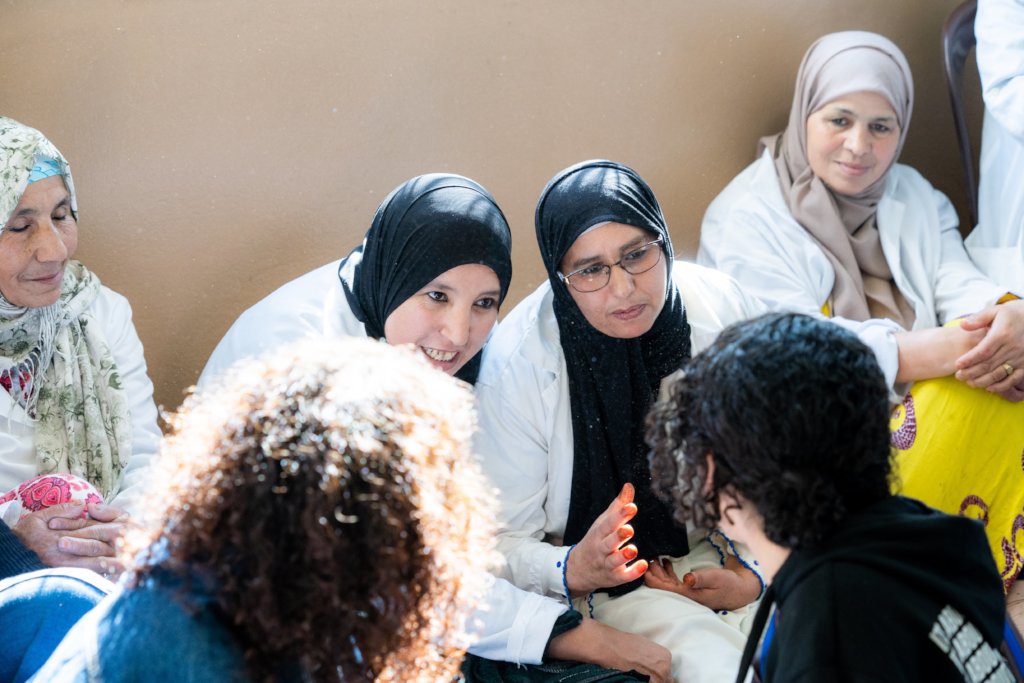
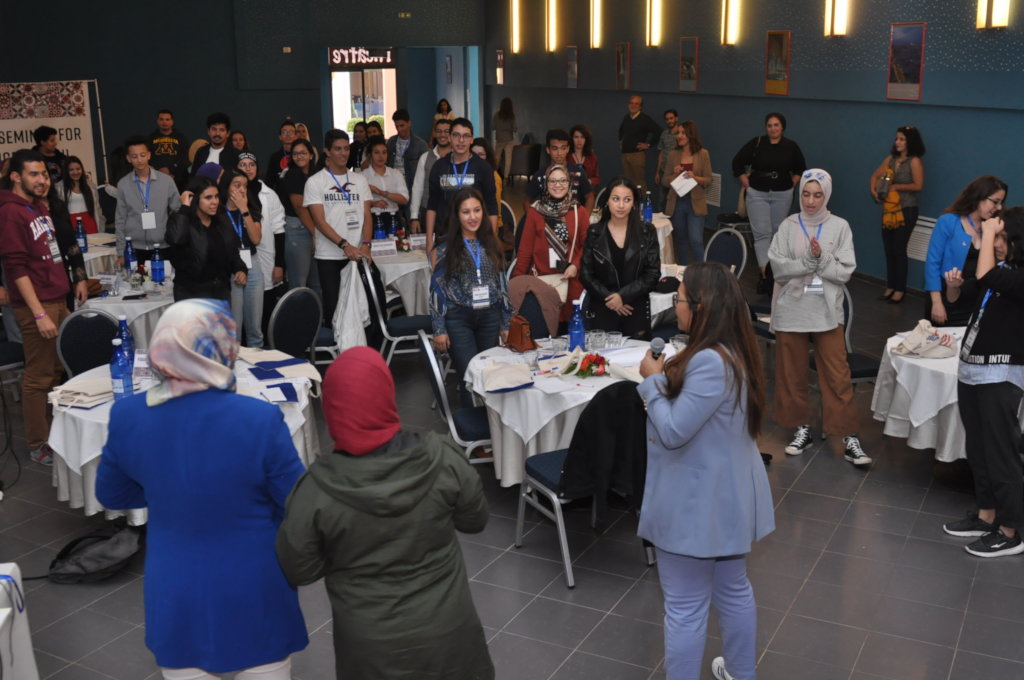
When visiting Agadir, this very foundation was something that stood out to me most when talking with girls from Ibn Zohr University.
Initially, our interactions were hesitant and reserved. Being on a college campus surrounded by new people, particularly girls my age, is a situation where I normally feel confident and sure of myself, excited to interact with those around me.
And while I was of course excited to forge meaningful connections, I was also surprised by how shy I felt.
Shyness is not a feeling I frequently confront and I was forced to ask myself: Why am I uncomfortable expressing myself in this moment? Why do I feel like a fish out of water?
While the existing language barrier was certainly a challenge, it was not the determining factor for my initial silence.
My hesitancy to discuss my opinions and experiences was not because I was unwilling to try and chip away at the wall between Darija and English, or because I was embarrassed to stumble through broken Arabic sentences I knew from learning Fossha at school.
I realized that the palpable reluctance of everyone in the room to connect with each other was because there was not yet a degree of trust where either party felt comfortable sharing such important parts of ourselves.
The respect for our different cultural, religious, and environmental backgrounds had not yet been established.
However, by the end of the two hour session, I was laughing with these girls like my sisters, sharing inside jokes, and exchanging phone numbers.
What allowed for this to culminate was just a simple hello. I learned that sometimes all it takes is starting the conversation, pushing past the uncomfortability of being vulnerable, and beginning.
If no one lays the first stone, a foundation of mutual respect cannot begin to be built.
What I remember most is a conversation with a girl named Fatima. We discussed our goals after graduation, particularly our dream jobs and how our families would fit into the future we saw for ourselves, but most crucially what values shaped these respective visions we had for our adult lives.
When understanding our personal values there was an inseparable link to religion. Growing up in the largely secular United States while also being raised Jesuit Catholic has made my worldview a syncretic blend of my country’s cultural ideals and deeper religious values.
However, while I can acknowledge that the religious aspects of my upbringing have inevitably shaped how I approach life, I cannot say that Catholicism is a driving force in my conscious moral compass today.
After sharing this with Fatima, she asked if I still go to church frequently, and I admitted to not being very religious at this point in time.
She expressed that this was “a shame” and asked “What is keeping you from Islam?” While it was my first instinct to be a bit taken aback by the bluntness of her statements, it was our honesty with each other that allowed us to explore how our faiths diverged and overlapped.
Our dialogue, while sometimes jarringly frank, was full of kindness on both sides.
As evidence of this mutual appreciation for our differences, our exchange culminated with the statement “It’s okay if we don’t agree but it’s interesting to hear your perspective.”
If I had allowed my initial anxiety to hold me back, I would not have had the conversation with Fatima about religion that I did.
While these interactions with Ibn Zohr students are not nearly enough towards implementing sustainable development projects that realize concepts like empowerment and its tangible intersection with community progress, I walked away from this experience more enriched, more open-minded, and more understanding of how people different from me approach their religious ideals. While this was only one, small conversation, it exemplified to me the importance of interfaith cooperation and spiritual dialogue.
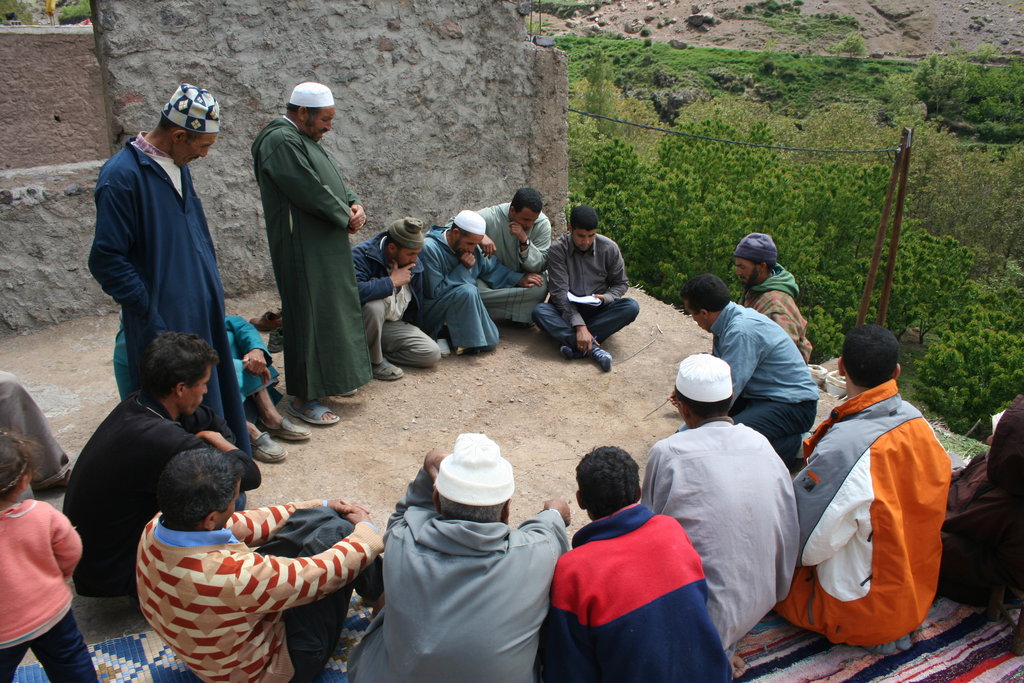
Morocco’s religious diversity and the links between communities of different faiths is not a challenge to overcome but a strength to harness.
Importantly, collaboration between Muslim and Jewish populations is a driving force in sustainable agricultural and industrial development initiatives.
For example, religious cooperation is a key part of critically understanding why placing a tree nursery on land nearby to the tomb of a sacred Hebrew saint economically benefited farming families in Akrich and further allowed for empowerment workshops and women's cooperatives.
HAF’s sustainable development projects are part of a cycle where religion is irrevocably intertwined and where conversations of faith must be considered if the “participatory” aspect of participatory development is to continue to be realized.
Project reports on GlobalGiving are posted directly to globalgiving.org by Project Leaders as they are completed, generally every 3-4 months. To protect the integrity of these documents, GlobalGiving does not alter them; therefore you may find some language or formatting issues.
If you donate to this project or have donated to this project, you can receive an email when this project posts a report. You can also subscribe for reports without donating.



Support this important cause by creating a personalized fundraising page.
Start a Fundraiser