Project Report
| Nov 8, 2020
Strengthening the connections via virtual spaces
By Srishti Jayana | Communication and Documentation Officer
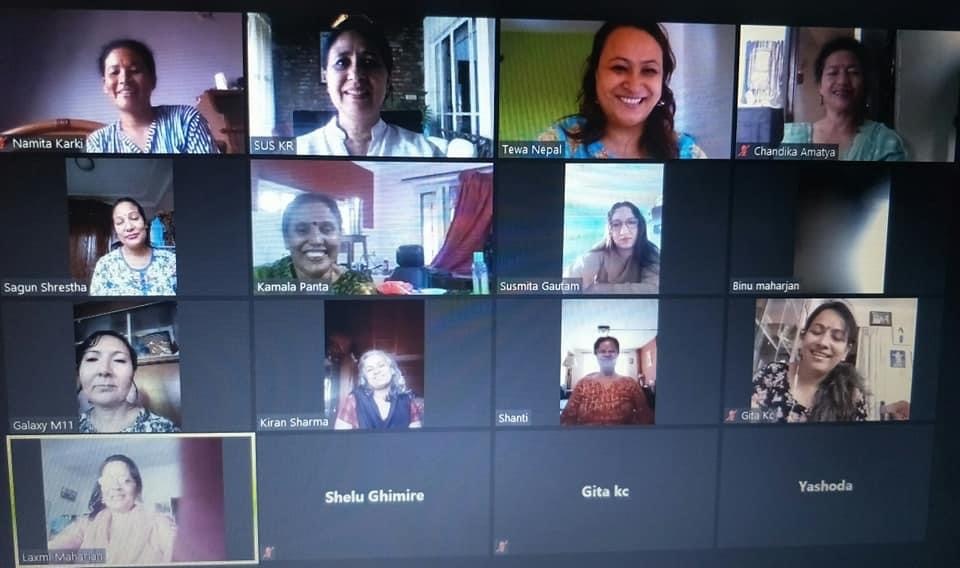
![Ongoing skill sharing session in zoom]()
Ongoing skill sharing session in zoom
With the ongoing pandemic and necessary precautions that are mandatory to take, personal as well as professional lives of ours have been affected. One of our core programs, the Volunteers program had also been impacted. Since the coronavirus cases started increasing from March 2020 to date, the programs to run in-person have been near to impossible. During the lockdown, the program officer was in close communication with as many volunteers as possible through various social media chatting platforms. To date, Tewa has more than 900 trained volunteers and 30% of them are still actively engaged in Tewa. Volunteers of Tewa used to participate in different local fundraising events, discussion programs focused on the volunteers, and refreshers programs. During the lockdown, Tewa came up with the idea to start weekly sessions via zoom. The weekly session is focused on all the volunteers. This session was focused solely on volunteers and was about skill sharing. Any interested volunteer with any skill, can lead the session and share about their skill with other interested volunteers. The session was conducted every Sunday via Zoom. Through this skill-sharing session, 117 volunteers have learned different skills. Like, learning how to make chayote pickle, making compost and liquid fertilizer, waste management skill, and making handbags. Also, our volunteers learned about basic skills in poem writing and making liquid hand wash. Apart from this training, Tewa also focused on the well-being of the volunteers. During ongoing pandemic and lockdown, the mental health of people has been affected due to an increase in stress and only staying indoors. So, we had also organized Psycho counseling and well-being session for our volunteers. The facilitators for all the sessions were our volunteers. These sessions had helped our volunteers interact with each other during this chaotic time, distracting themselves and giving them space to share, learn, and be carefree.
Jul 12, 2020
Strategizing local fundraising approaches
By Srishti Jayana | Communication and Documentation Officer
The starting months of the year 2020 proved to be a crisis not only to one country but the entire world. The horrid impact of Corona Virus spread across the world and the terror hit Nepal in March soon after it got out of control in India. The nature of the virus confused everyone and left people in Nepal including Tewa unable to continue normalcy of activities as planned within the organization.
Due to Covid-19 and official lockdown for almost 3 months starting from March 23, the day-to-day lives of the people are impacted and affected. The professional working hours and spaces are also affected. Tewa adapted to work remotely, which Tewa had never initiated before. Our programs were also adversely affected. The pandemic had equally affected our local fundraising. During the crisis and economic upheavals due to lockdown, it was difficult for us to raise funds locally and approach our donors, let be the new potential donors. Tewa has planned and strategize to change the fundraising model. The philanthropy team came up with Peer to Peer Fundraising. The concept is to approach 10 or more potential donors who will be interested in donating a small amount of donation (USD 5). We will also request them to look for other potential donors in their network who will agree to contribute to us even in a smaller portion. This concept is to create a chain of interested donors. By creating a pool of donors who will contribute a smaller amount will lead to collecting a large fund.
Along with this, we have also planned to stay in touch with our regular donors through a virtual space. As most of the organizations are organizing discussion meetings through a virtual coffee meet-up, we have decided to use the virtual space for a coffee and lunch meet-up with our donors. This would support us in approaching our donors in a more personal way as well as give a sense of priority at this critical hour. These new approaches and strategies are developed and adapted by Tewa to contribute to its fundraising event which would continue to promote local community philanthropy in the people. These strategies will have its own set of pluses and drawbacks. But with minimum donation criteria, we have the hope that we will achieve our goal.
Mar 16, 2020
Innovative ideas to raise funds
By Srishti Jayana | Communication and Documentation Officer
![]()
Tewa is approaching its Silver Jubilee Year in 2020 reaching a major milestone. For the past 25 years, we have been promoting community philanthropy. Community philanthropy or the act of giving is mostly linked to culture and with a religious purpose. But Tewa has tried its best to shift this practice and encouraged people to donate for women and support them. Tewa as a women's fund in Nepal has been trying its best to support women from a different intersection.
As we take a new leap and are stepping in our silver year, we have decided to raise funds on a large scale through our local and international allies. We decided to publish the 4th Edition of Priyajanko Samjhana ra Kadarma (In memory and honor of the beloved ones). The first edition of the similar publication was done in 2000 A.D and named Mahila Ko Samjhana ra Kadarma (In memory and honor of the women) We approach potential donors who are willing to honor their beloved ones and dedicate a page for them. A short message and a picture of the honoree are requested to be published in the book. Each page dedicated to the loved one/s is charged for around 500$. We approached more than 40 individuals who might be interested in this publication. Out of which 18 individuals showed interests and honored 20 individuals who are/ were close to them. Donors honored their parents, children, close friends, grandparents, siblings who were close to them. In total, we raised around 10000 dollars from this publication. 5000 $ will be donated to one of the women's organizations in Nepal while the rest of the amount will be added up to our local fundraising amount.
This is a simple example of how the local fundraising is taking place and people are trusting. The shift had changed in the aspect of giving as well as strengthening the voices of women from the grassroots level. Donations like these, no matter small or large, help us make an impact on women's lives by supporting their agenda. So far, we have supported more than 500 women's organizations through 715 grants.