By Yael Or | Philippines Country Director
During months February- June 2015, IsraAID has continued its work with CALCOA farmers' association, in Cabintan, Ormoc, Leyte.
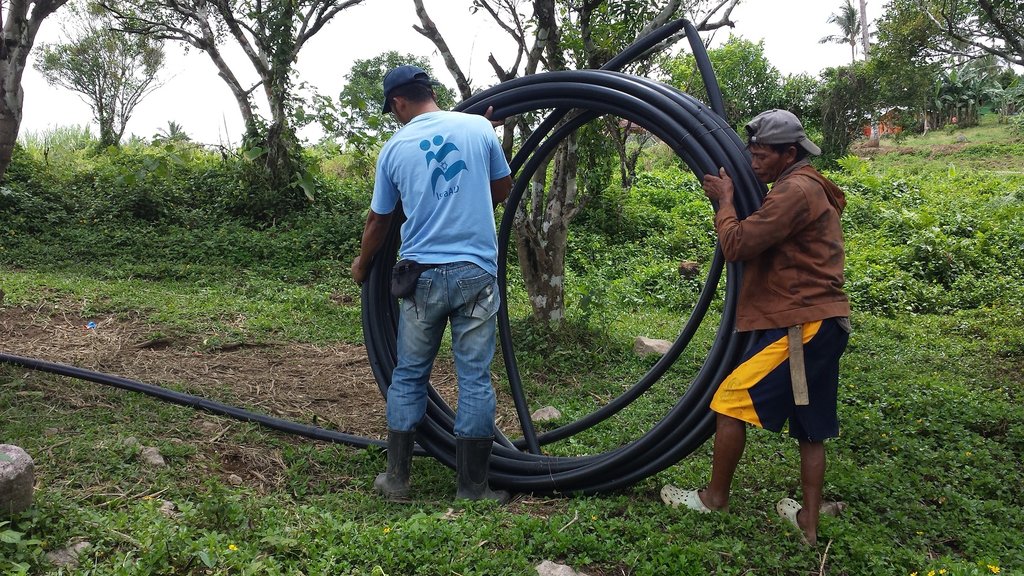
After few weeks of hard work exposing, reinstalling and aligning the water piping system, which was not in use beforehand, and which resulted with the first significant water flow on the project's site, most of CALCOA members took some time to attend their individual fields. This was, in fact, the first good growing season since typhoon “Haiyan” hit the region, as last year, the farmers were busy trying to recover from the typhoon's disastrous effects, and could not properly attend their fields, thus losing their livelihoods.
During this time, in the month of February, IsraAID's agronomist was mainly preoccupied with checking the local market for irrigation systems and protective structures. Finally, he was able to locate a local supplier and to order irrigation equipment from Netaphils company, located in Davao. It is important for IsraAID to work with local suppliers when possible, in order to promise that the association will have access to the same materials/goods, if needed, in the future. He also turned to Top Hamamot company in Israel and started a process of ordering protective structures for the project, after realizing it's not possible, unfortunately to find local suppliers.
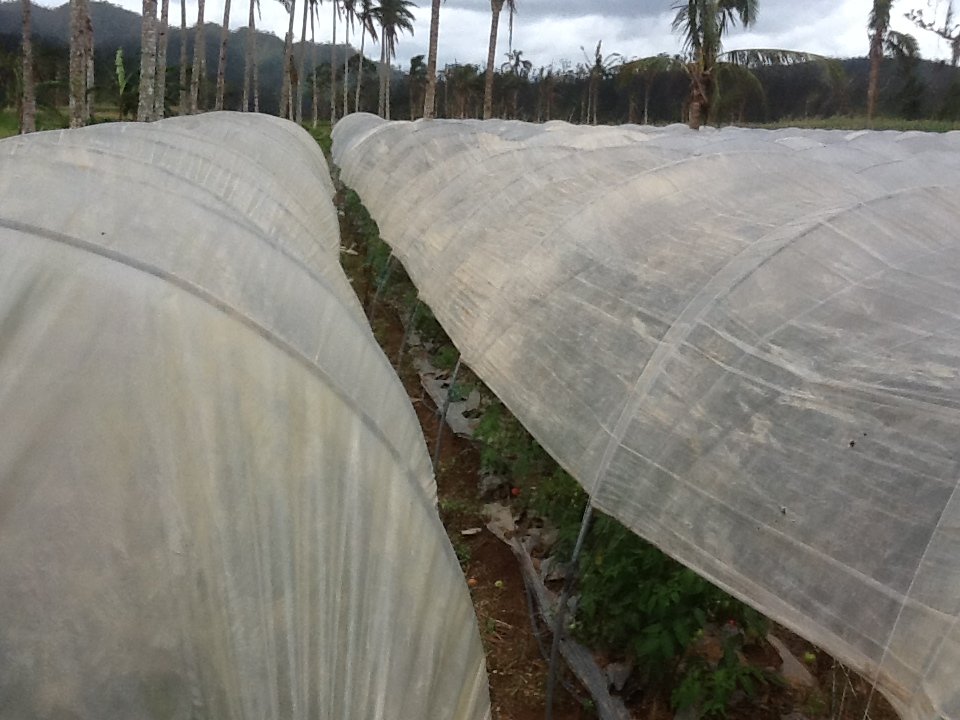
IsraAID, will donate a total of 19 protective structures which will be used by CALCOA association farmers to grow their crops in ultimate conditions and to achieve increased quantity and quality of yields.
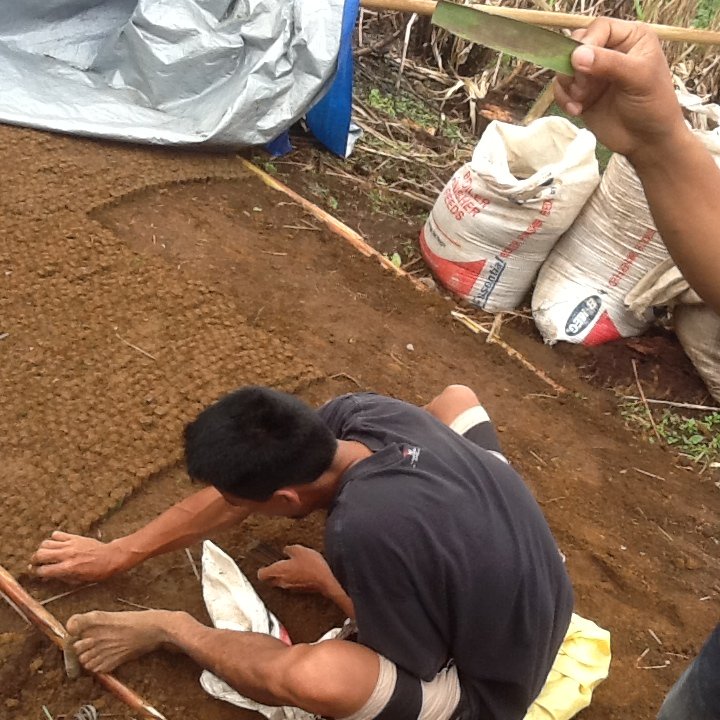
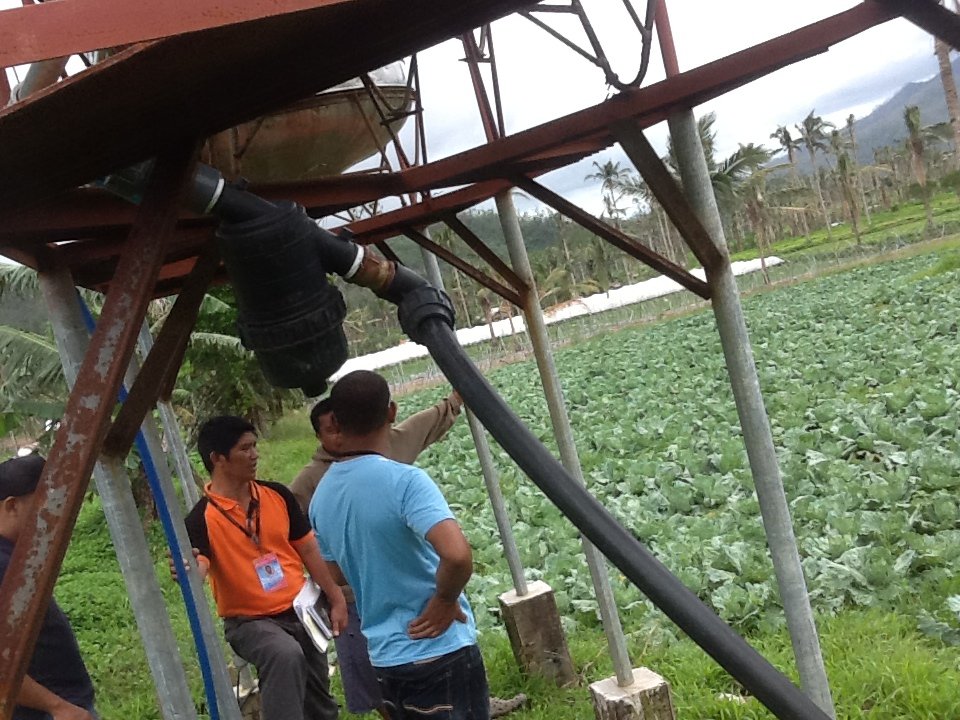
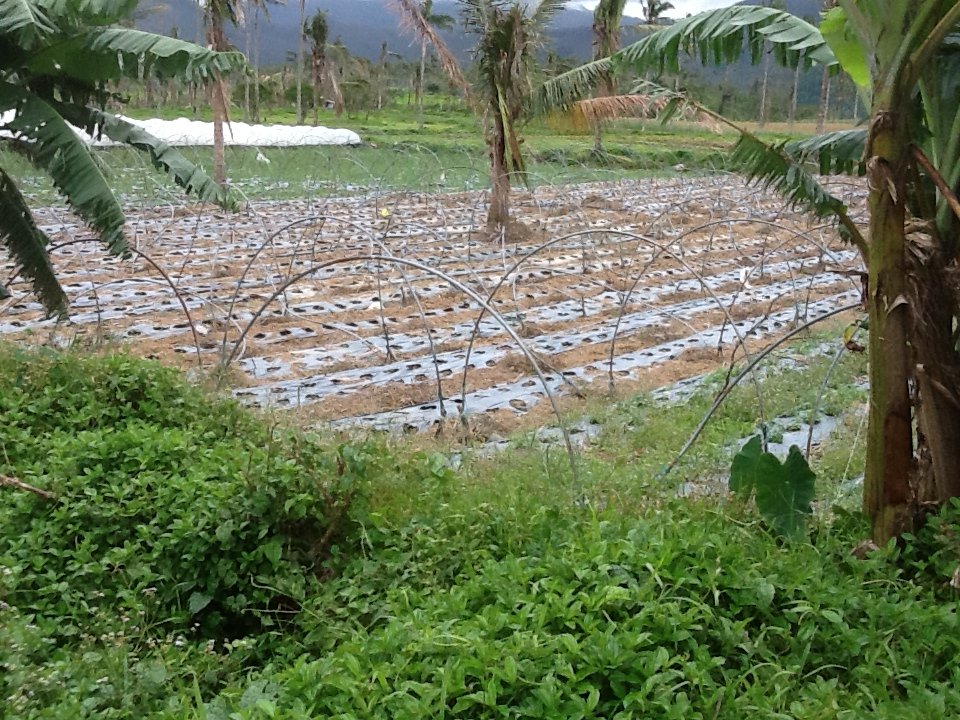
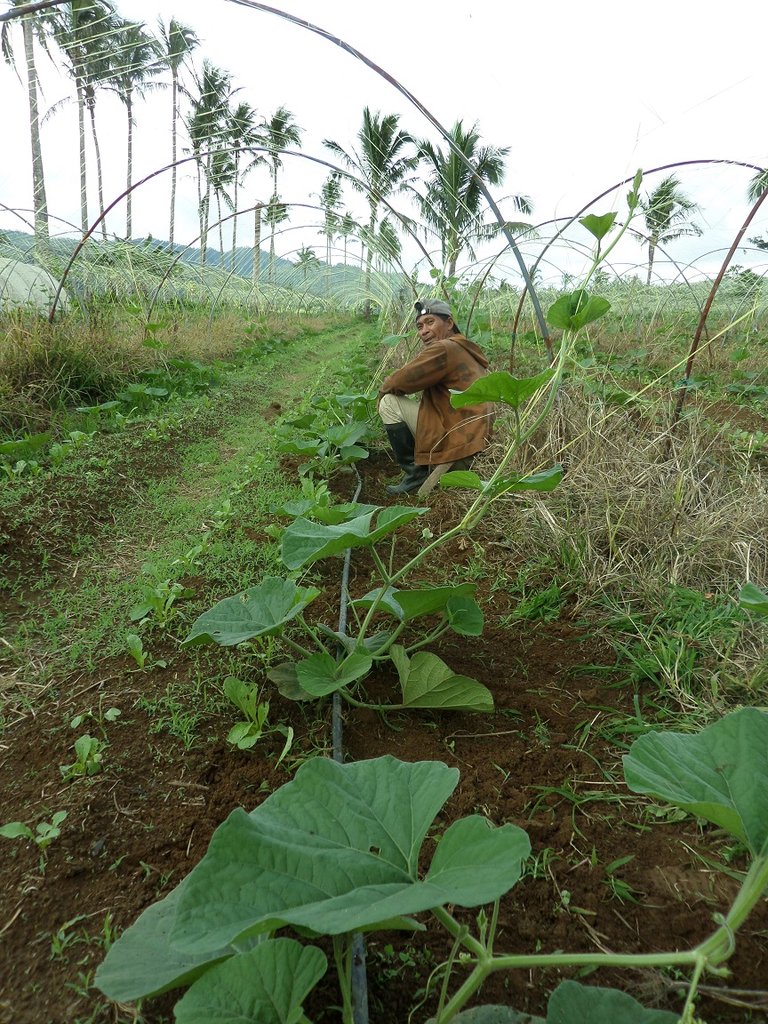
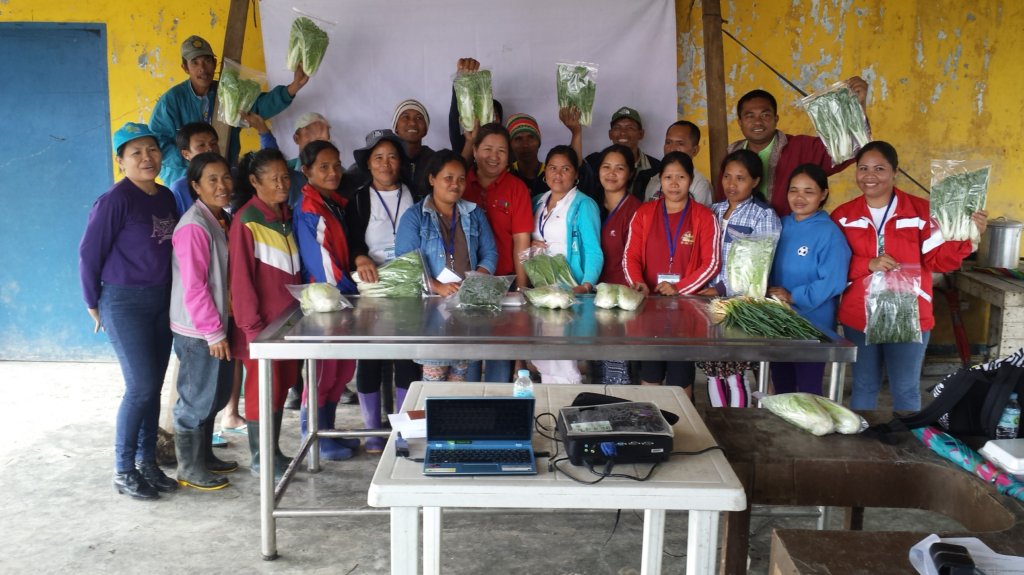
By the end of the month, the Irrigation equipment arrived at Cabintan, and CALCOA members joined forces to install the new irrigation systems and an old irrigation system, that was left abandoned on site. IsraAID's team trained 7-10 farmers on irrigation system installation and operation. This training included experimental stages in order to demonstrate the effectiveness of the irrigation system on the crops, in comparison to non-irrigated crops.
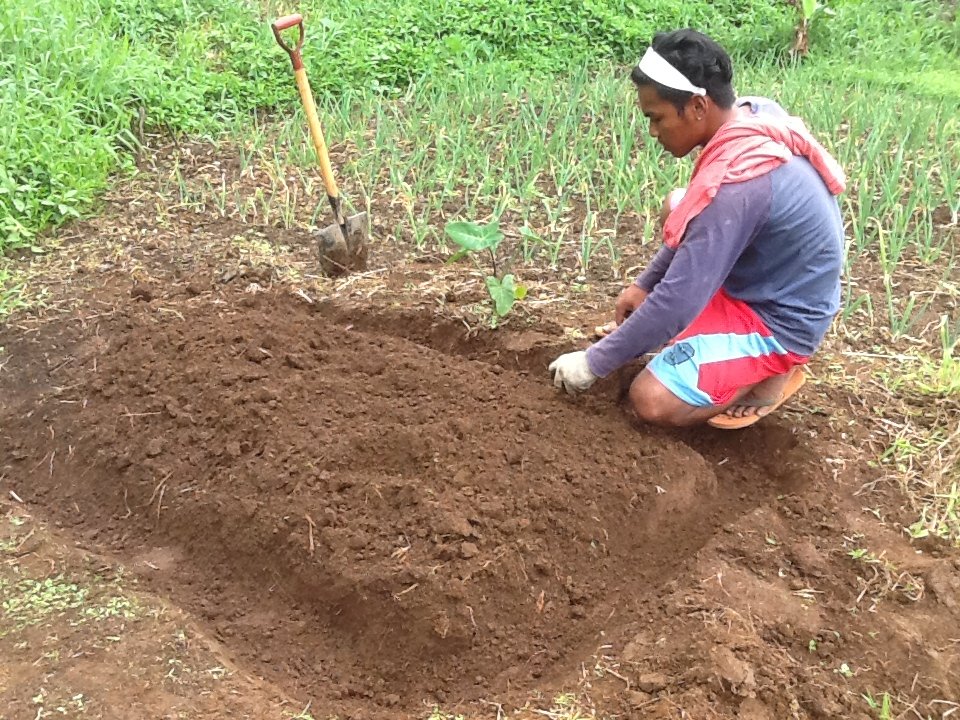
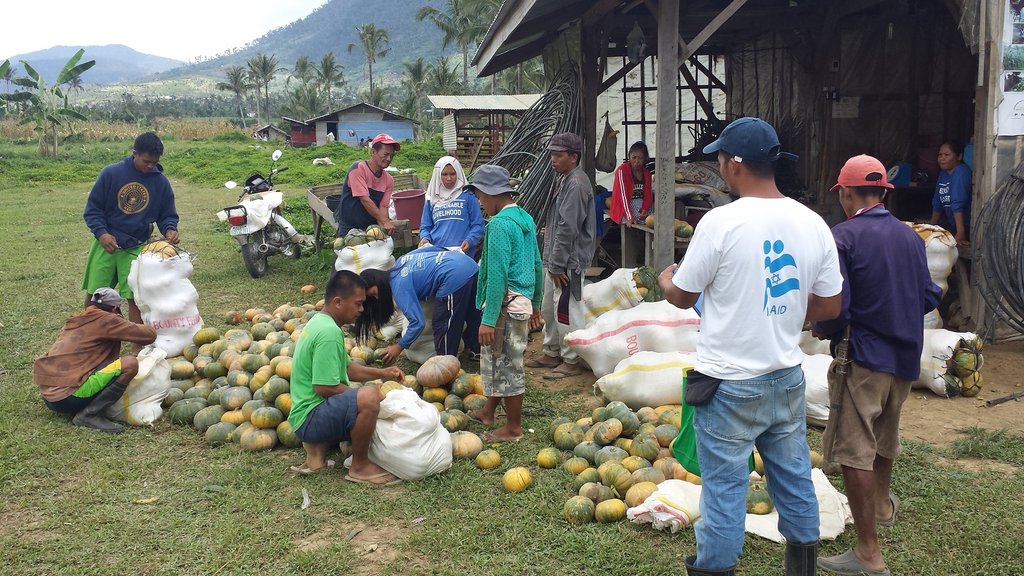
After over one month leave, and upon his return to Cabintan, IsraAID's agronomist met with CALCOA members in the field. The field was planted with pumpkin and melons. There were visible growth differences between the unirrigated crops, crops irrigated with the old system and crops irrigated with the new system, donated by IsraAID. The farmers were content to notice the differences and agreed that irrigation does have additive effect on the crop. For example: The yield of beans that were irrigated already exceeded five times the expected yield with more to come...
Since returning to the field in mid-April, IsraAID's team has been training the farmers on the agricultural aspects of operating and using the irrigation system, a technology which is new to the farmers of Cabintan.
During this month, IsraAID's team was able to finalize the protective structures order from Top Hamamot Company, in Israel, and it is expected to arrive during July 2015.
During those months, and in parallel to the field work, several visits to the farmer’s individual fields were made. With each farmer an interview was conducted regarding his practice and its economic implications. (Data is still being processed).
In May, IsraAID donated a mist blower to CALCOA farmers' association. It has been proven that application through wind assisted machinery has greater impact of the applied chemical whether it is fungicide, insecticide or foliar fertilizer. This technology was introduced to Cabintan farmers for the first time. Before the mist blower, the farmer’s means of spraying was exclusively with knapsack sprayers. With the great assistance of Stihl team (the local suppliers of the device) in Ormoc and Eugene, the technician coming from Manila, CALCOA members got extensive training on operating the new mist blower. The farmers learned the basic assembly of the device, its basic maintenance and also practiced its use. In addition to the technical training, IsraAID trained the farmers on the proper use of the device, in the agricultural aspect.
Given that the current dry season in Leyte, has been extremely dry, IsraAID's team together with the farmers, realized this was an important opportunity to examine and measure the water flow at the water source, since it allows getting a realistic picture of the water supply in extremely dry conditions. It appears that the existing water source will be sufficient for the farmers to irrigate the crops in the protective structures donated by IsraAID, even in the dry season. Measuring the water flow, and witnessing the relatively low water flow, demonstrated and emphasized the advantage drip irrigation has over other irrigation methods.
With that being said, IsraAID realizes that any future plans for growth and expansion in scale of cultivated area, will require securing additional water sources.
During June 2015, IsraAID's team and the farmers focused on utilizing existing irrigation systems, donated to CALCOA in the past, by different agencies, and which were not utilized until now, in order to connect as much as CALCOA communal plots to the water system.
Even though the farmers are generally impressed by the yields achieved under drip irrigation, it takes time to incorporate these new agricultural practices to their traditional practices. This requires a long and patient process of trust building, sharing and learning.
As preparation to the upcoming arrival of the protective structures, IsraAID had a meeting with 30 active members of CALCOA association, in order to recruit more farmers to participate in the preparation work needed in the plots, prior to the arrival of the structures. The meeting included presentation of the benefits and the challenges of growing in protective structures followed by Q&A session. The meeting also included an open discussion about the terms of use of the protective structures and the contract between the farmers and the association. The aim of this discussion was that the farmers will jointly decide on the best agreement that will allow the farmers to participate and benefit from using the structures, while still securing the association's income that will allow the association to accumulate capital for further development and possible expansion of the project.
Furthermore, IsraAID offered to provide in depth training to a small group of five community members, committed to the project, in order to transfer the knowledge to local hands, thus sustain the project for the long term, in terms of the farmers' ability to supervise crop management themselves and provide professional guidance to the rest of the farmers.
During months February – June, IsraAID developed valuable partnership with Energy Development Corporation (EDC). EDC will invest in locally produced protective structures according to IsraAID's offered design, which is largely based on the design of the structures ordered from Israel. This will allow experimenting and examining the quality of these locally produced structures, in the hope to secure the possibility of future expansion of the project, using locally supplied materials.
Since bringing more structures to Cabintan means increased demand of water, IsraAID is also collaborating with EDC in a joint plan to build a dam at the water source.
Moreover, in the past, EDC has invested in irrigation equipment in order to assist farmers to irrigate the plots nearby Barangay Aguiting, Ormoc, Leyte. As part of this collaboration, between IsraAID and EDC, IsraAID has agreed to instruct the farmers in Barangay Aguiting on installation and use of the irrigation system that has been left untouched on site since it was purchased by EDC and to generally provide professional guidance when needed.
IsraAID has also established partnership with the VSU University, in Baybay, Leyte. IsraAID has invited a research group from VSU led by Dr. Zenaida Gonzaga to conduct an experiment in Cabintan. The research is focused on improving yields by using irrigation and structures. IsraAID's team was also invited to visit the experiment plots at VSU in Baybay city. During this visit, IsraAID approached the university’s soil analysis laboratory, in order to conduct soil examinations, once the crops will be harvested, in order to get the most accurate state of the nutrients level in the soil.
Project reports on GlobalGiving are posted directly to globalgiving.org by Project Leaders as they are completed, generally every 3-4 months. To protect the integrity of these documents, GlobalGiving does not alter them; therefore you may find some language or formatting issues.
If you donate to this project or have donated to this project, you can receive an email when this project posts a report. You can also subscribe for reports without donating.