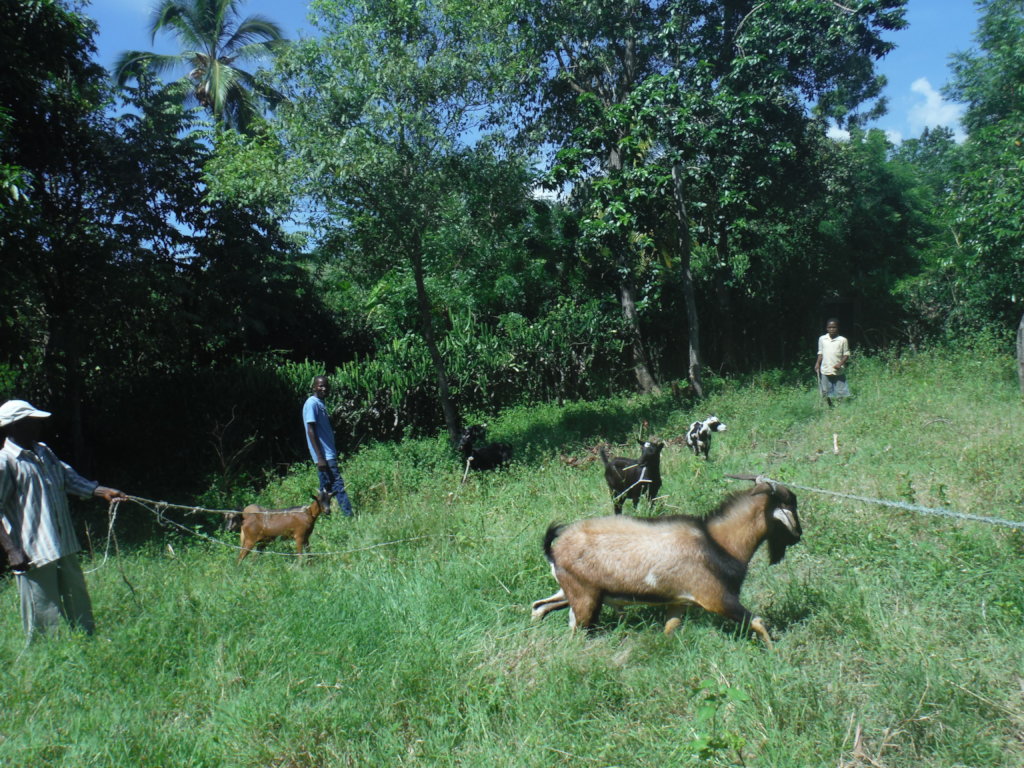
By Michaelle M. | Project Assistant
This year, Lambi Fund of Haiti continues to monitor and assist a total of 3 Goat Breeding projects from the previous year. Among them, one (1) is in the Artibonite Department and the other 2 are in the South Department of Haiti. The organizations currently leading these projects are:
• Rivière Blanch Peasant Development Organization (ODEPERIB)/Gwomon Artibonite;
• Groupe de femme active pour révalorisation Manich (GFARM)/Kavayon Sud;
• Association des Gens pour l developpement de Clonard (AGDEC)/Kavayon Sud
ODEPERIB
The ODEPERIB organization had a total of 15 goats that were pregnant and collectively gave birth to 21 kids, as several carried multiple offspring. Of the kids born, there were 8 male and 13 female kids. Unfortunately, there were complications affecting three mothers, resulting in abortions and a cumulative loss of five kids (3 male and 2 female kids).
The abortions occurred mainly because some female goats sustained repeated blows to the abdomen from other goats’ horns while lactating. In response, members of the Organization have taken all necessary measures to reduce the risk of abortions within the project.
Despite these losses, the overall kidding season resulted in a positive net increase in the herd. The Organization, along with the veterinary technician, continues to closely monitor the health of the mothers and the surviving kids.
Considering the challenging conditions currently faced by Haitian farmers, including drought and limited food availability, the members consider the results favorable. According to the Organization, the goats are developing very well. All beneficiaries have followed the recommendations of the project’s technical team, particularly regarding adequate nutrition and water supply, which are essential for healthy goat development. As a result, the goats remain in good health and condition.
Both the members of the Organization and the Technical Team have expressed satisfaction with the outcomes and overall performance of this breeding project.
At this time, goats have not yet been distributed to new beneficiaries, as the kids are not strong enough to be released. However, all necessary preparations have been made to begin distribution during the first week of February 2025. The Organization has already identified the new beneficiaries who will receive the goats. A total of 16 female goats will be sold to meet the needs of 16 new members.
GFARM
As of December 2025, the GFARM organization progress is as followed. From the original starting point of 44 goats, the GFARM Organization currently has a total of 40 offspring, consisting of 19 females and 21 males. Since the inception of the organization, GFARM members have discussed, decided, and mutually agreed to return the first litter of kids to the Committee so that additional members can benefit from owning goats under the same agreed-upon terms.
These first-litter kids were successfully weaned and distributed during the months of June, July, and August. Subsequently, on December 26–27, 2025, the Committee distributed an additional 11 kids to 11 new beneficiaries.
Overall, the organization has added a total of 40 new beneficiaries. As a result, the herd has nearly doubled in size, increasing from 40 to 84 goats.
The goats are developing very well and have not experienced any health complications. Based on their growth and overall condition, the Organization continues to thrive in its goat breeding activities.
The provisions implemented by the Technical Team and the Organization to care for, protect, and nurture the goats have proven highly effective. In addition, the organization has access to medical treatments and provides preventative veterinary care, which has contributed significantly to the success of the project.
AGDEC
The AGDEC goat breeding project has now been running for several months. Here are the key results and developments observed during this period.
In September 2025, an additional 10 females gave birth to 12 kids (5 females and 7 males). Unfortunately, all of these kids died during Cyclone Melissa. As a result, the affected beneficiaries were required to keep the female goats until their next kidding, so that they may retain ownership through the next litter.
The organization distributed 48 kids to 48 new members. In addition, the Project Committee retained 4 male goats to replace 4 older males that had become aggressive and had reduced reproductive capacity.
Under normal circumstances, more goats would have been distributed during this period. However, due to the losses caused by Hurricane Melissa, the number of goats distributed remained unchanged.
Overall, the breeding process is progressing well, with no major challenges apart from the losses caused by Hurricane Melissa. Project members continue to take good care of the goats, which contributes significantly to their good health and condition.
Despite the hurricane, the herd has increased. Currently, the project supports a total of 103 beneficiaries (55 at the start of the project and 48 added in the subsequent reproduction cycles). As the goats continue to mature and reproduce, we remain optimistic that project performance and impact will increase in the upcoming year.
Project reports on GlobalGiving are posted directly to globalgiving.org by Project Leaders as they are completed, generally every 3-4 months. To protect the integrity of these documents, GlobalGiving does not alter them; therefore you may find some language or formatting issues.
If you donate to this project or have donated to this project, you can receive an email when this project posts a report. You can also subscribe for reports without donating.



Support this important cause by creating a personalized fundraising page.
Start a Fundraiser





