By Dr. Corinne Taylor-Smith | Project Leader
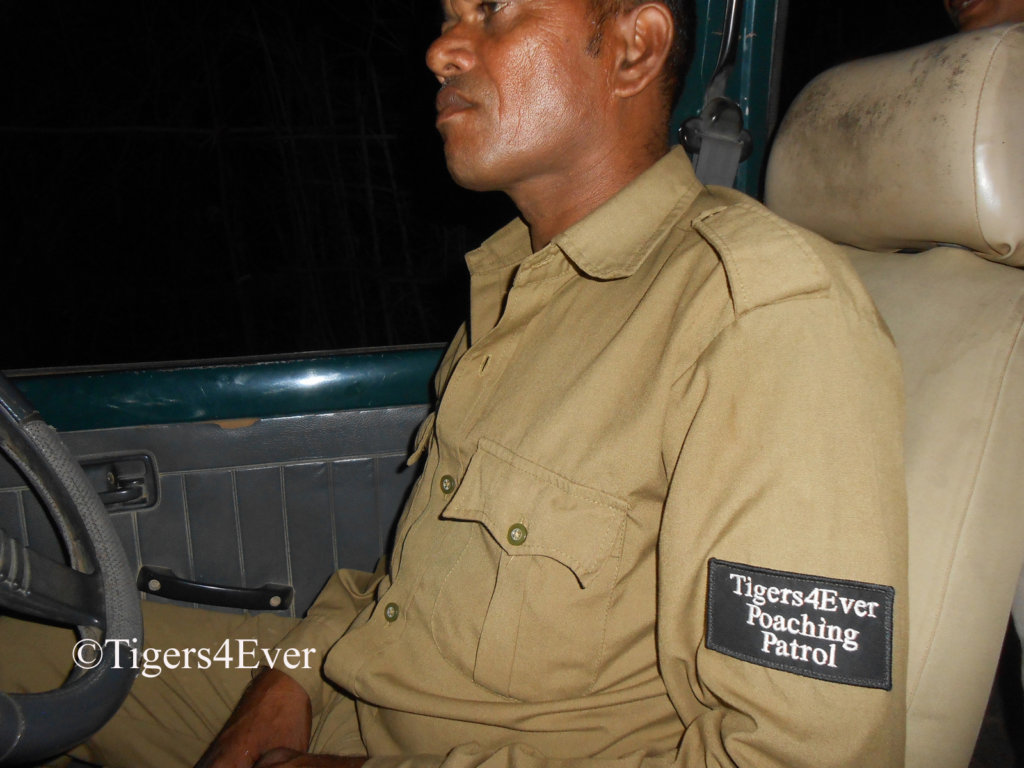
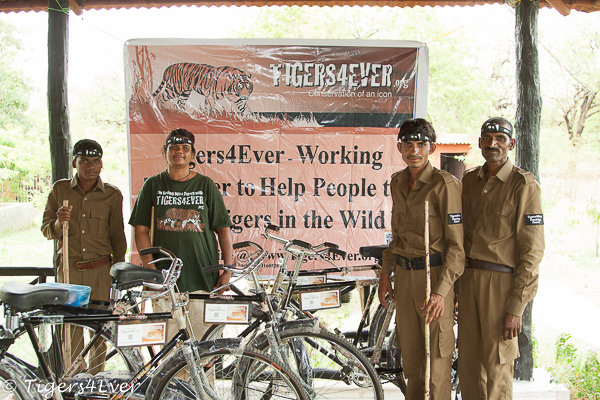
After years of late monsoon rains, it seems strange to write about thunderstorms in the middle of the hot, dry drought season followed by a monsoon season which started in mid-June! There have been strange weather patterns throughout 2025, and they have presented some unusual challenges for our anti-poaching patrollers as a result. Since our last project report your continued support has been more vital than ever as our patrollers have adapted to unseasonal storms and early flooding. Your generosity ensured that we were able to maintain our anti-poaching patrols at full strength—which has been crucial at a time when both human-wildlife and tiger-tiger conflicts are at unprecedented levels. Your kindness has enabled us to patrol at triple our base level for the three months prior to the official Monsoon Season start on 01 July when we increased to quadruple patrolling to counter the increased risks. We truly couldn’t have done it without you.
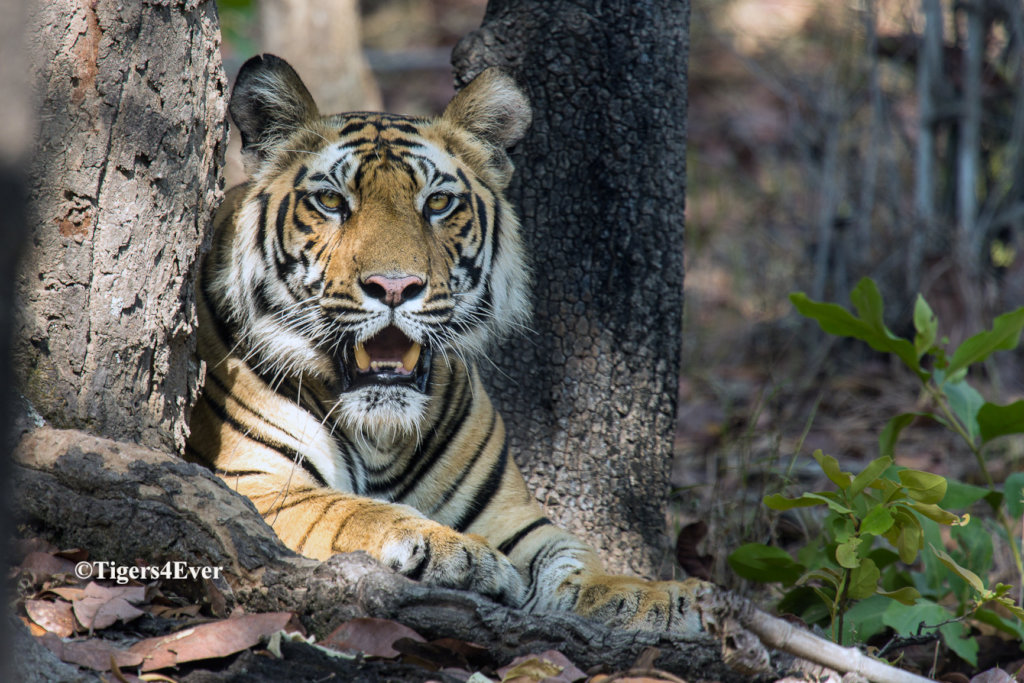
Just this morning we received news from Bandhavgarh that three notorious Tiger poachers who had been operating outside the periphery of Bandhavgarh have been arrested and confessed to their heinous crimes. Despite our best efforts to increase the area patrolled, these poachers were determined to strike whenever a young sub-adult or defeated alpha male crossed their paths in search of new territory. As the wild tiger population grows, so too does the threat from poachers— as more space is needed for the tigers to thrive. This makes your support more crucial each day, so we can continue to poach a bigger area and stop other poachers before they have chance to strike! Our anti-poaching patrols are on the front line, working tirelessly to protect these magnificent animals and their cubs around the clock. But we can’t do it without you. Your donations are vital to ensure we can continue this life-saving work, safeguarding wild tigers now and for the future generations to come.
Sand Mining and Other Encroachment
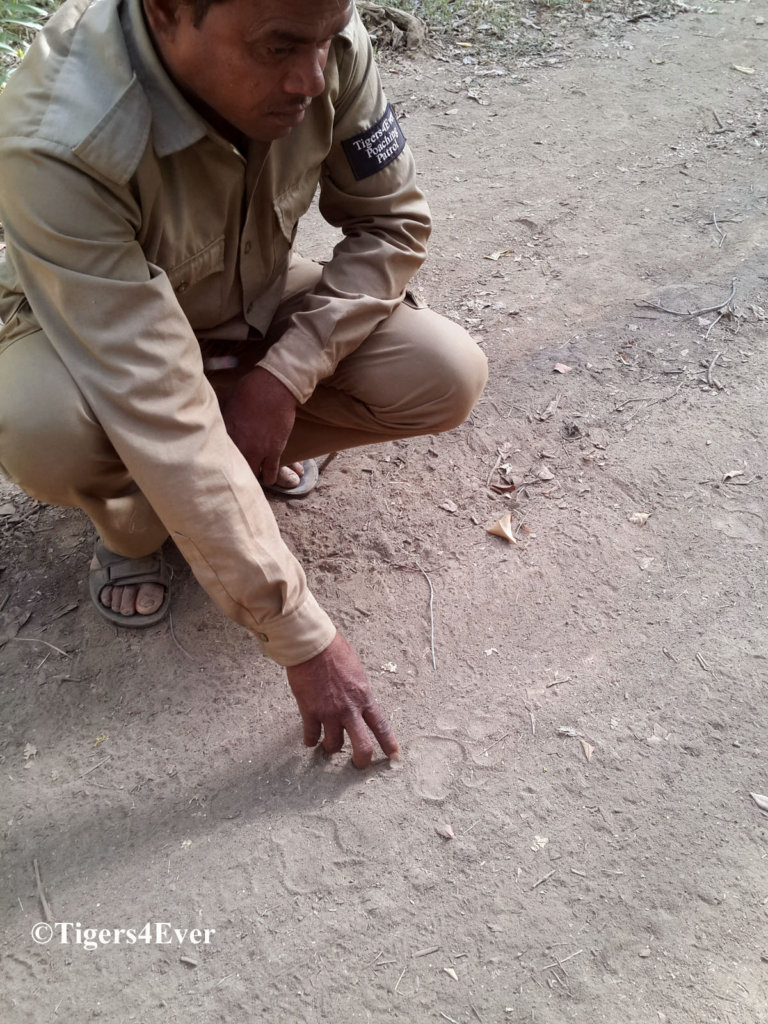
Thunderstorms and monsoon rains make tracking elicit activities more challenging as telltale tracks are washed away and people including poachers use the gloom of the clouds and increased tree canopy to move in the jungle unseen by patrollers. However, despite their tracks being washed away they are still seen, smelled and heard by the animals who call the jungle home and will defend their young against any perceived threats. Our patrollers also need to be extra vigilant in these challenging conditions to prevent being attacked by poachers and the wild animals too. The warm dry season with unseasonal storms, activated the poisonous snakes more than a month early too, so our patrollers needed to take extra care after the storms, when they check the undergrowth for wire snares and traps.
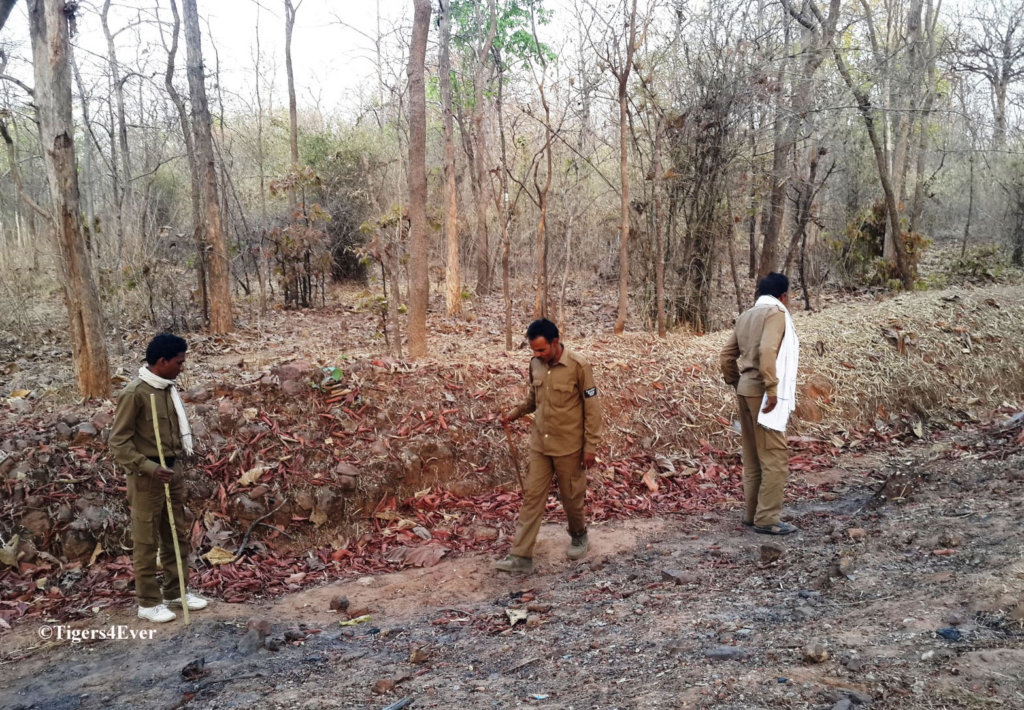
In the early morning, our patrollers walked along the edge of the riverbank, scanning for snares and signs of illegal fishing, they found fresh elephant footprints near the fields of a village where the wheat crops had been seeded, so they raised the alarm. The memory of the 13 poisoned wild elephants from late 2024, still fresh in the patrollers’ minds! Our team searched around the village hedgerows for wire traps, tethered snares, and poison. Suddenly, one patroller jumped back startled as a large cobra emerged from the undergrowth where he was checking for snares. Thankfully, the patroller was unharmed, protected by his sturdy boots and cane, which shielded him from a dangerous potentially deadly bite!
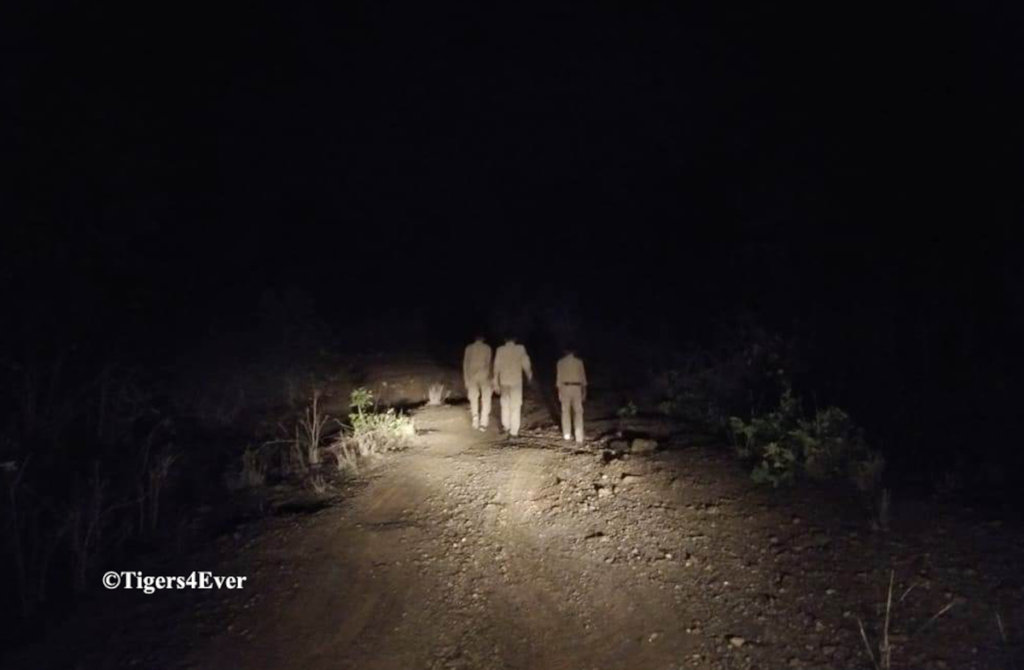
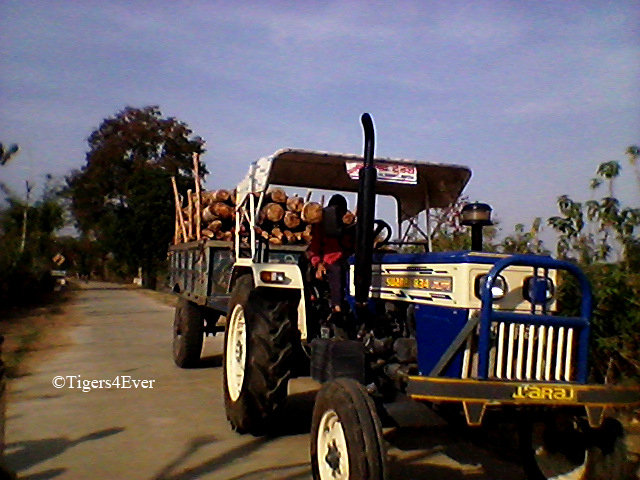
A little further along from the snake encounter, our patrollers discovered signs of encroachment into the forest for illegal sand-mining, this problem is increasing especially at night. The patrollers find a safe spot to have their meal break and decide to wait near the site of encroachment as night fell. Suddenly the nightjars call and the sound of owls were broken by the chugging of tractors and diggers echoing through the calm forest night. Faced with a split-second decision as to whether to pursue the culprits alone or move to safety and call for back up, our patrollers chose the latter: call for back-up and more resources. The large group of miscreants outnumbered our patrolling team, and their personal safety must come first, so they can live to protect the wild tigers on another day! It was wise to wait for back-up rather than risk their own lives, as with more resources the culprits can be stopped and arrested. We provide an array of essential equipment for our brave anti-poaching patrollers and you can learn more about the recent supplies including another 130 full uniforms with sturdy boots, 600 treated mosquito nets and 200 powerful flashlights which were desperately needed in the field, here: (https://goto.gg/56553),
In January 2025, our patrolling area increased by 100 square kilometres into the Shahdol forest area to the northeast of Bandhavgarh. However, expanding the territory stretches our team and increases our costs, which is challenging due to the continue pressure on fundraising following the cost-of-living crisis and recent economic sanctions. In May 2025, we increased the wages for our patrollers to ensure that they remain competitive, but this has consequences too.
We need to secure new funds for patrolling before the end of 2025, or we may be forced to scale back patrols after the monsoon season (July–September) ends. This would not be a decision taken lightly as it would significantly increase the risk of more tigers falling victim to poachers. We definitely don’t want to do that if it can be avoided. If you can donate this month, no matter the amount, it will make a real difference. Together, we can keep wild tigers safe. (https://goto.gg/28767). Please consider a donation in lieu of Global Tiger Day (29 July) or World Ranger Day (31 July).
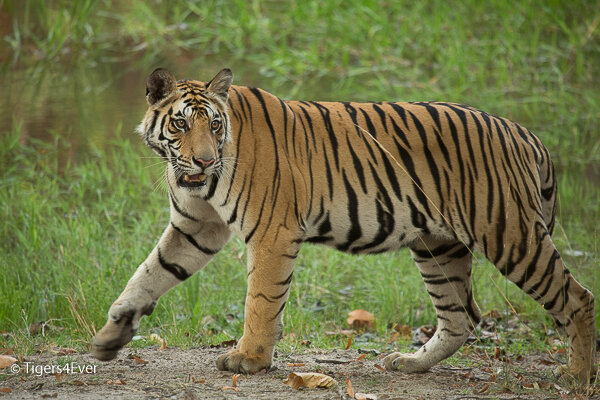
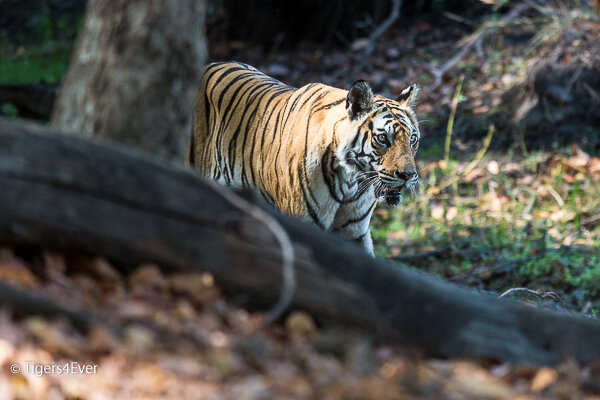
In 2010 when Tigers4Ever was founded only 37 wild tigers roamed freely in Bandhavgarh’s jungles, we are proud that today there are around 226 wild tigers in Bandhavgarh. Sadly Bandhavgarh’s tiger habitat has not grown to keep pace with the increase in Tiger numbers and it’s size remains unchanged. We now have almost 6 times the number of wild tigers to keep safe! Both the human and wild tiger populations continue to grow, and this places immense pressure on the ecosystem and its inhabitants. Even with tolerance from both wild tigers and humans, conflict is inevitable. In the last year, we’ve focussed on several initiatives to mitigate these conflicts and address their consequences. Our patrols covered more than 33930km (21083 miles) whilst protecting wild tigers in 2024, if we are forced to reduce this by a third in 2025 so many wild tigers and their cubs will be vulnerable that it doesn’t bear thinking about! Please donate this month, if you can afford to, however much you can spare will be a huge help for sure. (https://goto.gg/28767).
Grass Harvesting and Amla Picking
The monsoon rains (and unseasonal storms) have boosted new growth in Bandhavgarh, but with this new growth comes a different kind of encroachment too. Bamboo is harvested to make fences, baskets and furniture, whilst grasses are harvested for livestock fodder and Amla fruit for its high resale value in the markets. This encroachment takes precious resources from the wildlife such as elephants and deer which in turn will enter the villages to devour the crops as they search for something to eat. This leads to a vicious circle of human-wildlife conflict and daily challenges for our patrollers. The wildlife is still at large as resources are plundered, and people are often attacked by elephants, leopards, wild boar and tigers as they throw caution to the wind as the search for their coveted prize. Our Patrollers have to protect the forest as well as its wild inhabitants, but they also become educators as they deliver forest safety briefs and safety information cards or banners.
Throughout the last 2 years we have focussed on multiple initiatives to address Human-Wildlife Conflict and forest encroachment via our other projects, including the provision of more permanent wildlife waterholes bringing the total number of Tigers4Ever waterholes to 26 (soon to be 27) and installing solar-powered PIR lighting at 55 forest edge locations to reduce the risk of livestock and human kills and nightly crop raids by elephant, tigers and leopards, (https://goto.gg/34315). These initiatives are running concurrently with our forest safety education programme too. In July 2025, we have launched of Forest Rehabilitation Project to restore lost habitat and create new territory for wild tigers and their prey. We are grateful to our friends at Typical Tigers NFT who raised and donated sufficient funds to enable us to prepare and protect the land where the pilot project will be and buy the first grass seeds and some saplings to plant. We are now fundraising to do more (https://goto.gg/70006) and Typical Tigers NFT are holding a Global Tiger Day fundraiser to help us put a waterhole in the new forest area too.
Can we do more?
Our anti-poaching patrollers work tirelessly in some of the planet’s most extreme and dangerous environments, performing one of the toughest jobs in the world. Three-quarters of the global wild tiger population is in India, with 3,167 wild tigers, 785 of which are found in Madhya Pradesh where our patrollers operate. Bandhavgarh’s wild tiger population has increased more than fivefold from 37 in 2010 to 226 today, a success story made possible by your support!
Worryingly, two wild tigers have been trapped by poachers in the last 14 months and the number of snare wires and signs of anchored traps are increasing again too. Farmers often tie wire snares around the boundary of their crops and villages to prevent crop raiding, but these wire snares are indiscriminate and will kill tigers and leopards if they remain undetected. Our patrollers systematically remove these wires and fill the anchor points with sand or soil to prevent hidden tethered snares along the trails where tigers walk. Our patrollers always need to be extra vigilant against snares as they can be easily concealed and can snare a patroller’s foot too. Increasing tiger numbers inevitably leads to an increase in poaching, in addition to increased tiger-tiger and human-tiger conflict, so we can’t afford to reduce our patrolling now. Wild tigers need more habitat and protection, so we extended our patrolling range a few months ago to include areas where some of the sub-adult tigers from Bandhavgarh have migrated.
The growing wild tiger population has resulted in an increased risk of tiger-tiger conflict too. The aggressive roars of territorial battles echo for up to 8 miles, prompting our patrollers to approach with caution. Wounded tigers are extremely dangerous, and our patrollers must stay alert to avoid attacks on themselves. They search for signs of injury and, if necessary, call for veterinary help. Sadly, sometimes it’s too late, and the lifeless body of a once-majestic tiger is found. Despite being it a natural death, it’s heartbreaking to see such a magnificent creature lying lifeless. Without restored habitat and more waterholes, sadly tiger-tiger conflict will continue to increase. One of our supporters Paul is doing 25 walking marathons in 25 days next month, to raise funds for a wildlife rescue vehicle. Take a look at our social media channels where you can find out more and join Paul on one or more of his walks if you are feeling energetic. His route takes him from Tigerton in Scotland to Tiger Bay in South Wales. Around half of the Tigers4Ever Trustees are joining the walk at various stages and they are fundraising for our Forest Rehabilitation Project as they walk too: https://www.globalgiving.org/fundraisers/teamtigers/
More wild tigers mean more territorial conflicts and natural deaths, thus expanding and improving forest habitat is crucial, we’ve identified two 100-acre areas of denuded forest where we will clear invasive lantana before planting saplings from 32 native tree species and grasslands to provide food for elephants and the tigers’ prey.
Every day, we confront these challenges head-on. In 2023, wild tiger deaths in India reached a 15-year high with 181 reported deaths, which was a 150% increase from 2022. The 2024 death toll reached 126, including 15 due to tiger-tiger conflict in Bandhavgarh. The news for 2025 is bleak too with 108 wild tiger deaths across India already including the cubs of Chhota Bheem and the male tiger killed by the poachers, detailed in our previous report. It is vital therefore that we continue maximum patrolling to protect wild tigers during and after the monsoon as so many young cubs would not survive if their mother or father was killed by a poacher’s snare. Meanwhile, our work to enhance the existing wild tiger habitat and to reduce conflict through our wildlife waterholes project continues: https://www.globalgiving.org/projects/water-for-bandhavgarhs-tigers/.
Protecting wild tigers and their habitat means more cubs survive but with that success comes greater responsibility. As tiger numbers grow and exceed the carrying capacity of their current habitat, urgent action is needed to prevent rising conflict. We’re already facing a critical tipping point in both human-wildlife and tiger-tiger encounters.
Thanks to your generous support, our patrols have helped reduce unnatural tiger deaths in Bandhavgarh. But we can’t afford to let our guard down as poachers are always watching, waiting for a chance to strike. Your donations have made it possible to extend increased patrols into September 2025. With your continued help, we can keep wild tigers safe through the coming months and beyond the monsoon season. If you’re able to give, now is the time. Every donation truly makes a difference. (https://goto.gg/28767).
Instances of human-tiger conflict at the extreme level can lead to dangerous challenging times for our anti-poaching patrollers too, as they are tiger protectors and rural communities often exact revenge on patrollers as they attempt to remove a tiger which has attacked or killed. Our patrols need to always remain vigilant, especially whilst attempting to restore calm. We continue to deliver our forest safety education training to those we encounter in the forest to try to reduce the risk of further deaths-whether those are human or tigers.
Fundraising to cover our current patrolling costs continues to challenge us so we must be cautious when extending our patrolling range further. The poachers know that the cubs born 2 -3 years ago are old enough to leave their mothers’ protection now and are making their own way in the world, so we are on high alert to curb this risk and have tripled patrolling and extended our range as a result. These vulnerable young tigers will face many challenges in their quest for their own territory, not least sibling rivalry and aggression from their own parents. They will also face battles with other young adult tigers seeking to establish their own territories too and other adult tigers which have already staked their claim. As young tigers migrate further afield, our brave men and women patrollers will risk their lives to keep them safe. It will be a challenge to protect them all!
We are proud of our patrollers and their amazing efforts to keep wild tigers safe. During the last 3 years their workload has increased 3-fold, and our patrollers have responded with outstanding effort and hard work whilst poaching activity around India has reached a 15-year high. It is a miracle in the circumstances that we continue to keep so many wild tigers safe!
When conflict incidents are coupled with the increased risk of poaching activities, it means that our patrollers need to always be on high alert. We must ensure that we can maintain a minimum of tripled patrolling now, especially as poaching activity is on the increase. https://goto.gg/28767.
Making a Difference
Your continued support means that we can cover an extra 1800 km (1135 miles) of wild tiger territory per month with our tripled patrols. During patrolling, it is essential to ensure sufficient time to search for snares; traps and signs of poisoners around forest areas where human encroachment is widespread as poachers are more active. We need to maintain our patrols around the periphery of villages where crop raiding and livestock killing is rife. Our increased patrolling helps us to curb human encroachment into wild tigers’ territories and allows us to provide safety advice for those trying to protect their crops and livestock from wandering elephants and tigers respectively.
With around 225 wild tigers to keep safe, your help is crucial. In the last quarter, we’ve received news of 12 more precious tiny cubs which need our help. Your gift, however large or small can make a huge difference as to whether Bandhavgarh’s wild tigers and cubs can survive the unprecedented threats they face:
Without our help, we know that more wild tigers will die; and more humans will be mauled or killed due to encroachment or human-tiger conflict. Sadly, with every human life lost comes another threat to the wild tiger’s survival in the form of retaliation; thus, we must protect both if we are to ensure that wild tigers can have a wild future.
Please don’t hesitate if you can help, your donation can be the difference between life and death for a wild tiger, as it helps to increase our patrolling when it is most needed. Every tiger and every tiger cub counts. Thank you for making our fight against poachers, the changing climate and human-animal conflict possible. (https://goto.gg/28767).
Links:
Project reports on GlobalGiving are posted directly to globalgiving.org by Project Leaders as they are completed, generally every 3-4 months. To protect the integrity of these documents, GlobalGiving does not alter them; therefore you may find some language or formatting issues.
If you donate to this project or have donated to this project, you can receive an email when this project posts a report. You can also subscribe for reports without donating.



Support this important cause by creating a personalized fundraising page.
Start a Fundraiser