By Anna Cryer | Conservation Admin and Communications Officer
Habitat Restoration in Tiger Reserves
When conserving big carnivores, the path to protection and peaceful coexistence is often not straightforward. This is why Born Free is dedicated to the Satpuda Landscape Tiger Partnership, where we work with organisations in India who cover a broad range of needs allowing us, as a team, to take a multifaceted approach to tiger conservation and enable local communities to live alongside these magnificent animals.
One of our partners in the Satupuda Landscape Tiger Partnership (SLTP) is The Corbett Foundation. Since 1994, The Corbett Foundation have been dedicated to conserving India’s wildlife.
The Corbett Foundation’s work in Central India takes different approaches but is always focused on the involvement of the local community. Whether this is through their stall-feeding programme, supported by Born Free, which aims to reduce the numbers of free-ranging cattle in natural ecosystems by growing and providing the community high quality fodder to feed their cattle at home , or providing free veterinary checkups to cattle injured by wild carnivore attacks, helping to develop sustainable livelihood initiatives and running nature education camps, The Corbett Foundation are working tirelessly to promote tiger conservation.
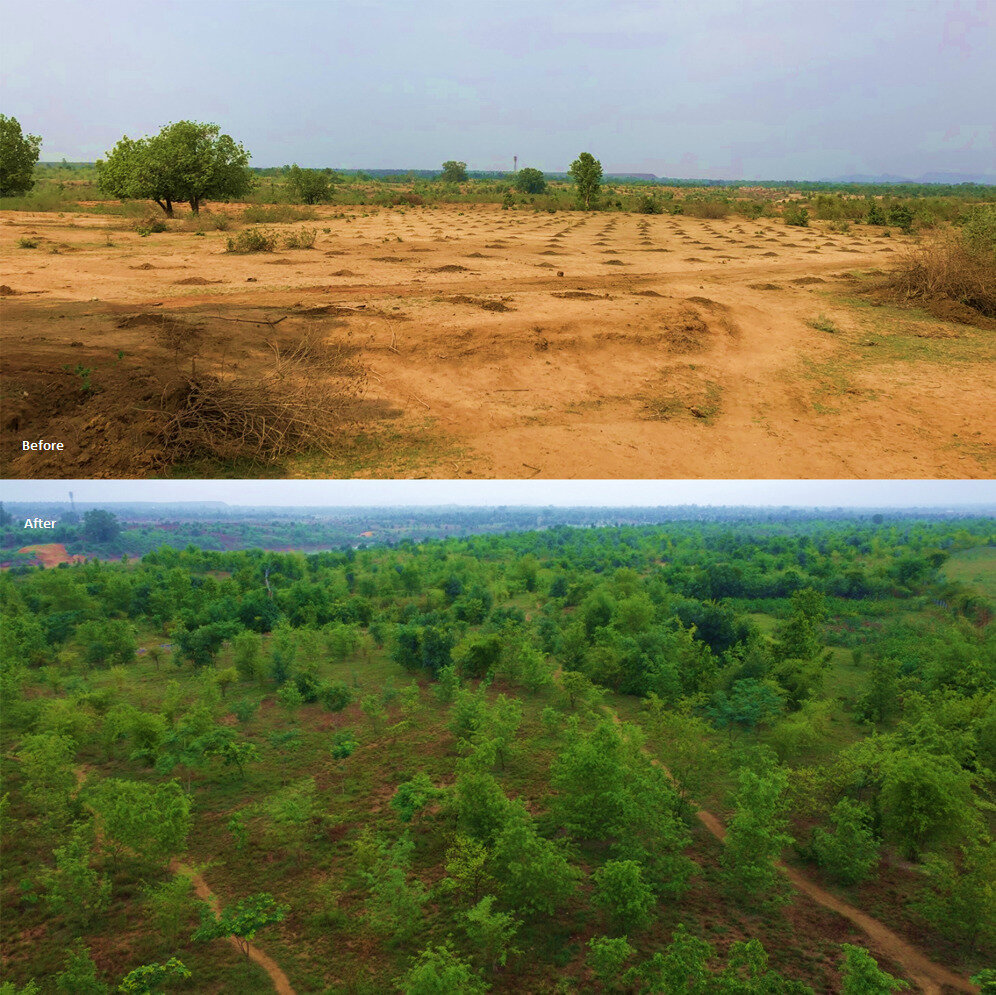
One of their latest successes has been the restoration of over 1,700 hectares of buffer area around a number of tiger reserves.
Initially, surveys were carried out around the reserves, to understand what species of plants were present, both native and invasive, and the wildlife which were using the buffer zones. Camera traps were also set up to understand which animals were using the planned restoration plots.
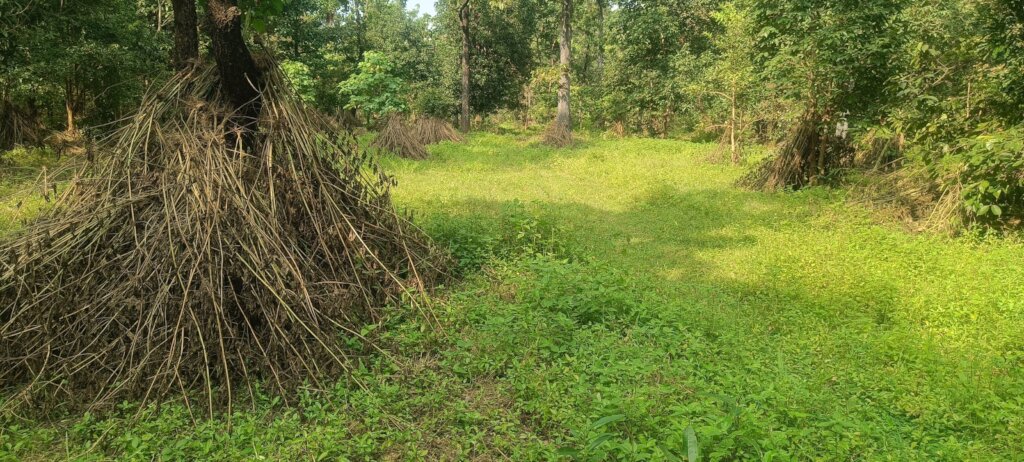
The team then got to work removing invasive plant species, plantings saplings and sowing seeds. Invasive plants can compete with native plants for resources and this can lead to a decline in native species presence in an ecosystem. As ecosystems evolve in a fine balance, inhabited by the plants and animals naturally occurring in an area, the introduction of new plants or animals can cause an imbalance in the ecosystem and lead to declines in biodiversity and ecosystem health. From the Satpura Tiger Reserve alone, 3,000 tonnes of invasive plants were removed.
The team also developed water retention structures in the Satpura Tiger Reserve. Water is one of the most crucial factors determining vegetation and wildlife presence. Often in summer, the Satpura Tiger Reserve has been experiencing water shortages, something that will likely be particularly exacerbated by climate change. To ensure wildlife can survive in the protected area, the development of ponds throughout the reserve has been essential.
In the Bandhavgardh-Sanjay Dubri Corridor, wildlife populations are increasing, particularly tigers, elephants, leopards and gaur. While this is great news for wildlife, it makes eco-restoration efforts even more important. By increasing and improving the state of forested habitats, these populations can continue to flourish.
Conserving tigers is not only about protecting the tigers themselves. It is about protecting their prey, their habitats and ensuring that they all have all they need to thrive, without having to stray into human-dominated areas, where conflict is more likely to occur. The Corbett Foundation’s habitat restoration programme is ensuring wildlife still has a home in Central India.
Born Free are proud to partner with The Corbett Foundation and value their commitment to tiger conservation. Together, with your help, we can conserve India’s tigers.
Project reports on GlobalGiving are posted directly to globalgiving.org by Project Leaders as they are completed, generally every 3-4 months. To protect the integrity of these documents, GlobalGiving does not alter them; therefore you may find some language or formatting issues.
If you donate to this project or have donated to this project, you can receive an email when this project posts a report. You can also subscribe for reports without donating.



Support this important cause by creating a personalized fundraising page.
Start a Fundraiser