By Colum Muccio | Project Leader
Yellow-naped amazon conservation project
Guatemala is one of the countries in the world with the greatest diversity in flora and fauna.due to its strategic position as a geographical bridge between north- and south-America This biodiversity is being threatened by habitat loss, pollution and the illegal wildlife traffic.
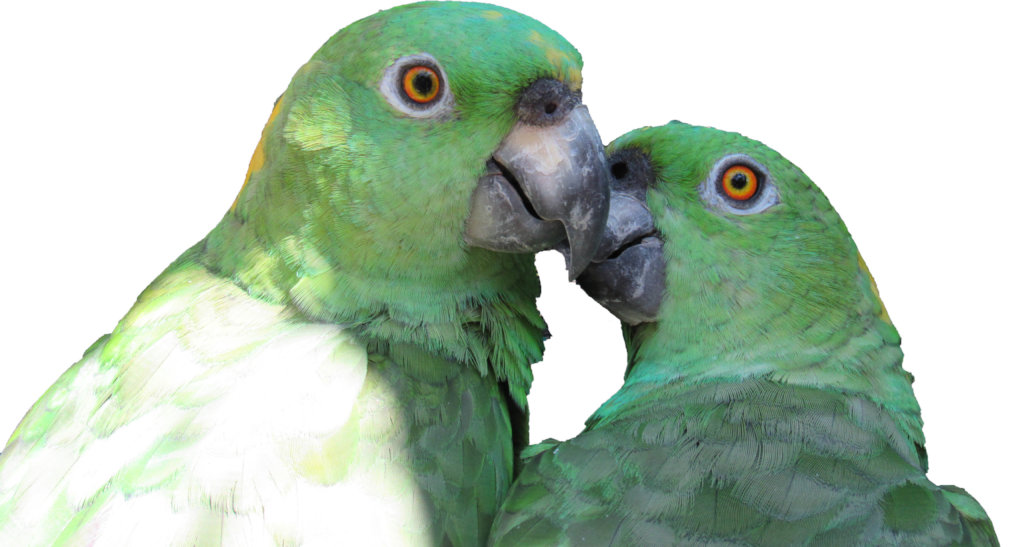
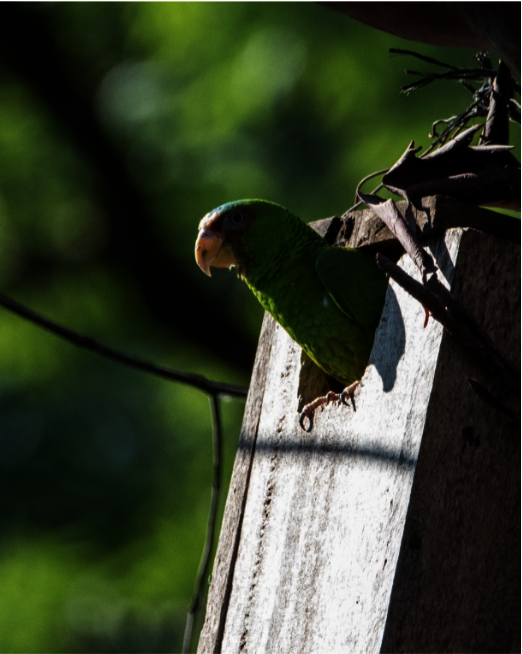
One of the most threatened species of fauna in the country is the yellow-naped parrot (Amazona auropalliata), a species subject to habitat loss due to the expansion of agroindustry and a target species for wild animal traffickers. It is a valued species by traffickers and parrot enthusiasts for its advanced ability to imitate the human voice and other sounds.
COLORES, the Yellow-naped Parrot conservation project, began its conservation work of this charismatic parrot in 2010 on the Pacific coast of Guatemala. It has contributed to knowledge about parrots in Guatemala, the strengthening of local conservation and protected area management capabilities, as well as working with communities from a social and landscape conservation perspective.
In Guatemala, the yellow-naped parrot only inhabits the coastal plain of the Pacific. It is currently classified as critically endangered by the IUCN. In Guatemala, the population is alarmingly low. A case study funded by WCS/DOS-INL estimated that there are fewer than 400-500 individuals in the wild (Joyner, Muccio, 2019).
ACTIVITIES 2022 COLORS
MONITORING AND NEST PROTECTION
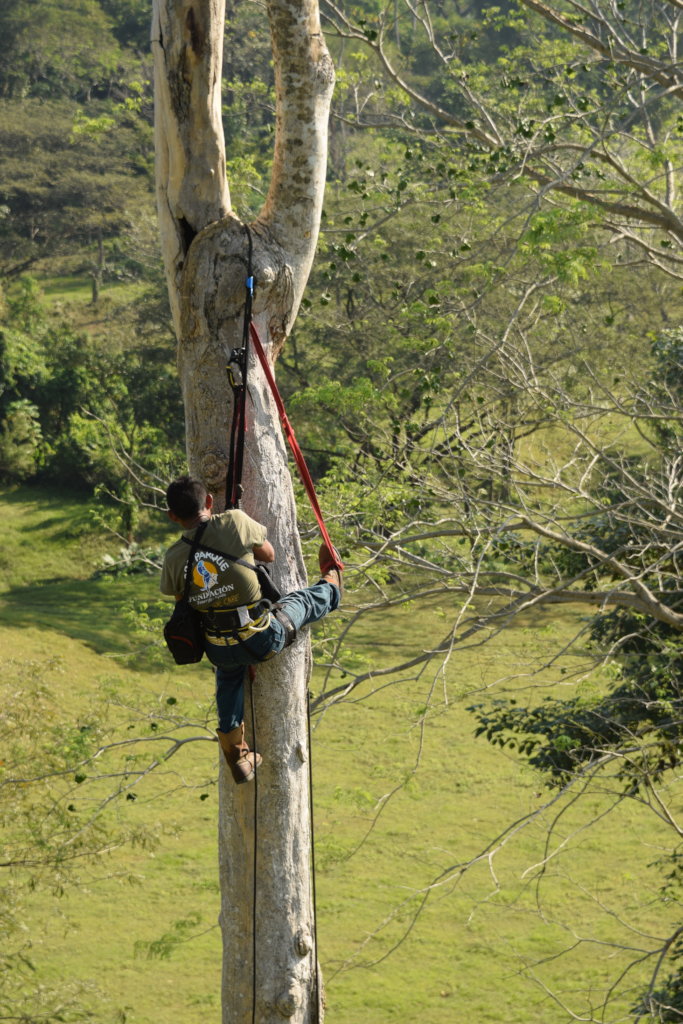
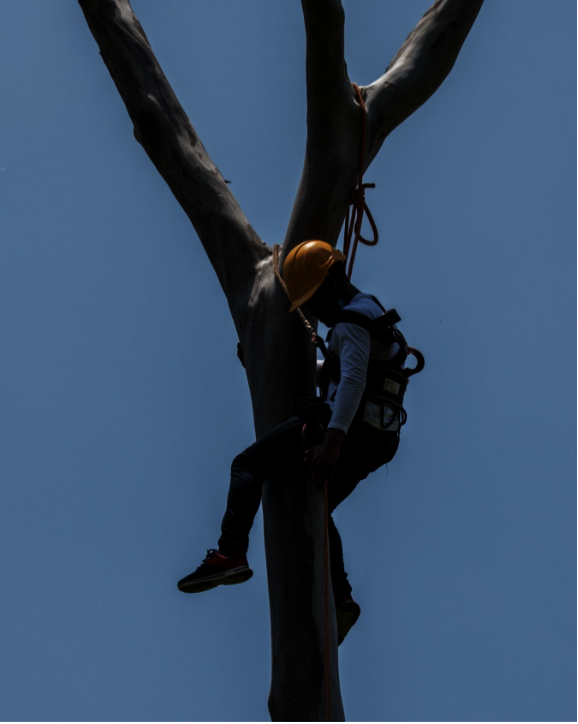
The review of nests recorded in previous years was taken, evaluating if the presence of adults in the trees, bitten cavities, or features in the tree were identified as signs of looting. With the support of the staff at each site, the search for potential trees was carried out. Usually, the yellow-naped parrot prefers trees with thick trunks with large cavities, and tall trees to have a good view of their surroundings. In some sites, there were 18 potential trees from which they were gradually discarded.
STAFF TRAINING FOR NEST SEARCH
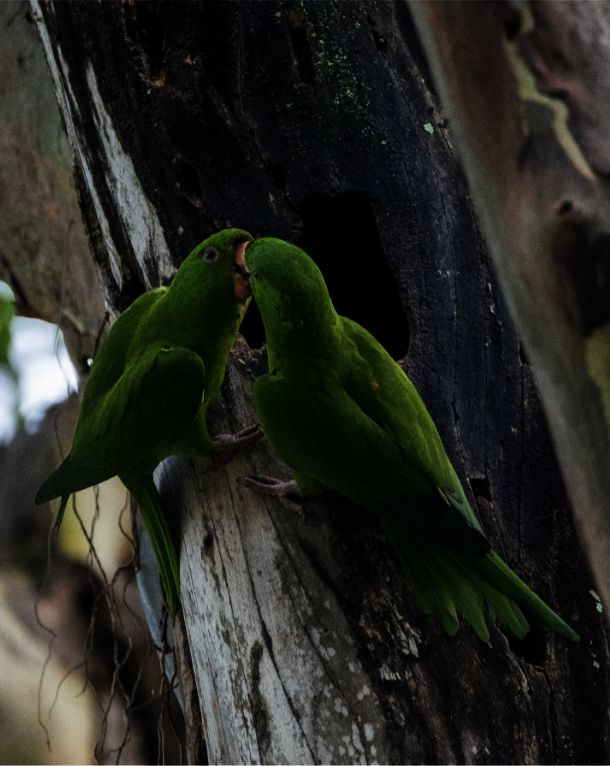
On each visit made by the coordinator, the collaborators at the sites were trained on the identification, behavior, and vocalizations of parrots and chicks. Usually, when finding a chick, the main thing that attracts is the sound. They generate a deep vocalization compared to adults. Chicks and juveniles are a more brilliant green color compared to the light green of adults and have gray pupiles while it is orange in adults. Chicks and juveniles also lack yellow on the nape and head. During visits to the sites, the coordinator takes the time to talk with the collaborators about the findings, and to review the data, especially those on the presence of cavities and the presence and behavior of adults (Time in trees, entries and exits, if they are sleeping in the tree, etc.).
THREAT IDENTIFICATION
During visits, the threats facing parrots are identified, both anthropogenic threats (looting and habitat destruction) and natural threats (the presence of bees and other predators). The presence of bees, raptors, and other wildlife was reviewed, signs of blows or cuts on the tree with a machete or club, signs of loops on branches, cuts near the cavity, and loss of branches due to storms or machete.
MONITORING OF NESTS
Priority was given to cavities with more potential to be active nests, taking into account the observation of the staff at the sites.
ARTIFICIAL NESTS
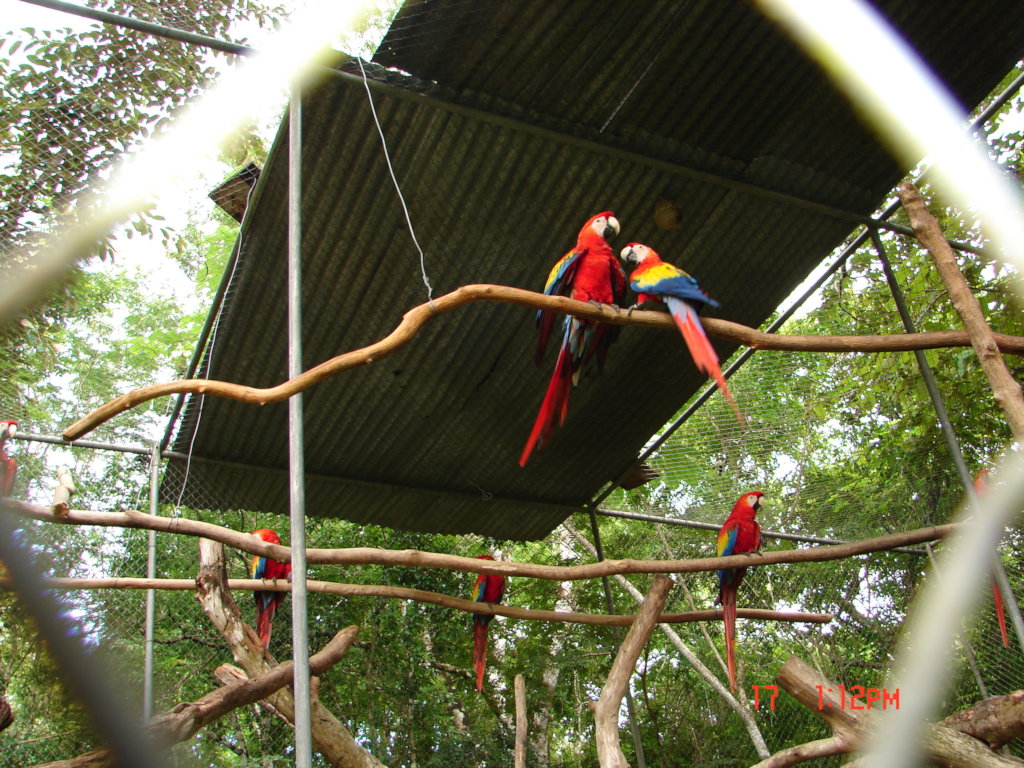
Due to the logging of large trees and the lack of suitable nesting cavities on the Pacific coast, one of the strategies of the COLORES consortium is the installation of artificial nests for yellow-naped parrots. In 2021, 38 artificial nests were installed. Unfortunately, most of them were taken over by bees. Due to this problem, during the 2022 season no artificial nests were installed. However, for 2023, new nest designs and the use of repellents to deter bees are planned to be experimented with.
PARROT COUNT
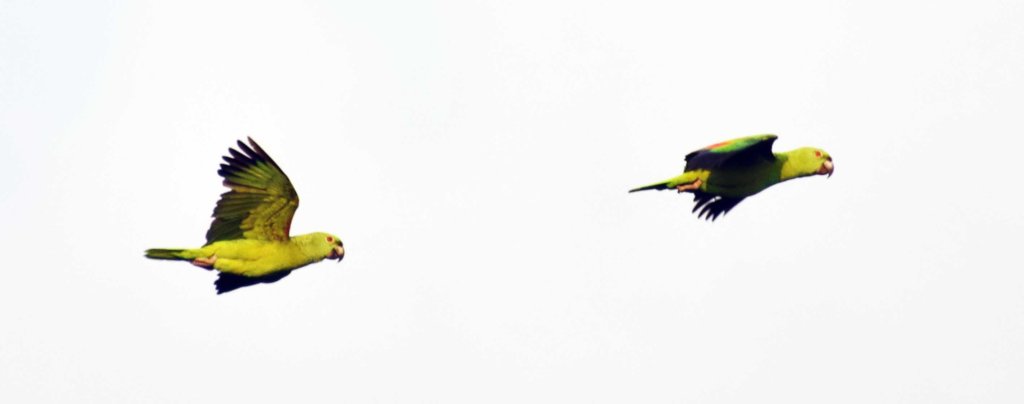
During the months of July and August, formal parrot counts were carried out at each hotspot. These counts were taken during the last 2 hours of the afternoon to record the populations at each site, collecting the following data: time, species, number of individuals in each flock, and flight direction.
SEARCH FOR NEW SITES
In an effort to expand our circle of friends, research locations, and sites where psittacids may be inhabiting, some farms were visited and meetings were held with landowners to understand their situation. In most of the farms visited, the presence of parrots was evident, taking them into account for future stages of the COLORES project.
A full report of the activities of the COLORES consortium in 2022 is available at https://arcasguatemala.org/who-we-are/arcas-publications/
Links:
Project reports on GlobalGiving are posted directly to globalgiving.org by Project Leaders as they are completed, generally every 3-4 months. To protect the integrity of these documents, GlobalGiving does not alter them; therefore you may find some language or formatting issues.
If you donate to this project or have donated to this project, you can receive an email when this project posts a report. You can also subscribe for reports without donating.