By Andra Weissberger | Deputy Country Director
Global Giving Report
E-Health 117 Hotline Operators Self-Care Sessions
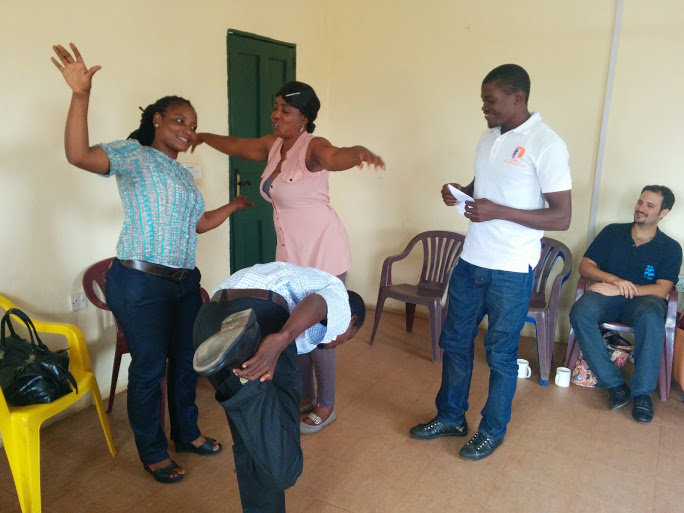
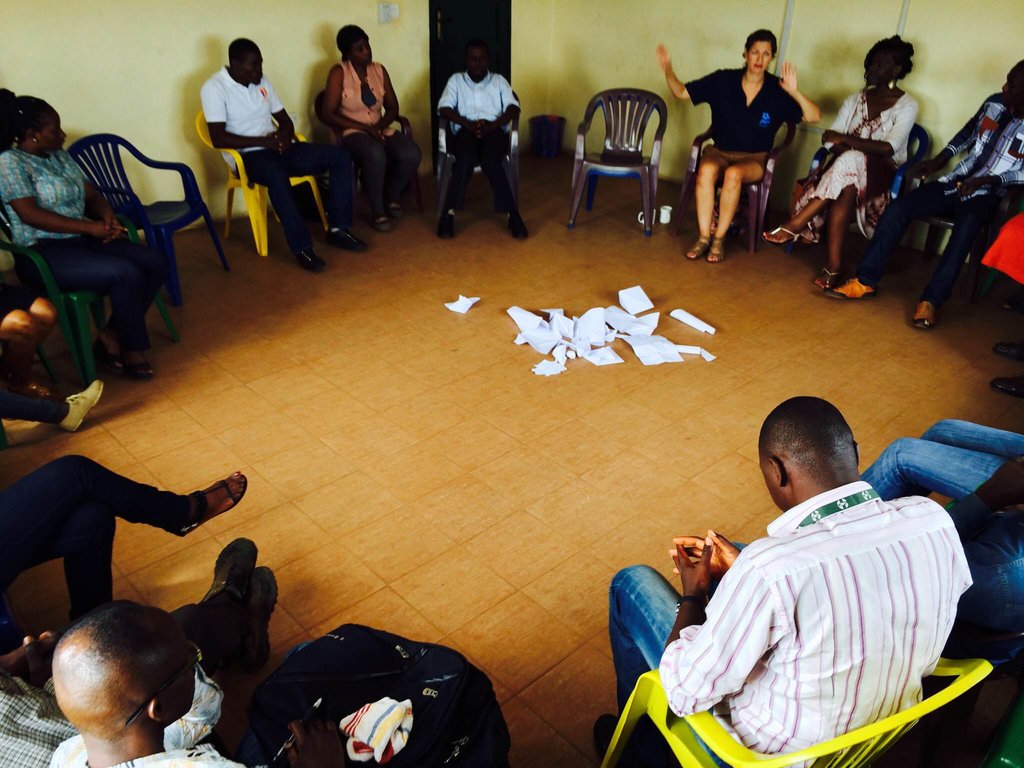
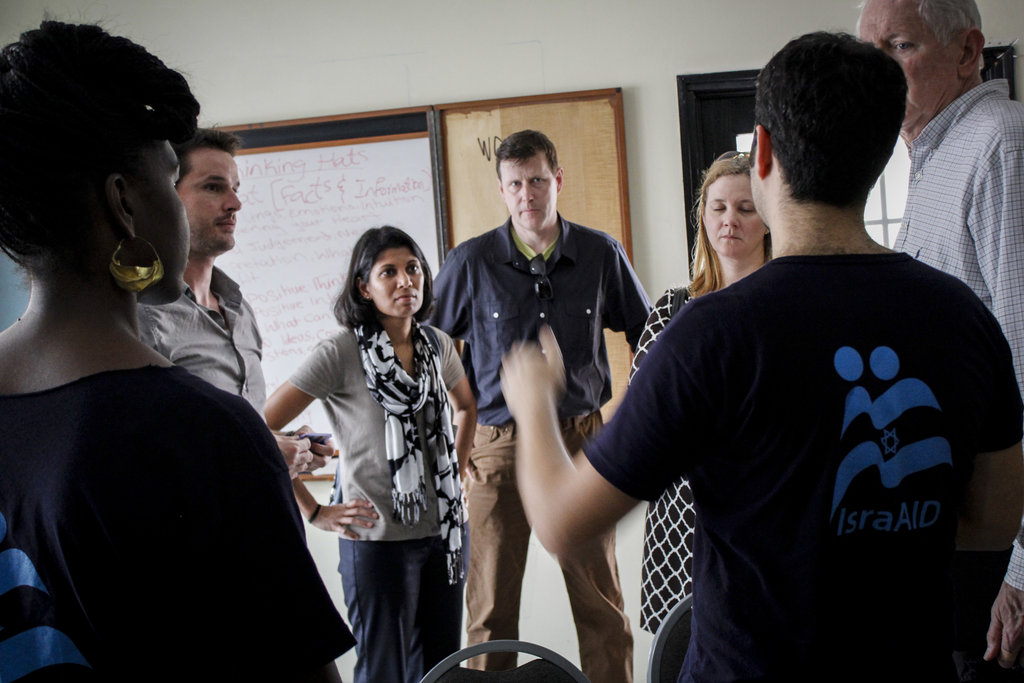
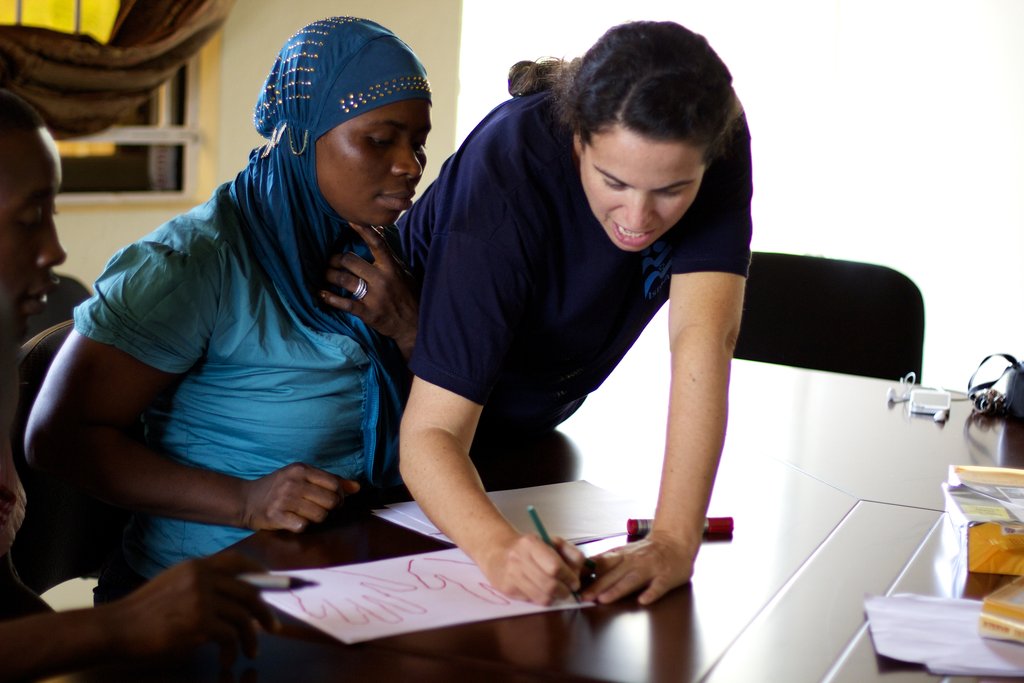
IsraAID has been providing the hotline operators of the 117 self-care sessions on a weekly basis. The sessions afford the operators the opportunity to let loose and air their grievances in a safe space. The sessions have focused on a range of topics including coping skills, anger management, trauma and grief, etc... This program is run by both IsraAID specialists and our social work student interns. By providing the students with the opportunity to plan and facilitate sessions we are helping to build their capacity to take on such programs in the future.
An observation as written by one of our social work interns about the work being done at the 117 Ebola response hotline, " like doctors and nurses 117 operator are also vulnerable and are faced with immense challenges from the public. In spite of their job, they also remained subject to verbal abuses and are looked low upon... IsraAID provides emotional self-care sessions to enable them to release the tension and stress from their daily work."
I solely depend on IsraAID support here at 117 because it gives me the inner most peace that I need. I used to come to work stress[ed] and easily get irritated either by my colleagues or the calls I received. But the sessions have enable[d] to cope and deal with the things that stressed me in the past. I also get lots of fun and learn from our different stories, because I thought I was the only one in this.
At the height of the EVD crisis with the hotline operating 24/7 IsraAID provided self-care to 120 operators a week. With the decreasing number cases there has been a commensurate downsizing of the hotline staff. This has caused a great degree of consternation and distress for those who are losing their livelihoods and who feel shunted aside. The self-care sessions have been instrumental in allowing those operators to process their experience, in promoting agency through advocacy by and for the operators and in celebrating the enormous contribution of 117 operators in the frontline battle against Ebola.
Concern Worldwide CAPS and Burial Teams
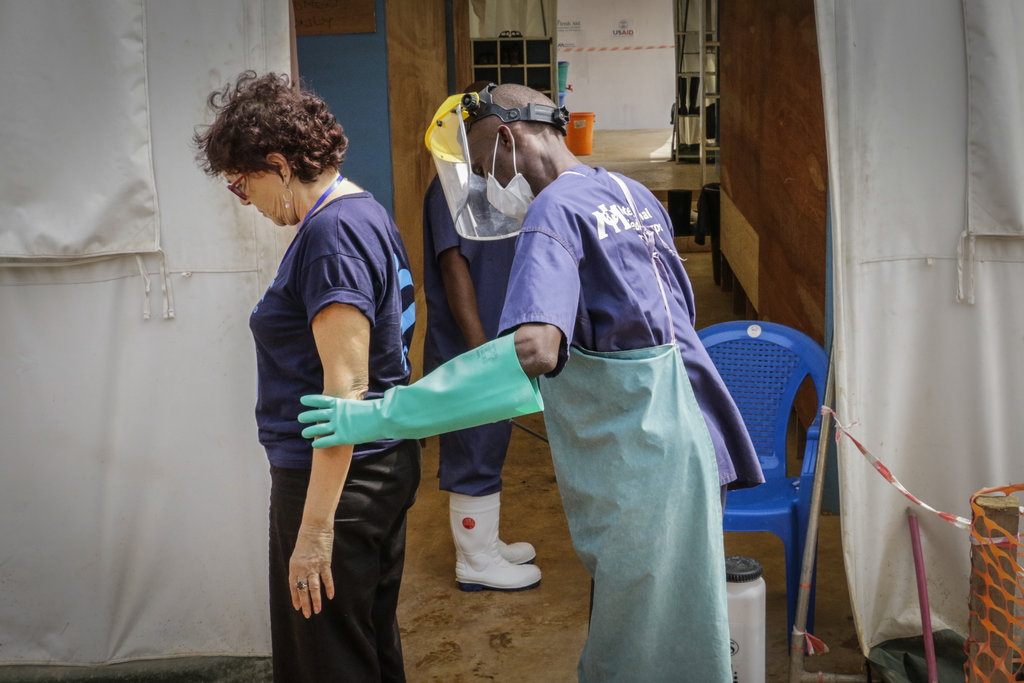
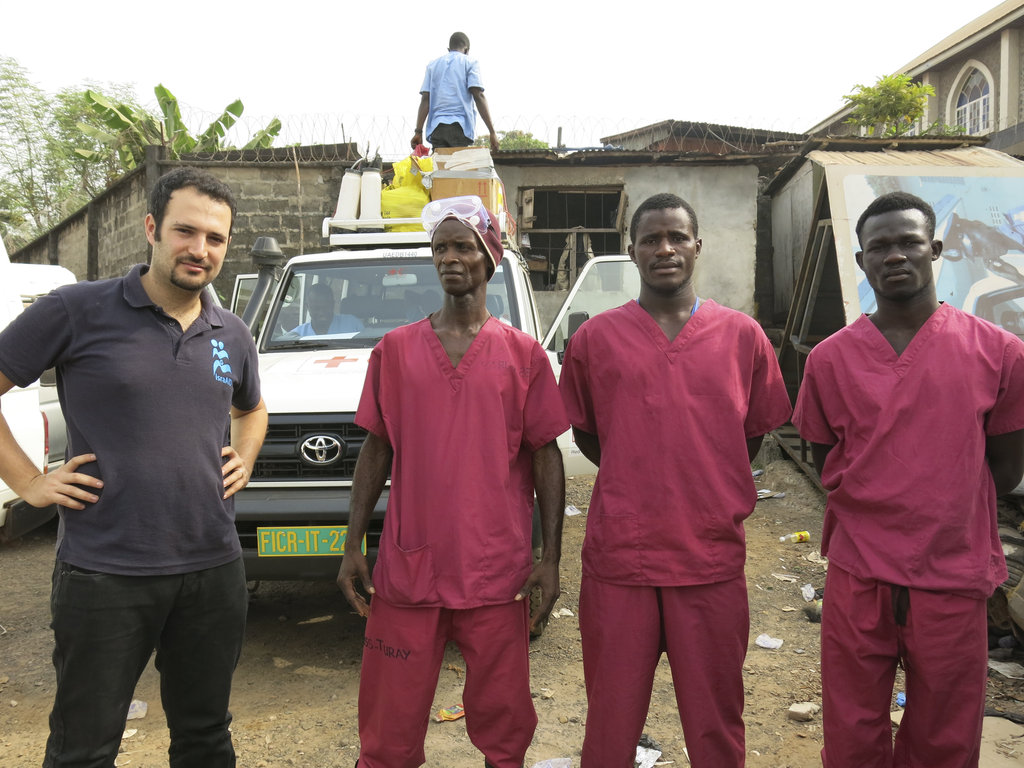
IsraAID in partnership with local NGO CAPS (Community Association for Psychological Support) provided self-care sessions for 168 members of the Concern burial teams operating the EVD hotspots of Western Area Rural and Urban districts.
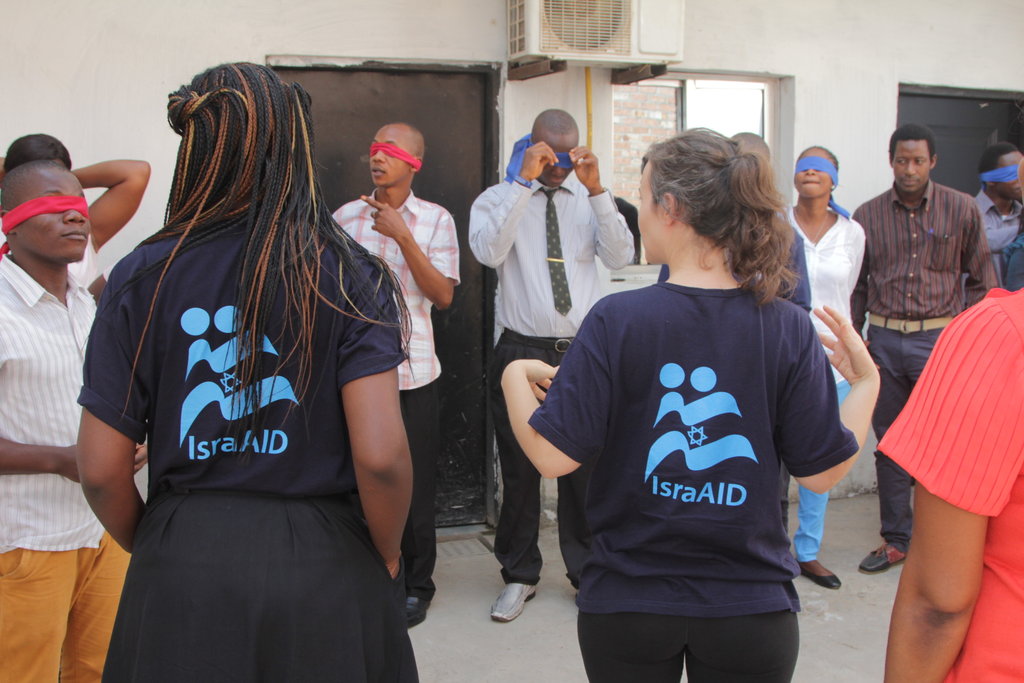
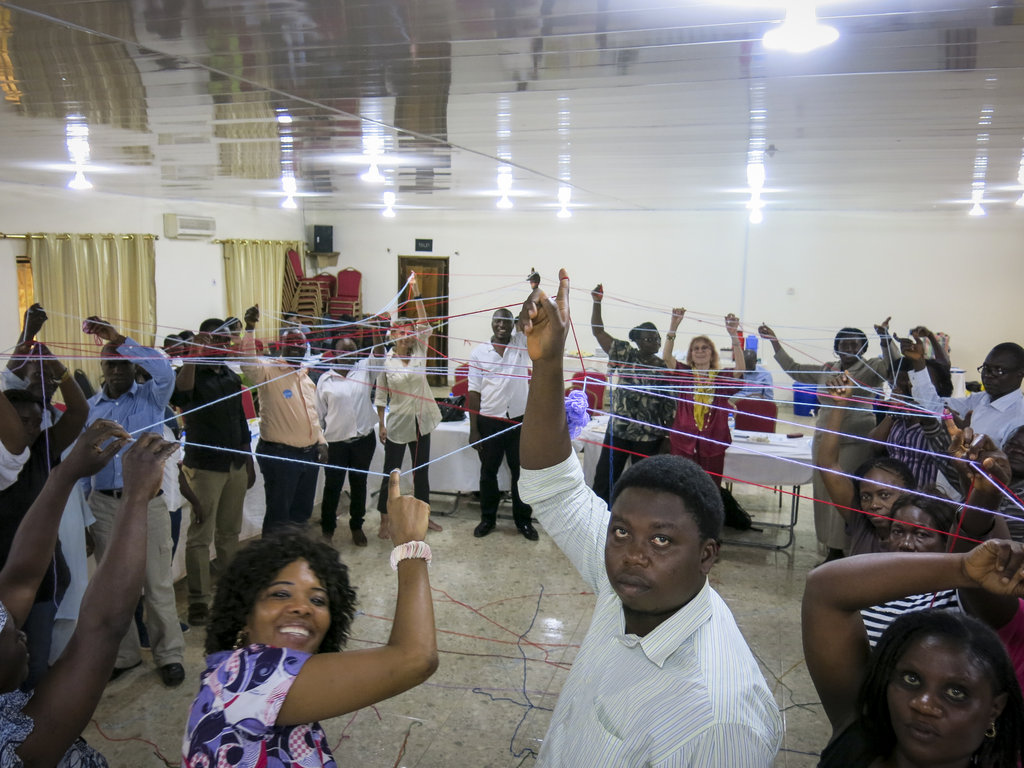
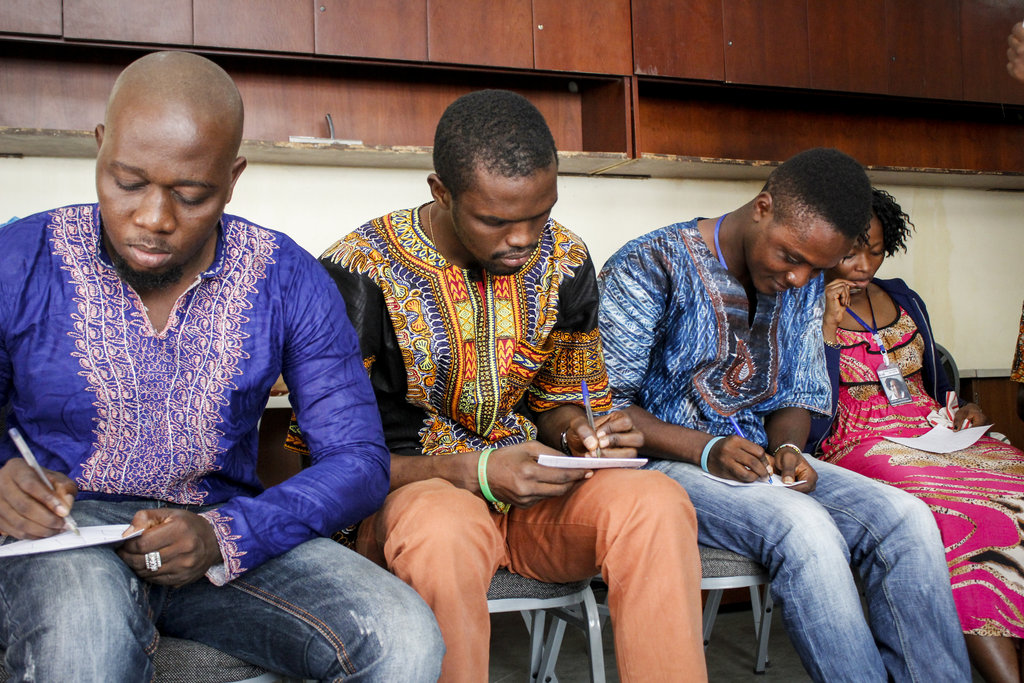
Th program for the self-care sessions was developed jointly by IsraAID professional PSS specialist and the CAPS counsellors, prviously trained by the Centre for Victims of torture. The program included 12 weeks of self-care sessions, provided on one of the weekly days off for the 14 burial teams. Topics covered in the sessions included; coping skills, stigma, trust, and team-building. Sessions were carried out in an interactive and experiential manner, using examples provided by participants in order to illustrate and illuminate the points the facilitators wished to drive home. Music, movement, story-telling and art were also incorporated into the sessions, allowing participants to express themselves in a wide variety of ways and thus ensuring an appropriate outlet for each participant.
While the sessions were run by CAPS counsellors, supervision for the counsellors was provided by IsraAID specialist to ensure quality control, adherence to the program and ensure durable ssolutions via local capacity-building. In addition to general oversight of the program and reguular interaction with both participants and counsellors at the IsraAID training venue, CAPS counsellors were provided with peer supervision and professional supervision on a weekly basis by a dedicated IsraAID staff member. Programmatic challenges and adjustments were thus easy to implement in an organic fashion ensuring that best practices were employed and lessons learned were incorporated in later sessions.
The overall attendance rate of 97% throughout the sessions is testament to the value attributed by participants to the sessions. Whereas, initially, participants were somewhat reticent and reluctant to actively participate in sessions, by the close of the program, most of the participants had to be reigned in, as their overwhelming enthusiasm was noticeable.
In the baseline stress assessment carried out in February 2015, all 168 burial team members showed elevated to extremely elevated levels of stress on both the PROQOL scale as well as on a locally-validated instrument. The midline assessment showed a significant drop in stress levels across the board, reducing the range of stress from extremely high to moderately high, in part due to concerns about staff downsizing and the probable loss of livelihoods entailed therein. An end-line survey is in progress, we expect to see even lower levels of stress in this planned survey, particularly given the fact that Concern, following up upon IsraAID and CAPS' recommendation, has decided to provide transitional programming and employment for the burial teams.
Ebola Heroes
"Ebola Heroes" is a community empowerment documentation project aiming to share inspiring stories of different service providers on the frontline of the Ebola response.
We invited individuals from the different response groups such as: burial teams, 117 hotline operators, Observation Interim Care Centers (OICC) staff, Ebola Treatment Center (ETC) doctors and nurses, Mental Health nurses, Social workers and mobilizers, Police and Ebola survivors to join this initiative.
We took a still photo of each of them and a video interview. The pilot group consisted of 20 frontline workers. While efforts are underway to compile and complete the final video of all the interviews on the ground here in Sierra Leone we had a small community event to display the photos and have the group speak about their experience of sharing their story. Each participant receive their still shot and a t-shirt that said "I am and Ebola Hero" in Krio.
As this project progresses IsraAID plans to get more participants' stories and to have larger community events as well as involve the Office of the First Lady and the Ministry of Social Welfare.
Mental Health Nurses
In February IsraAID provided each of the 20 mental health nurses with a smart phone with the EbolaCare application, designed by both IsraAID and JourneyApps. The mental health nurses are newly qualified and are in desperate need of support. IsraAID provided the EbolaCare application to augment their own assessment tools. The EbolaCare application consists of a stress assessment and the PROQOL. The nurses were provided with a two hour training on the phone along with an explanation of the two assessment tools.
Enabling Access for Mental Health Sierra Leone has provided follow up training for each of the nurses on an as needed basis with support from IsraAID and JourneyApps. The application does not require internet connection to operate but in order to collect the data online the nurses will need to have an internet connection. As there is little internet connectivity in the outlying districts where they are located we have received very little data to date. When the nurses return to Freetown for a refresher training we will receive the data and report on what we have found.
The nurses have been very pleased to receive the support from IsraAID and are so thankful to have any help they can get. One nurse upon receiving the phone mentioned that the application would help her not have to second guess herself and would be an excellent tool.
CRS Caritas Training of Trainers Group Work with EVD Affected Children, Supervision/Observations
IsraAID implemented a two week training of trainers (TOT) in three districts, Western Area Rural, Port Loko and Bombali. The training provided community volunteers with skills to run groups with children affected by the EVD outbreak. The trainings and supervisions have been co-facilitated by the IsraAID specialists and our social work interns who have proved to be an invaluable resource. As expressed by one student "Even though there are many challenges we are facing with our supervision work there are also some rewards. The first reward is that facilitators believe that for every session they held with the children they realize improvement in their skills. Another reward is that the facilitators find the activities in the training manual useful and applicable to the children. Finally the children are appreciating this services alot." IsrAID developed a comprehensive training manual that included reframed theoretical concepts in a practical hands on multidisciplinary activity toolbox for facilitation of children's groups. The first week focused on facilitating games and activities based on five core themes: inner peace and security, stigma, social connection, safety and grief and trauma. The second week focused on different therapeutic modalities including song, dance, the use of movement, art, story-telling and the incorporation of our partner produced video clips on each of the five themes. The volunteers also received extensive training on facilitation skills for group work with children.
After the two week TOT IsraAID has been providing ongoing support to the community volunteers by way of field observations and supervision. An IsraAID specialist meets with the community volunteers on a weekly basis in all three districts to discuss issues and concerns as well as reinforce the tools and skills acquired over the course of the training. IsraAID has also served as an advocate and liaison for the volunteers in the field and the implementing partner, ensuring that transport stipends and materials are delivered and maintaining good communication between the field and headquarters.
IsraAID developed, translated into Krio and validated, a behavioral checklist for the groups as a means of identifying children in need of further referrals- other agencies are interested in using this M&E tool. At the end of each session with the children, volunteers fill out the checklist allowing us to track macro trends without violating confidentiality protocols. At the end of the 10 week sessions we should be able to chart the overall progress in terms of positive versus negative behaviors. This tool is also used as a spring board for conversation and deepening understanding during supervision sessions.
The geographic scope and logistical constraints involved in this project have allowed us to grow as an organization, to extend our sphere of operations and further define IsraAID as the primordial PSS agency operating in Sierra Leone. A further series of trainings and supervisions is in development for Bo district to be carried out in the next six months.
Project reports on GlobalGiving are posted directly to globalgiving.org by Project Leaders as they are completed, generally every 3-4 months. To protect the integrity of these documents, GlobalGiving does not alter them; therefore you may find some language or formatting issues.
If you donate to this project or have donated to this project, you can receive an email when this project posts a report. You can also subscribe for reports without donating.