Project Report
| Dec 2, 2025
Caring for Central America's overlooked habitats
![Native melipona bees pollinate crops and forests]()
Native melipona bees pollinate crops and forests
Dear Friend,
By supporting Paso Pacifico you are sending resources directly to some of the most biodiverse corners of Central America.
You are addressing gaps in protections for biodiversity that could otherwise disappear.
Because your support goes straight to the communities that are on the front lines of conservation, you are also empowering people who are otherwise marginalized by society in a way that builds their knowledge, skills and pride in their natural resources and sense of place. Thank you for caring, and for investing in nature, beyond the borders of your town.
Here are a few updates that highlight how important your gifts are, whether they are big or small.
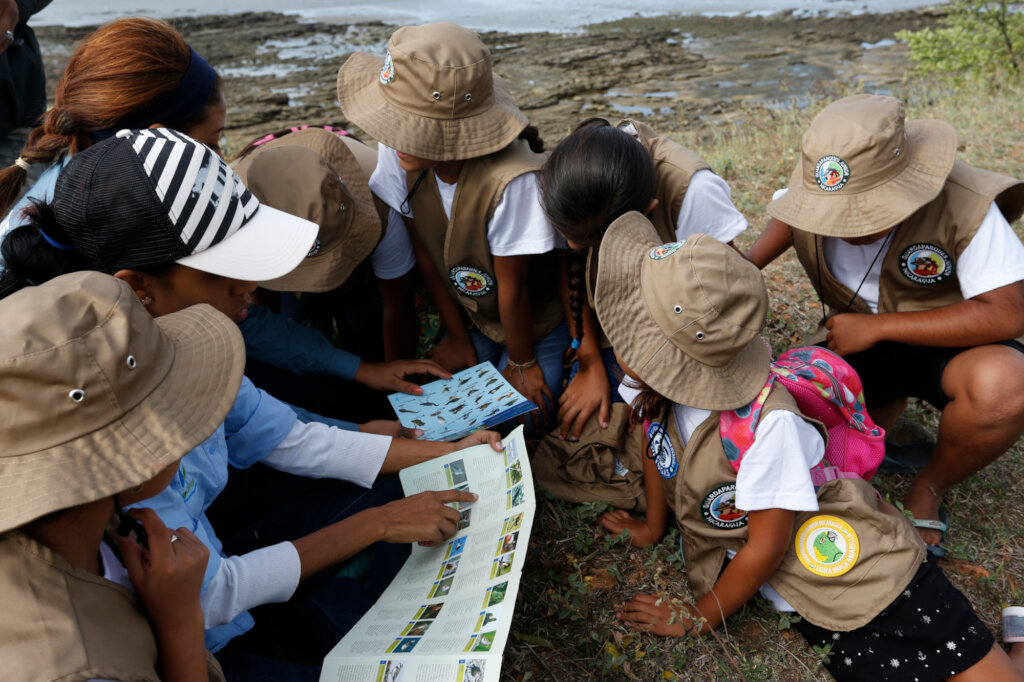
- There are over 100 species of native bees in the Paso del Istmo Wildlife Corridor, Nicaragua that help to pollinate crops and forest flowers. Team member Marcos Calero Perez has spent the past three years studying the native bees and their relationship with five different habitat types and flower resource availability. Marcos teaches classroom and field-based lessons on native bees to students from schools in Nicaragua. At the same time, Marcos continues to support seven farmers who have beehives occupied by native, stingless bees. This week, Marcos will present his findings at the MesoAmerican Native Bee Congress held in Heredia, Costa Rica. Thank you for making his work and attendance at this meeting possible.
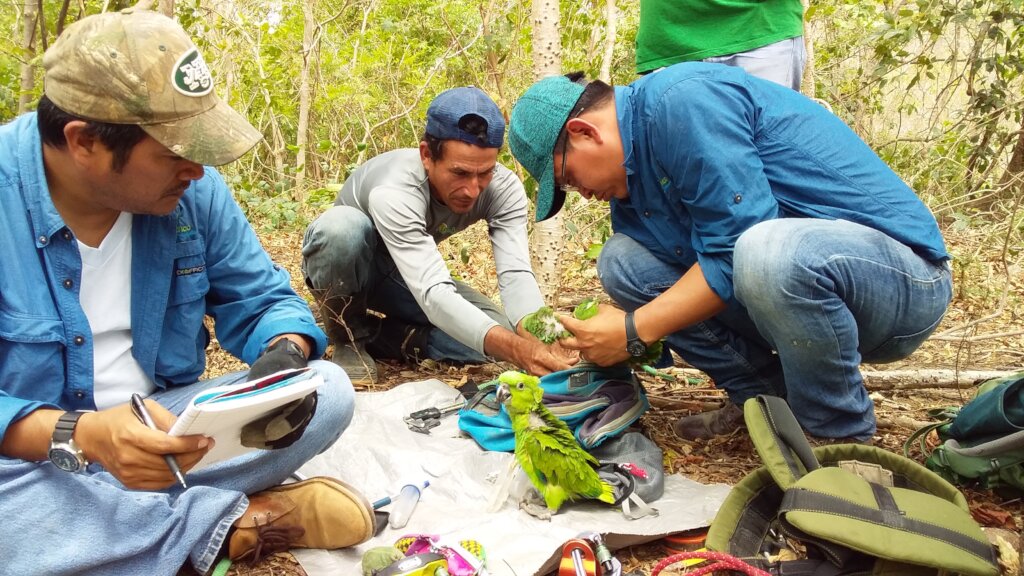
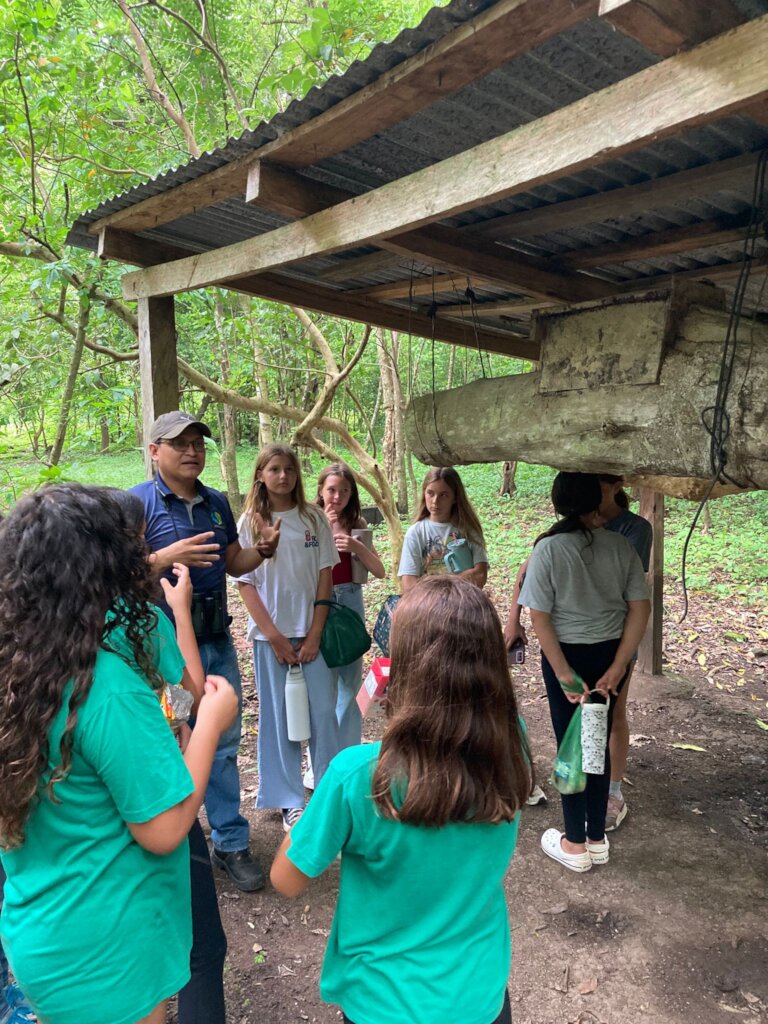
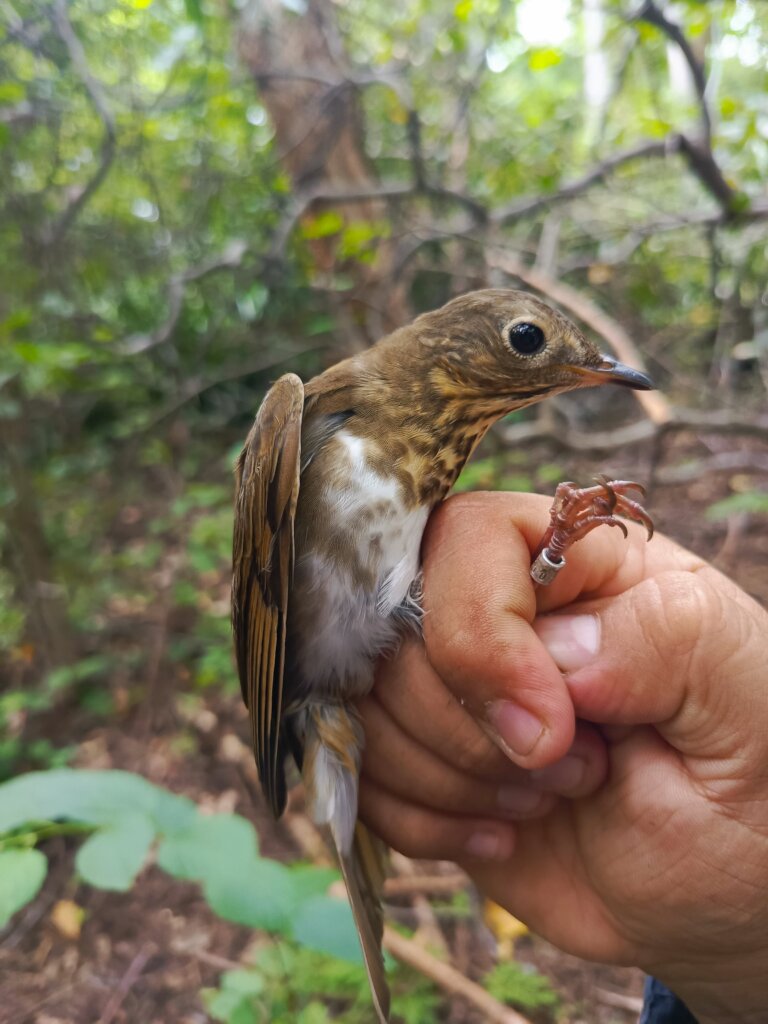
- Its the non-breeding season for North American birds, which is when hundreds of species choose to avoid the scarce food and cold weather by flying south. Your support has made it possible for us to manage two bird-banding stations for a decade. Thank you! Banding stations help us to gain good estimates on species survival from year to year. Our team is thrilled when they capture, and release, a bird that has visited the station before. With nearly 75% of North American birds with declining populations, your support for our efforts to protect bird habitats, raise appreciation for birds, and to monitor their populations is more important than ever. Thank you!
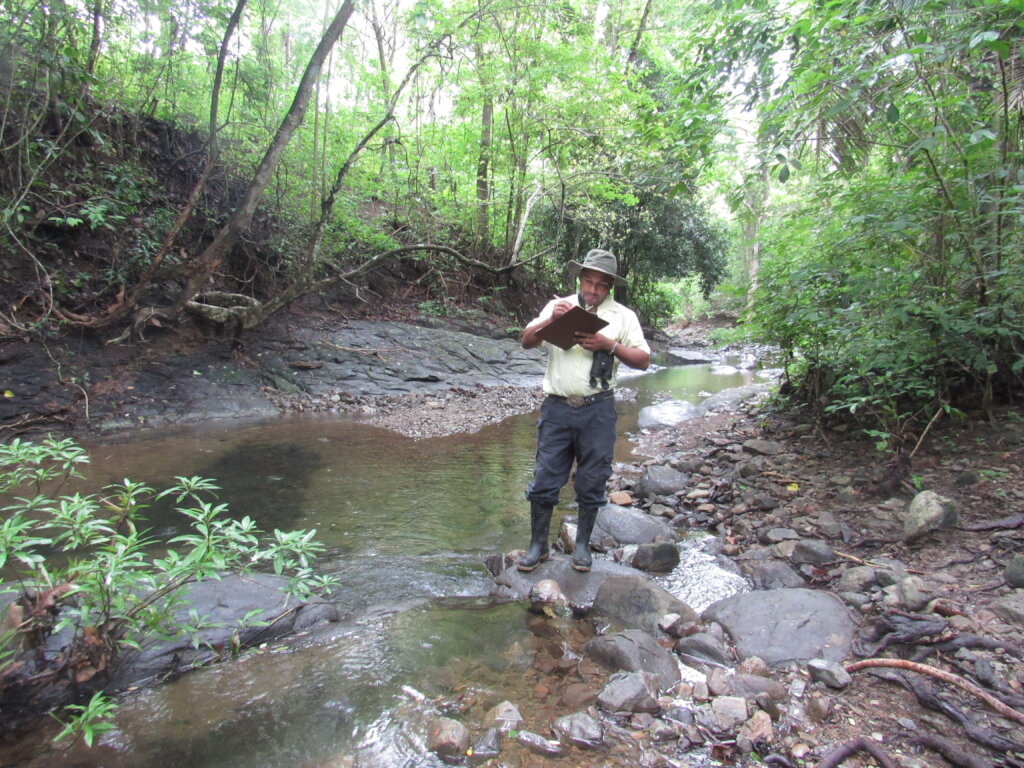
- The Laguna Olomega is a RAMSAR wetland is designated by a global treaty created to protect the world's most important wetlands. Although scientists studied the lake 100 years ago, the site had been long forgotten when you showed up in support for our conservation efforts there.Thanks to your donations, Paso Pacifico staff and community rangers worked alongside scientific collaborators from Central America and California document the biodiversity of the lake and its nearby forest using environmental DNA, which is basically the genetic material that all living things shed has they exist and move about their habitats. The preliminary results will be presented next week at the American Geophysical Union, and basically confirm that the lake is biologically rich (we found DNA of a freshwater eel) and the neighboring hills offer important wildlife habitat (kinkajous and threatened brocket deer were found). There was some concerning findings, such as the increase of nonnative fish, and the potential local extinction of at least one fish species. By supporting the community rangers who help lead the scientists to these new findings you are a part of this scientific rediscovery that will help us to improve our conservation strategies. Thank you.
Many of you will receive this report on #GivingTuesday. Please consider making a #GivingTuesday gift to honor quiet doers like native bees, the birds that go beyond borders, and the thousands over overlooked species that are now being seen through their genetic material and the efforts of Paso Pacifico.
![A fawn being protected by you]()
A fawn being protected by you
![Marcos teaching children about native beekeeping]()
Marcos teaching children about native beekeeping
![Team members and students conduct bird banding]()
Team members and students conduct bird banding
![Laguna Olomega is a globally important wetland]()
Laguna Olomega is a globally important wetland
![Swainson't Thrush at the bird-banding station]()
Swainson't Thrush at the bird-banding station
Links:
![Share on Twitter]()
![Share on Facebook]()