By Serena Killion | IsraAID Humanitarian Fellow
IsraAID Germany has worked with asylum seekers since the beginning of the European refugee crisis, providing a wide spectrum of services alongside the UNHCR, local authorities, and our local partners. In 2018, IsraAID Germany was honoured to receive the country's national integration prize, awarded by Chancellor Angela Merkel, for its work with refugees. This blog was composed by Serena Kilion, IsraAID Humanitarian Fellow, and a junior studying Computer Science at Columbia University.
Each week, I go to Am Oberhafen shelter in West Berlin to assist Nehama, the art therapist from IsraAID Germany. As we walk through the shelter made up by containers and a playground in the center, kids whizz by on little bikes, stopping to greet Nehama. The kids, who come from various countries in the Middle East and Africa, speak nearly perfect German. Nehama asks them if they are coming to the art session later in the day. Besides the individual Art Therapy sessions, she also runs multiple group art sessions limited to four children. Hannah and I assist her with this by making sure the children have all the supplies they need. She explains to us how the importance of creating a space where children feel free to create what they want. It is more about the process than the end result. On the shelf containing the supplies she has a sign with her ground rules.
1. Listen.
2. Do not hurt others physically or in the heart.
3. Respect each other’s art.
Art Therapy is a distinct approach in mental and health care that is useful for working with children who have experienced trauma, in addition to adults and families. It is often difficult for individuals to verbally express a traumatic event and even more so for children with limited language. Art Therapy allows young trauma survivors who cannot put ideas into words to communicate their thoughts in an art form. In the case for asylum seekers and refugees, art is also a means to overcome the language and cultural barriers.
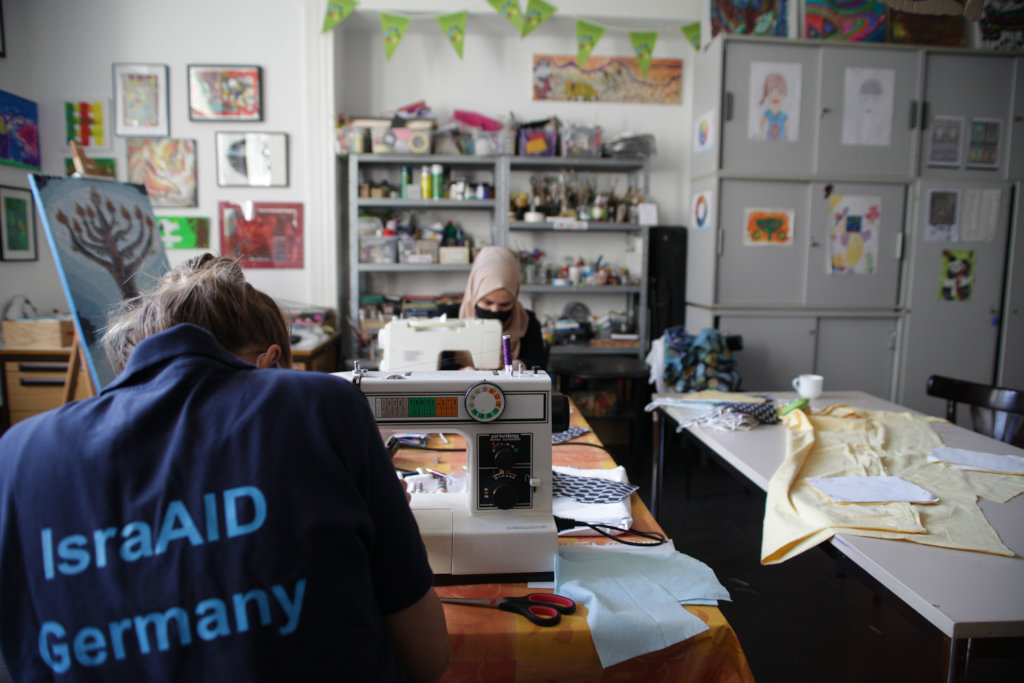
Nehama’s room is lined with shelves around the wall. One serves to dry newly created art and the others store her various materials, supplies, and finished art pieces. She provides art supplies including clay, water and acrylic paints, and kinetic sand. The set-up allows her to quickly bring out and put away supplies and to give the children a sense of pride and security knowing their artwork will be stored safely. Aside from individual or parent/child therapy sessions, Nehama also conducts group Art Therapy which Hannah and I, as interns, assist with. Working in a group helps participants accept their own feelings and share them with others and it also serves as a support group that can last long beyond the sessions themselves. The arts allow participants to confront the depths of their subconsciousness in a non-threatening environment.
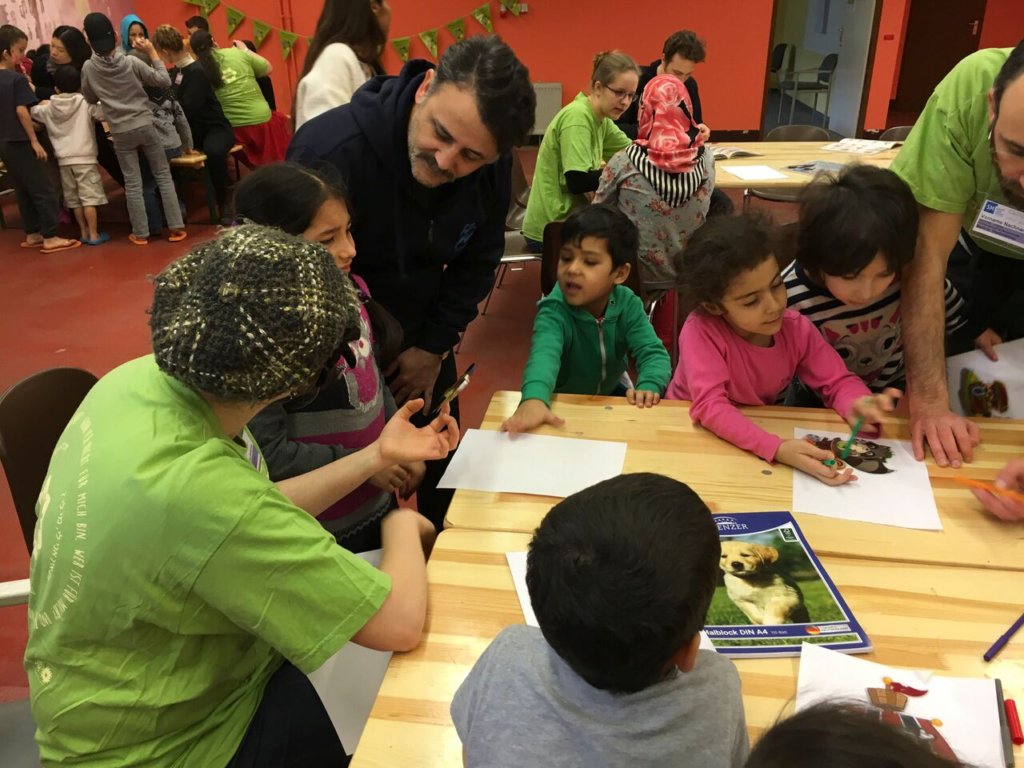
Each Art Therapy group is made up of three to four children and lasts an hour. The children decide what art medium they would like to use and ask Nehama or the interns to get the supplies from the cabinet. Other children often sneak into the art room, eager to participate in the next session and because they love being around Nehama. After all, she is coming to where they live to provide a space for them to be themselves. It can feel very intimate for them. Some of the children in the shelter are already going to Kita (in Germany, Kindergarten is for children from a few months old to 5 years) or grade school. However this is not the case for many; securing a spot in a school is dependent on not just their asylum status but also on availability. While the children play in the shelter, their parents are dealing with German bureaucracy and looking for a more permanent home. For the children who have spent close to half of their life in shelters, this is their home.
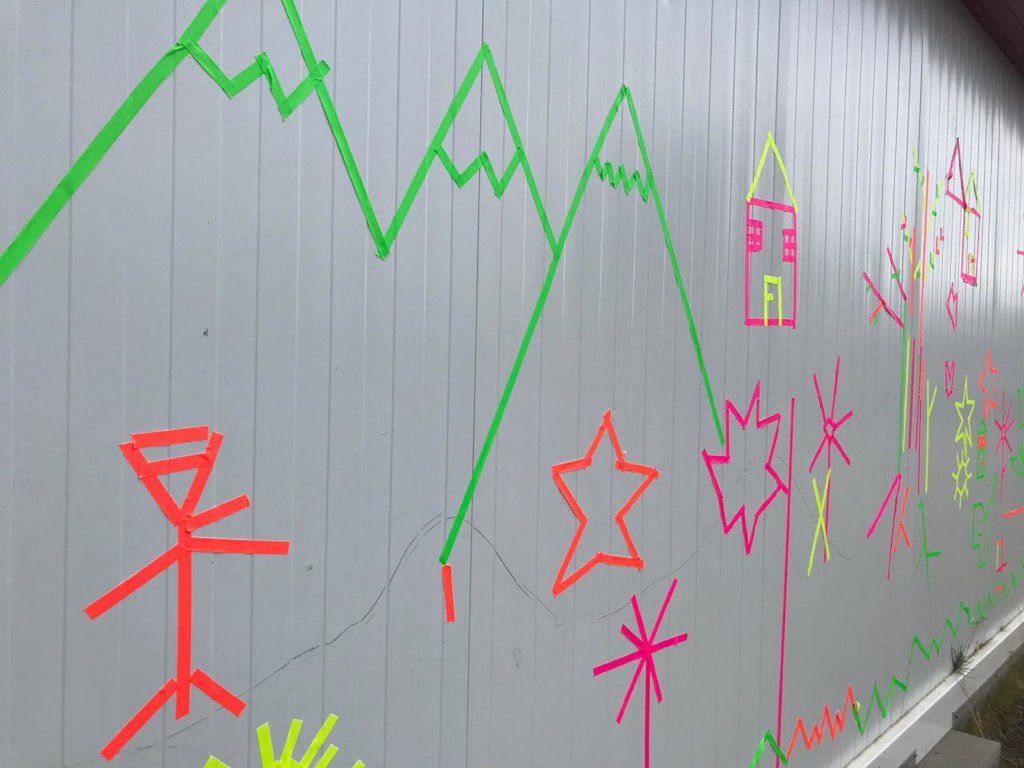
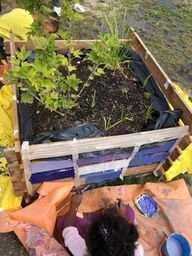
For this reason, Hannah and I are assisting Nehama in leading projects for the children to make public art in the shelter. This is not only a fun activity, but a way to personalize their temporary home. For example, we have painted the flower boxes with acrylics and made a tape art mural on one of the walls of the container together. The art projects are always voluntarily, but it always happens that kids become interested as we are setting up and when a few start, more join. As one could expect, the outdoor project always leads to some chaos, whether it is kids painting each other’s arms or someone taping outside the wall. Nehama tells us that while it can be tiring managing the children, she’s grateful that they are passionate about art and playing, even if they throw fits or make a mess. Most of the children that come to Art Therapy are still very young and may not have experience in formal education. It is in this space that they can learn how to listen and follow instructions, work in groups, and be creative without pressure. It is therefore Nehama’s hope and goal that Art Therapy also prevents children from difficulties adjusting to school in the future, where authority can be much less forgiving.
Thank you for your support!
Project reports on GlobalGiving are posted directly to globalgiving.org by Project Leaders as they are completed, generally every 3-4 months. To protect the integrity of these documents, GlobalGiving does not alter them; therefore you may find some language or formatting issues.
If you donate to this project or have donated to this project, you can receive an email when this project posts a report. You can also subscribe for reports without donating.