By Wayne Ncube | National Director
1. Introduction
This report outlines the key activities, strategic advances, and challenges faced by the Lawyers for Human Rights (LHR) Statelessness Unit over the last four months. Supported by our GlobalGiving community, our work continues to focus on eradicating statelessness through a multi-pronged approach of strategic litigation, community empowerment, regional advocacy, and direct client assistance. This period has been marked by significant advocacy milestones and persistent systemic barriers, particularly in accessing essential documentation.
2. Capacity Building & Community Workshops
Our commitment to empowering communities and strengthening the civil society ecosystem remained a priority.
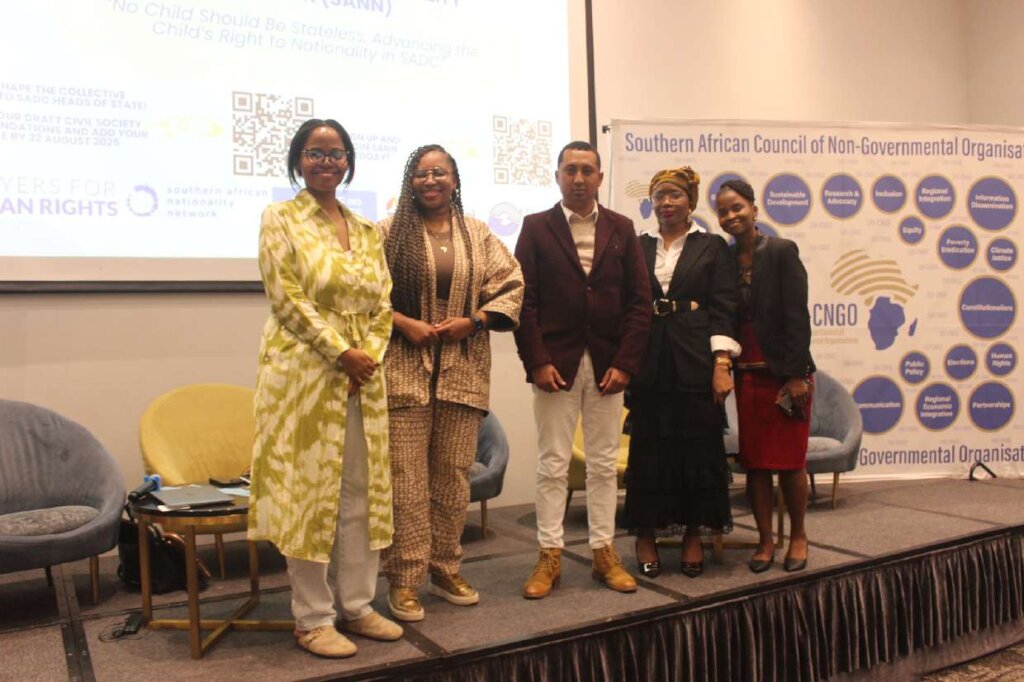
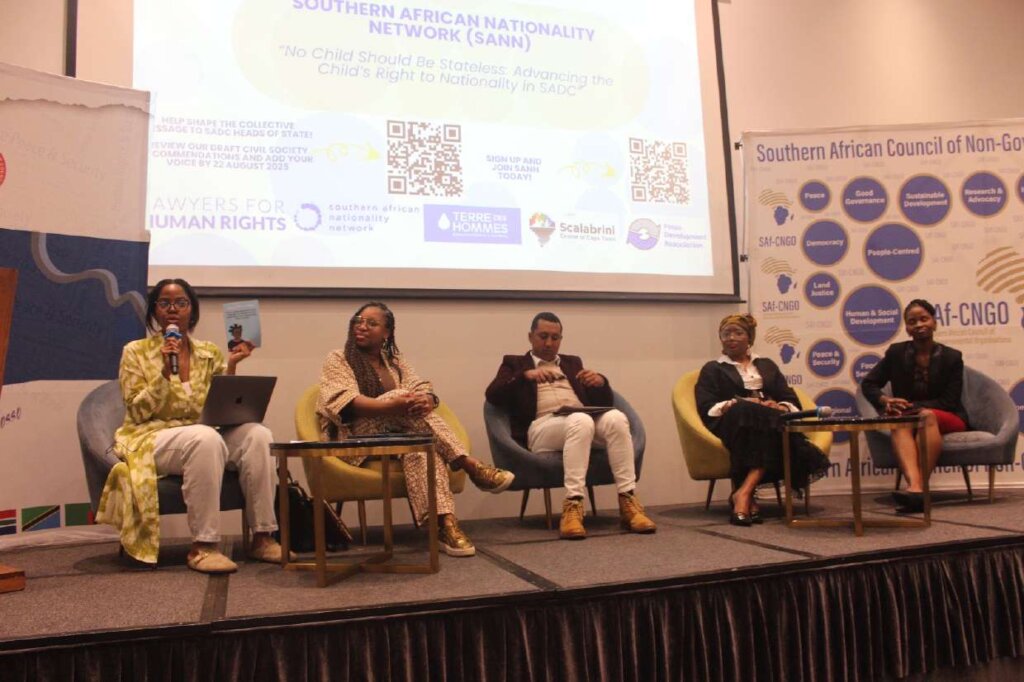
SADC Civil Society Organisation (CSO) Forum Side Event (October 2025): LHR convened a critical regional dialogue in Madagascar, bringing together advocates to discuss the intersection of statelessness, digital identity systems, and civil registration. This positioned our national work within the broader Southern African Development Community (SADC) advocacy landscape, fostering collaborative strategies.
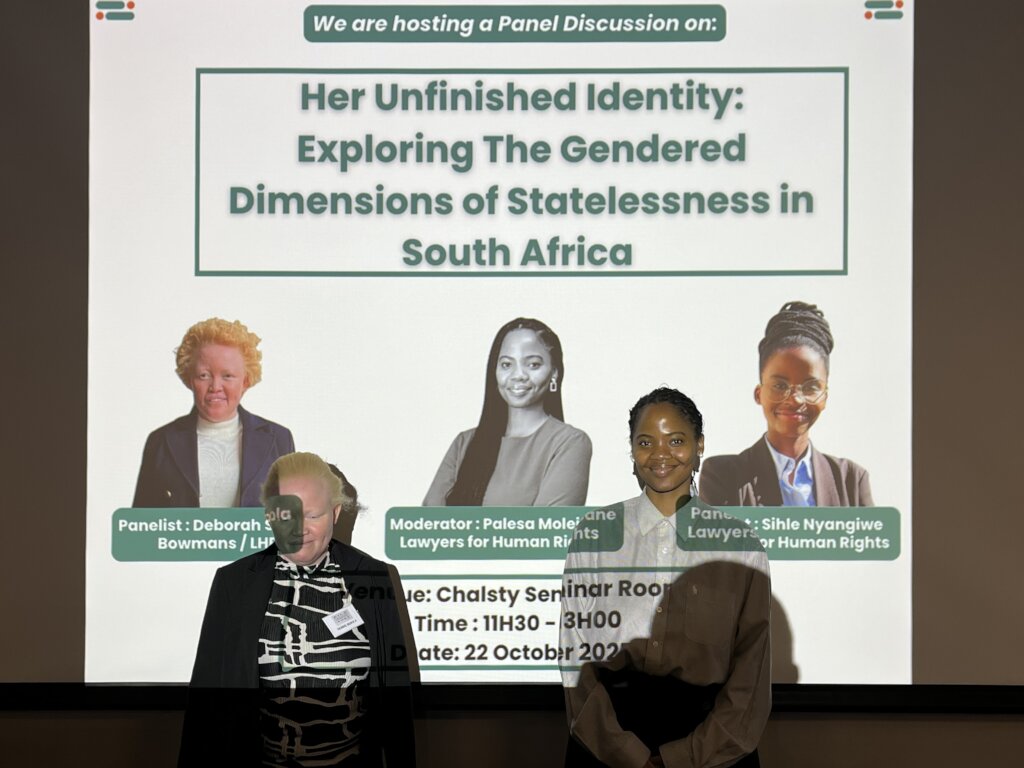
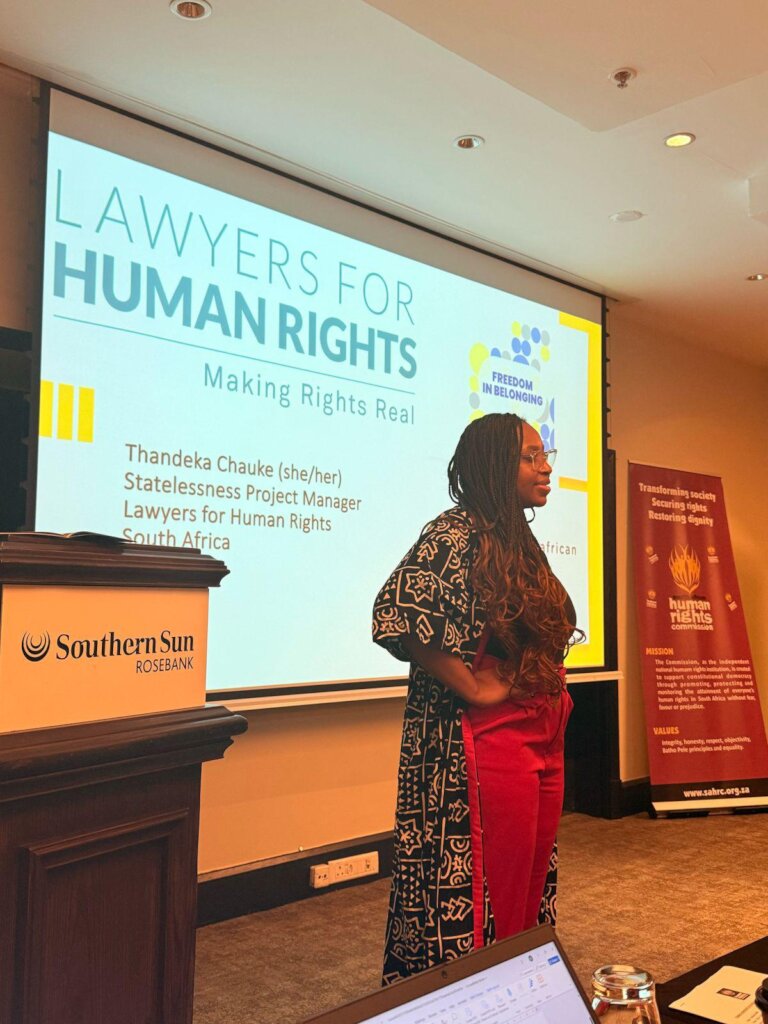
Public Interest Law Gathering (PILG) 2025 (October 2025): We hosted a powerful panel discussion to elevate the gendered dimensions of statelessness. Centering our “Her Document, Her Dignity” campaign, the session highlighted the intergenerational and intersectional impact of documentation denial on women and children, advocating for human rights-centered policy reform.
Southern Africa Nationality Network (SANN) Regional Meeting (November 2025): LHR played a leading role in co-designing and facilitating this annual gathering in Johannesburg. The meeting strengthened coordination among lived-experience advocates and member organisations across Southern Africa, solidifying shared priorities on the right to nationality.
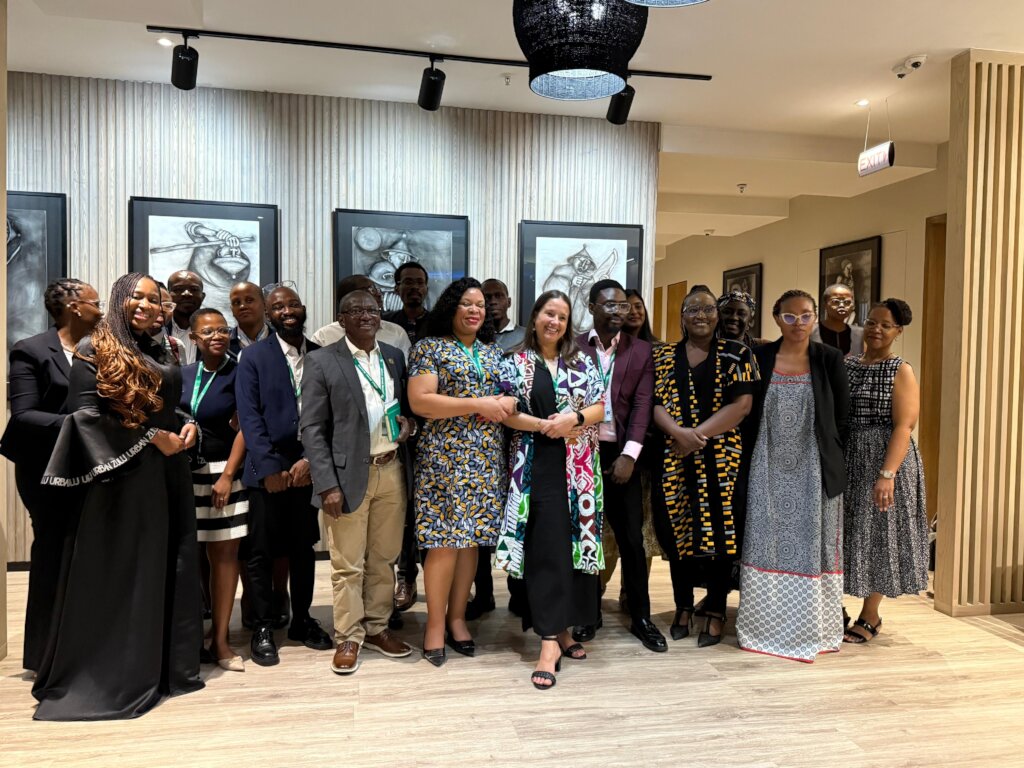
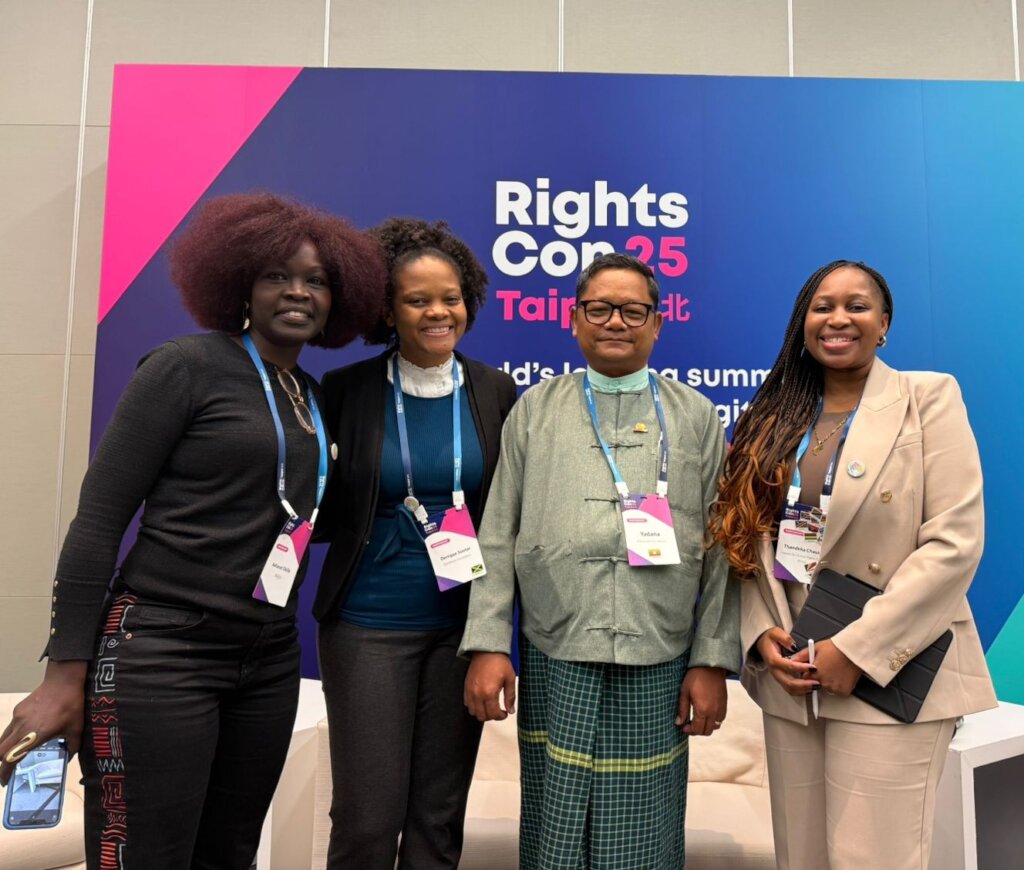
Pan-African & Global Advocacy Engagements: Our team contributed expert briefings at the Pan-African Parliament on model nationality laws and actively represented Southern African perspectives in global forums, including the Global Movement Against Statelessness (GMAS). These efforts ensure regional challenges inform international advocacy agendas.
3. Strategic Litigation: Securing Rights Through the Courts
Our litigation efforts have seen both landmark victories and critical progression in challenging unconstitutional laws and practices.
Landmark Victory in Blocked ID Case (Mazibuko v Minister of Home Affairs): The court confirmed that the Department of Home Affairs’ (DHA) practice of blocking identity numbers without a fair process is unconstitutional and invalid. We are now engaged in the vital monitoring and implementation phase, assisting affected individuals to finally access their IDs and restore their rights.
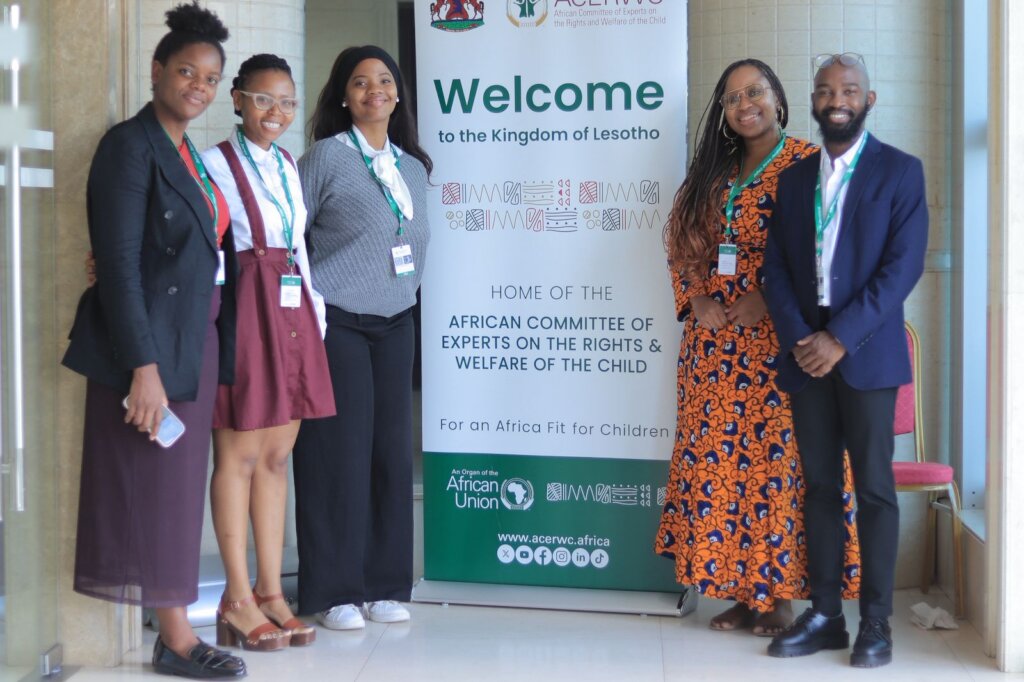
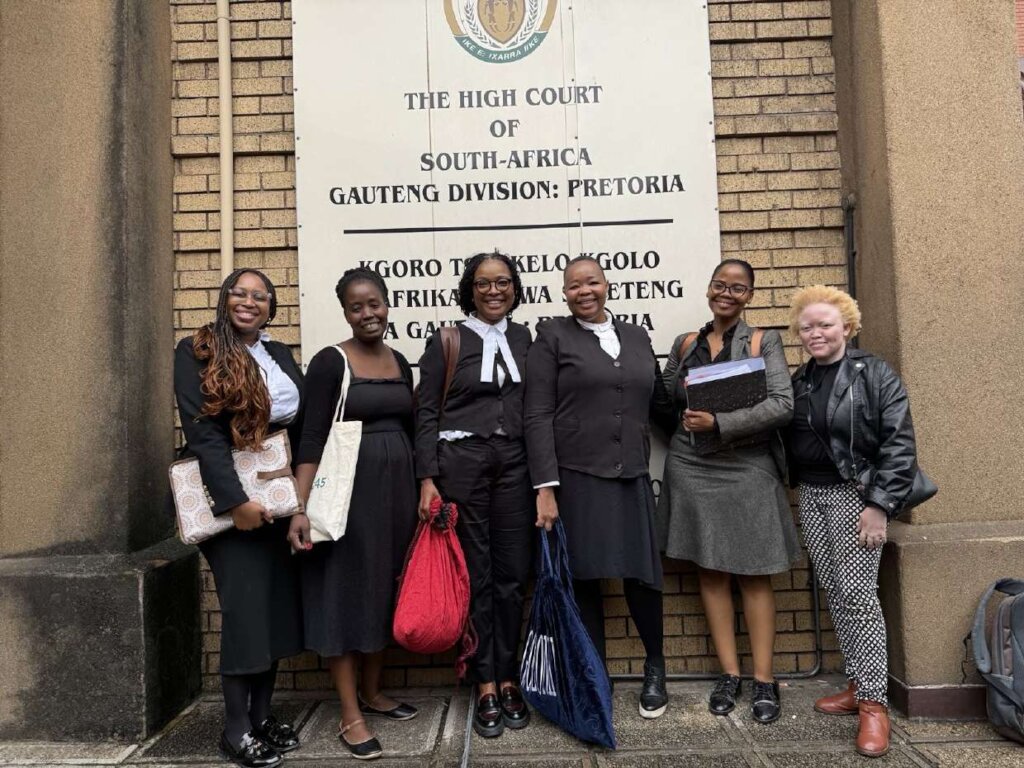
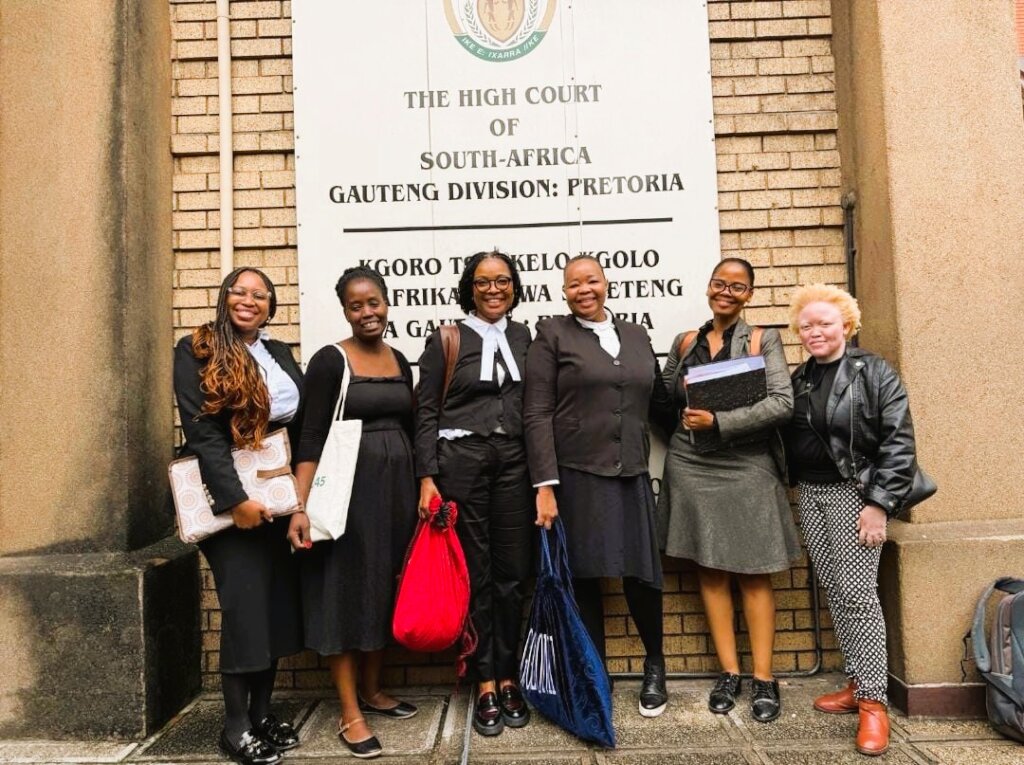
Challenging Restrictive Citizenship Regulations (LHR v Minister of Home Affairs): Our constitutional challenge to the 2023 Citizenship Act regulations is progressing through the High Court. All pleadings, including our Heads of Argument, have been filed. We await a hearing date for this crucial case, which seeks to overturn regulations that unlawfully restrict access to citizenship by birth.
Combatting Derivative Deprivation of Nationality: We are advancing a strategic case on behalf of young adults born in South Africa who are denied their first ID cards solely because a parent’s ID is blocked. This matter, developed in partnership with pro bono counsel, challenges a DHA circular that effectively punishes children for their parents’ administrative status, a practice we argue constitutes derivative deprivation of nationality.
Building Jurisprudence on Women & Statelessness: We have instituted a High Court application to address the specific and severe impacts of documentation denial on women and the intergenerational statelessness that results. This case is part of a deliberate strategy to develop stronger legal protections for women and children affected by these issues.
4. Direct Client Assistance & Case Management
The need for direct legal services remains acute, with DNA testing requirements representing a major financial and logistical barrier for our most vulnerable clients.
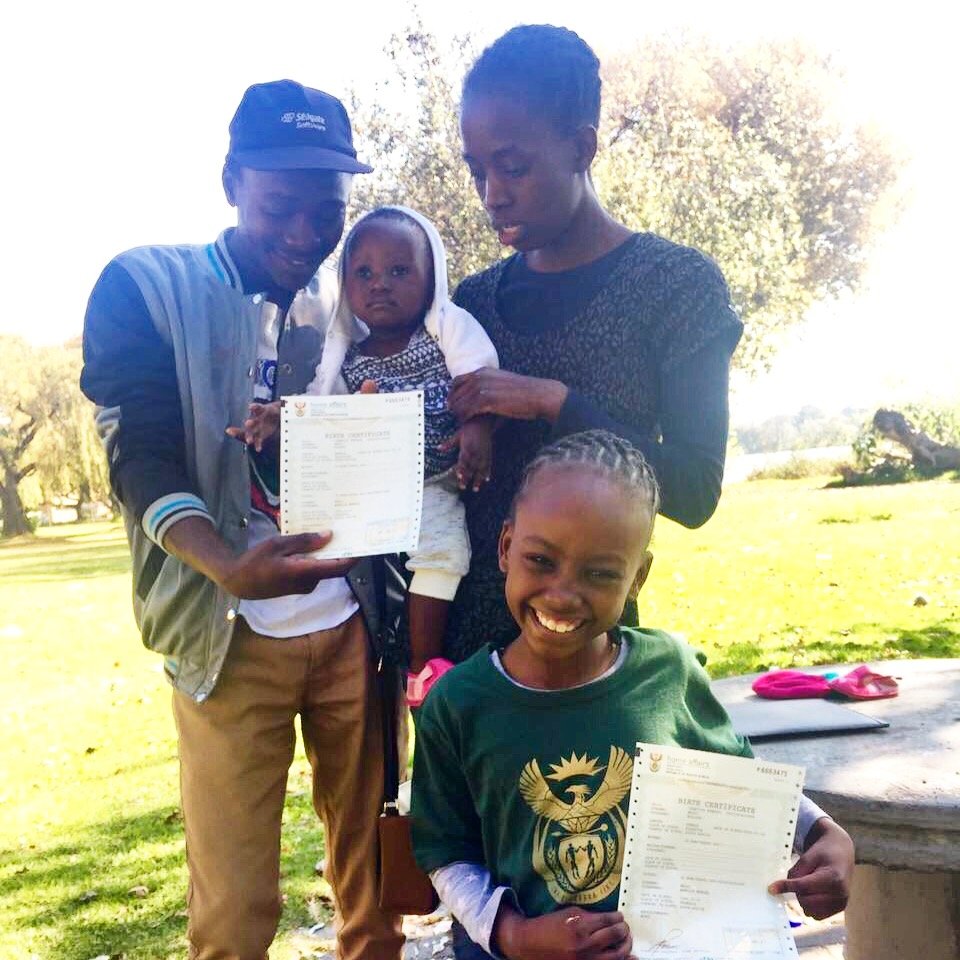
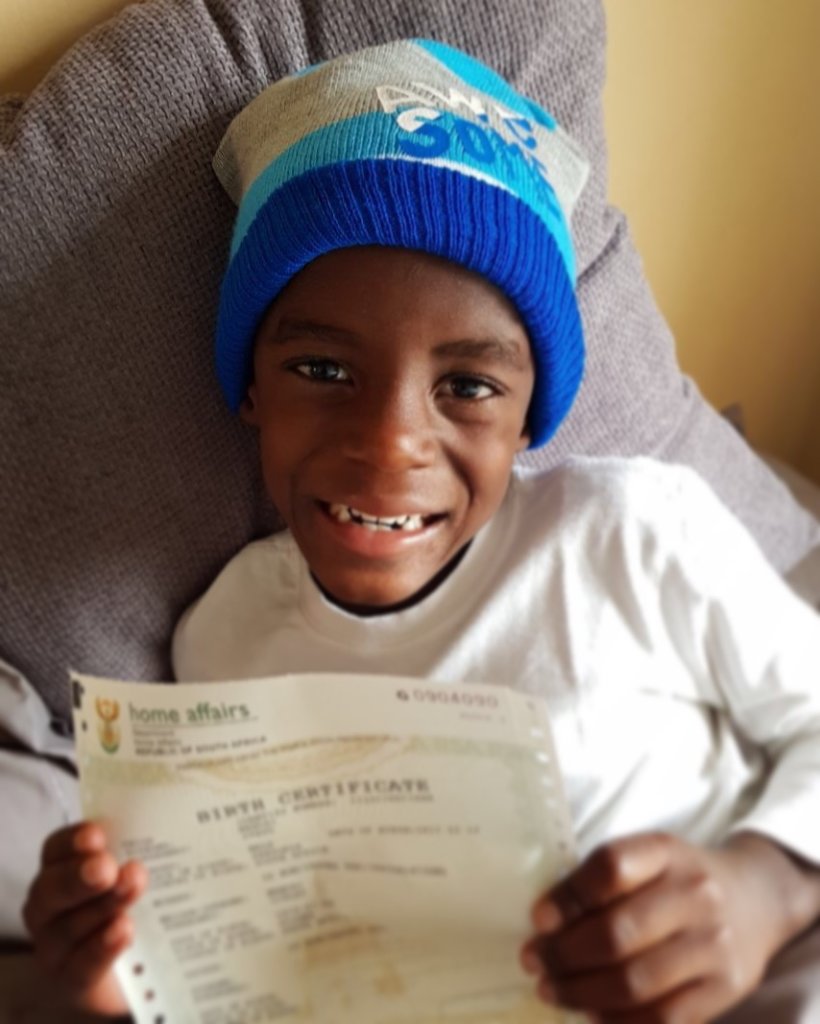
Ongoing Case Resolution: We continue to manage a significant caseload of individuals and families who cannot access birth registration or citizenship due to the Department of Home Affairs’ DNA testing requirements.
Critical Barrier – DNA Testing Costs: A primary obstacle to resolving these cases is the prohibitive cost of private DNA tests, necessitated by extensive backlogs in state facilities. We are currently facilitating tests for multiple families, including:
A South African mother struggling to register her children born in Mozambique.
A grandfather seeking to register his grandchildren while their mother is incapacitated.
A large family with 11 children, only two of whom are documented.
Several cases involving fathers seeking to establish paternity to register their children.
Estimated Financial Need: The expedited testing required to resolve just the current urgent cases in our pipeline is estimated at ZAR 28,960. Timely resolution of these cases is essential to securing these individuals’ fundamental rights to identity, education, and healthcare.
5. Impact & Continuing Challenges
Thanks to donor support, we have empowered communities, set vital legal precedents, and provided direct aid to those in need. However, systemic hurdles persist. The DHA’s reliance on expensive, privately-conducted DNA tests places an insurmountable burden on marginalized individuals, effectively rendering their constitutional right to a nationality contingent on their economic means. Our advocacy and litigation directly target this injustice.
6. Acknowledgements & Path Forward
We extend our deepest gratitude to our GlobalGiving donors. Your support fuels our integrated approach—from the courtroom to the community hall. As we move forward, our priorities are: (1) securing a hearing date for our citizenship regulations case, (2) expanding the “Her Document, Her Dignity” campaign, and (3) urgently raising funds to cover DNA tests for our current clients, allowing us to clear our backlog and take on new cases. Together, we continue the fight to ensure everyone has the right to belong.
By Wayne Ncube | National director
By Wayne Ncube | National Director
Project reports on GlobalGiving are posted directly to globalgiving.org by Project Leaders as they are completed, generally every 3-4 months. To protect the integrity of these documents, GlobalGiving does not alter them; therefore you may find some language or formatting issues.
If you donate to this project or have donated to this project, you can receive an email when this project posts a report. You can also subscribe for reports without donating.



Support this important cause by creating a personalized fundraising page.
Start a Fundraiser