By Teresa (Terry) Whatley | Founder/Director
Baby bird season for 2025 has finally slowed to a trickle here in Southern California. The season started late this year and is ending late. Certain birds, like pigeons and doves, nest and produce young year-round here, but the songbird types are usually done for the season by Labor Day. This year we are still getting in Pin-Tailed Whydah fledglings, but even those are becoming fewer. So, with the end of baby season in sight, let’s review some of the things that happened this year. We can learn from them and be better prepared for our next close encounters of the bird kind!
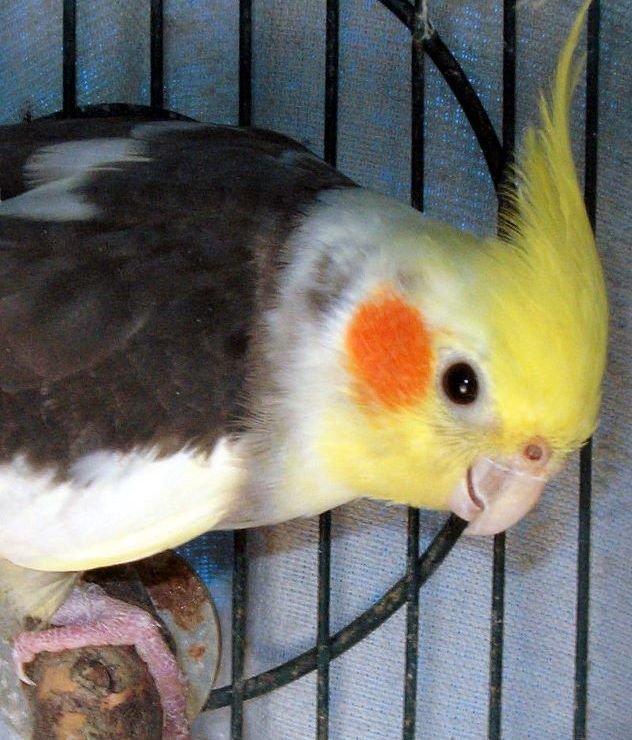
First and foremost, if you encounter a bird of any kind or any age that appears to be sick, injured, orphaned, or an escaped domestic bird, get the bird safely confined in a box, paper bag, wrapped in a towel, t-shirt, or in your bare hands if possible. Get creative and think outside that box that you may not have handy. Safe means confined and inside and not just left in an open box outside. Obviously, take your own safety into consideration. There are birds that can hurt you. Please don’t just leave the bird and assume that it will be OK or that someone else is going to help. If you are the first responder, so to speak, then it’s up to you. Once you have the bird safe, then it’s time to take pictures and post on social media or start making calls for added help. If you make a mistake and a wild bird you rescued is ok, it can always be put back where it was found. Domestic/exotic birds should never be left to fend for themselves or be put back outside.
Let’s go ahead and do away with a few popular misconceptions that often stop people from helping a bird they have met. These were the top misconceptions this year.
Let’s move on to the case where you’ve decided to help. We now need to know if you have a hatchling, a nestling, a fledgling, or an adult bird in order to provide proper temporary care. In all cases, you need to provide a soft substrate in whatever container you are using for the bird. An old T-shirt works great for this. It provides something soft to rest on, something to grip for traction, helps avoid injury to the bird during transport, and also helps provide warmth to hatchlings and nestlings that cannot yet regulate their body temperature.
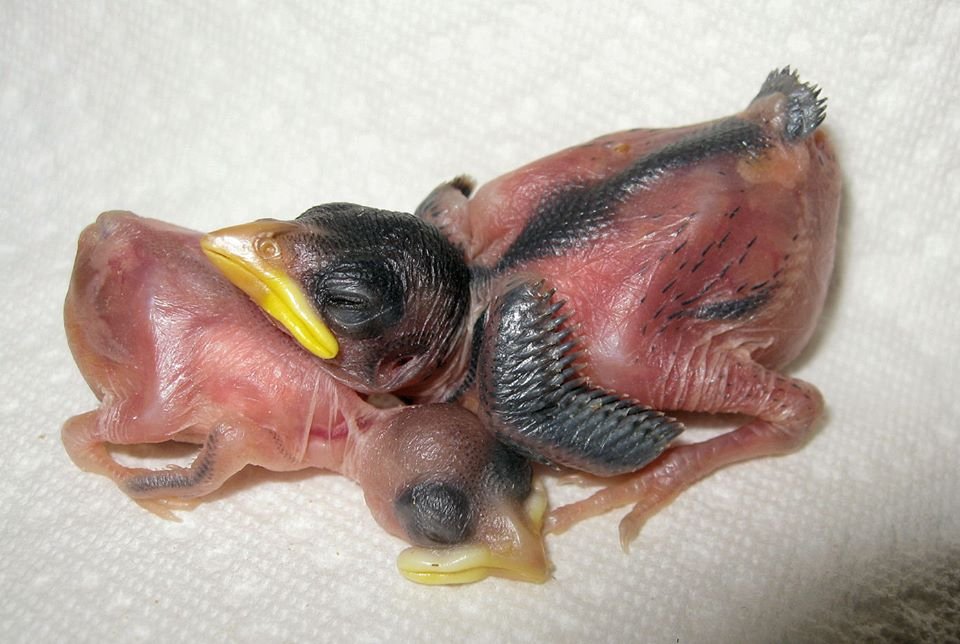
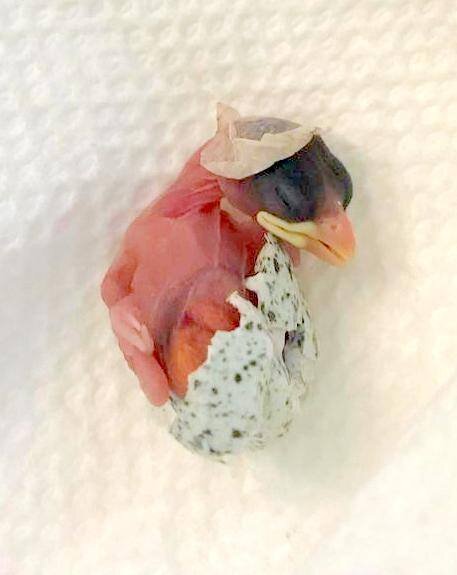
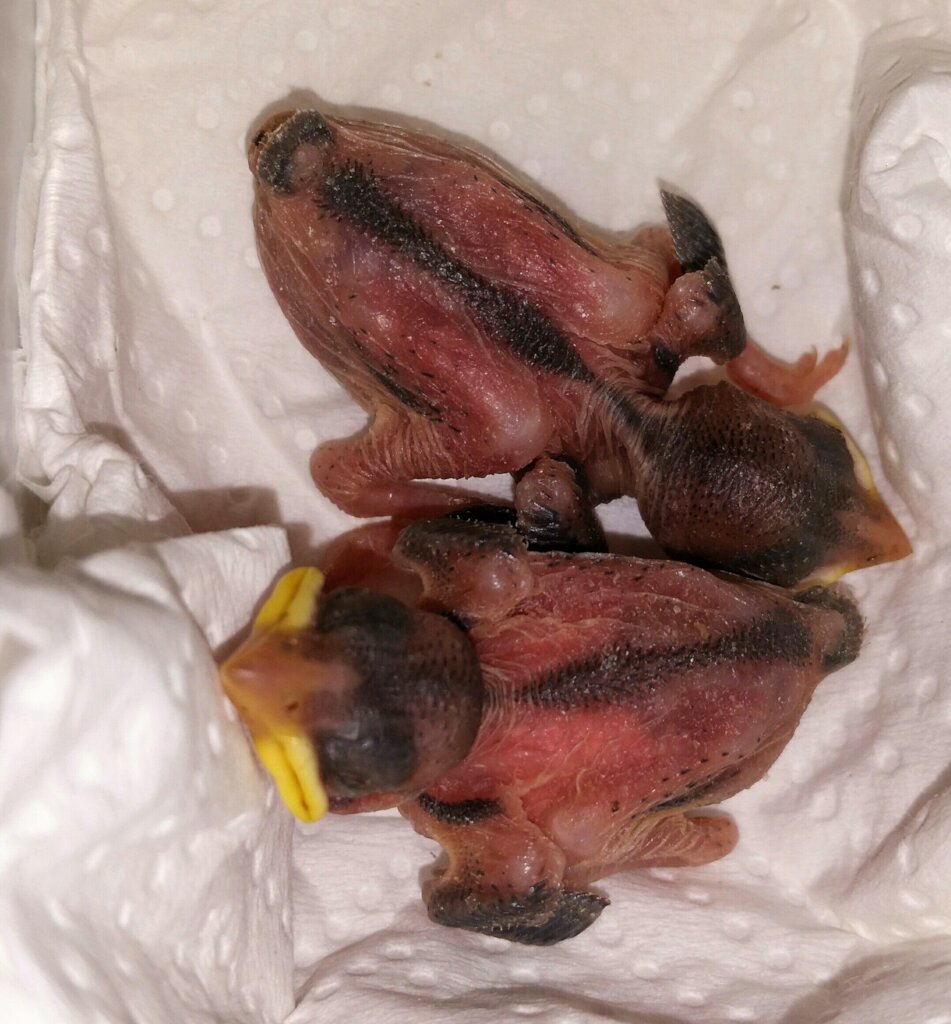
Hatchling: Naked or sparse fuzz, eyes closed, completely helpless. Zero chance of survival on its own. Supplemental heat is essential.
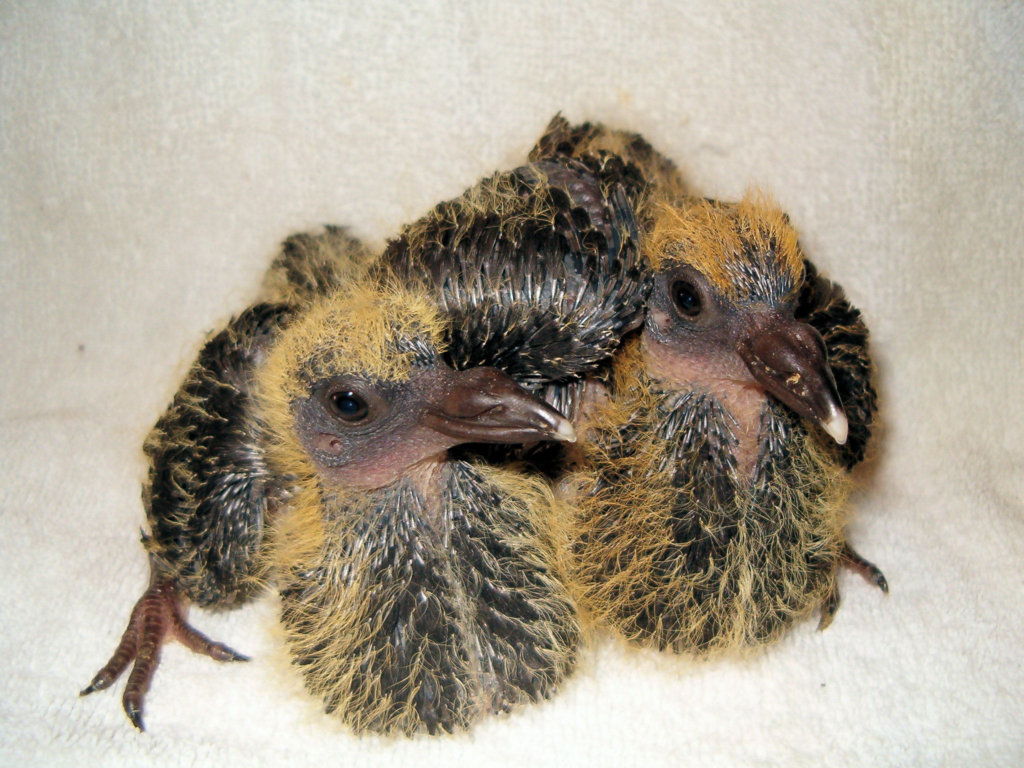
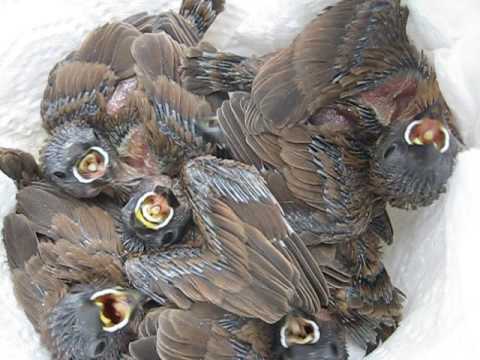
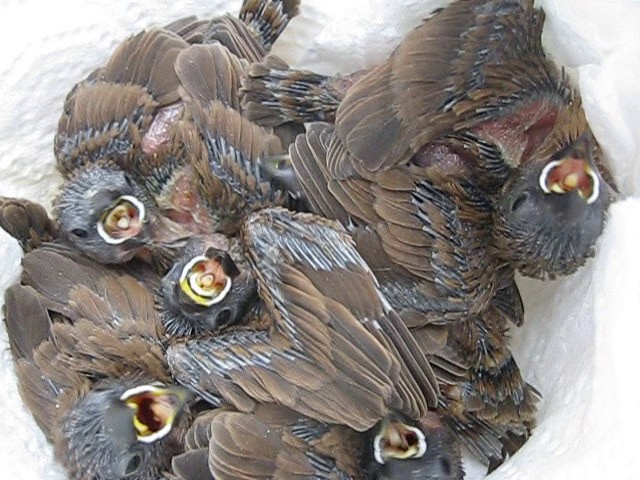
Nestling: Some feathers starting, eyes open, should still be in the nest and is completely dependent on the parent birds. Zero chance of survival on its own. Supplemental heat is likely to be needed.
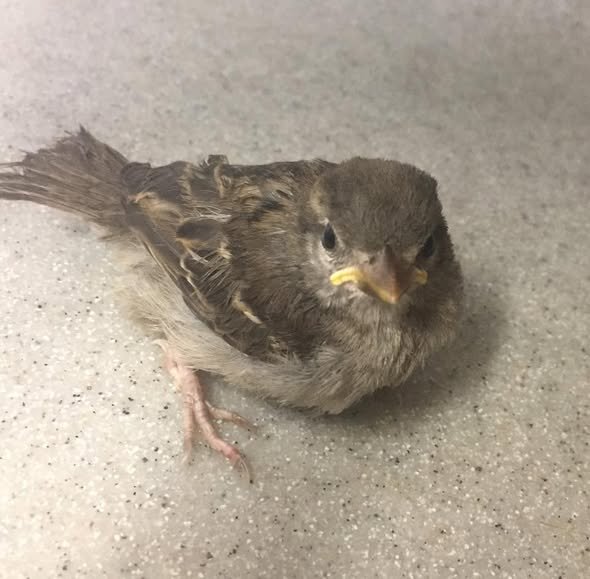
Fledgling: Has most of the feathers and has left the nest. Can fly some, but not well, and is still not completely self-sufficient. Won’t survive without the parents or adult flock members providing supplemental feeding and coaching on how to survive.
Adult: Bird is completely feathered, able to fly, and is self-sufficient. Unless sick or injured, it is completely capable of surviving on its own. Obviously, it’s sick or injured or both, or you wouldn’t be trying to help it. Unlikely to survive without your help.
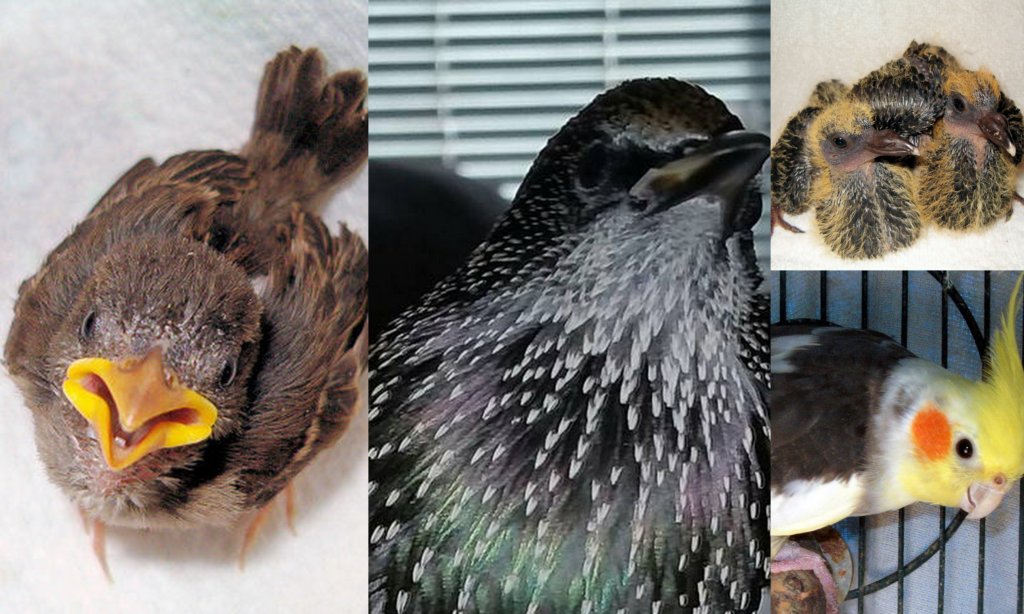
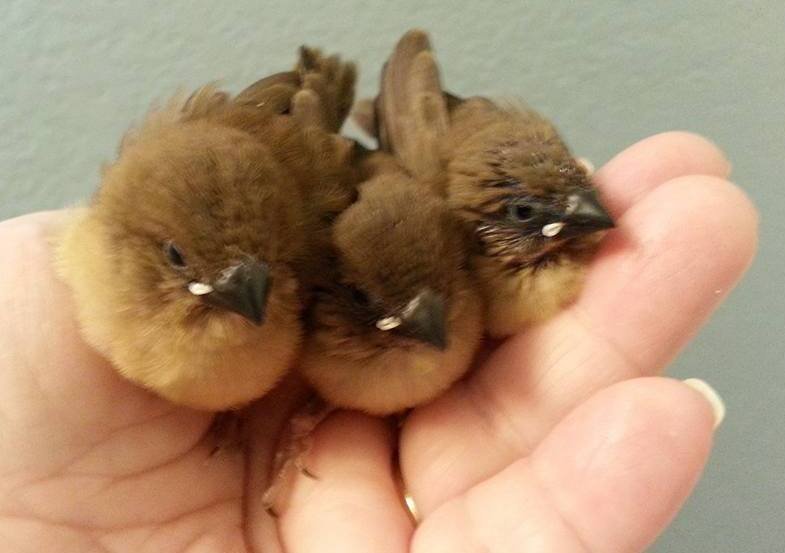
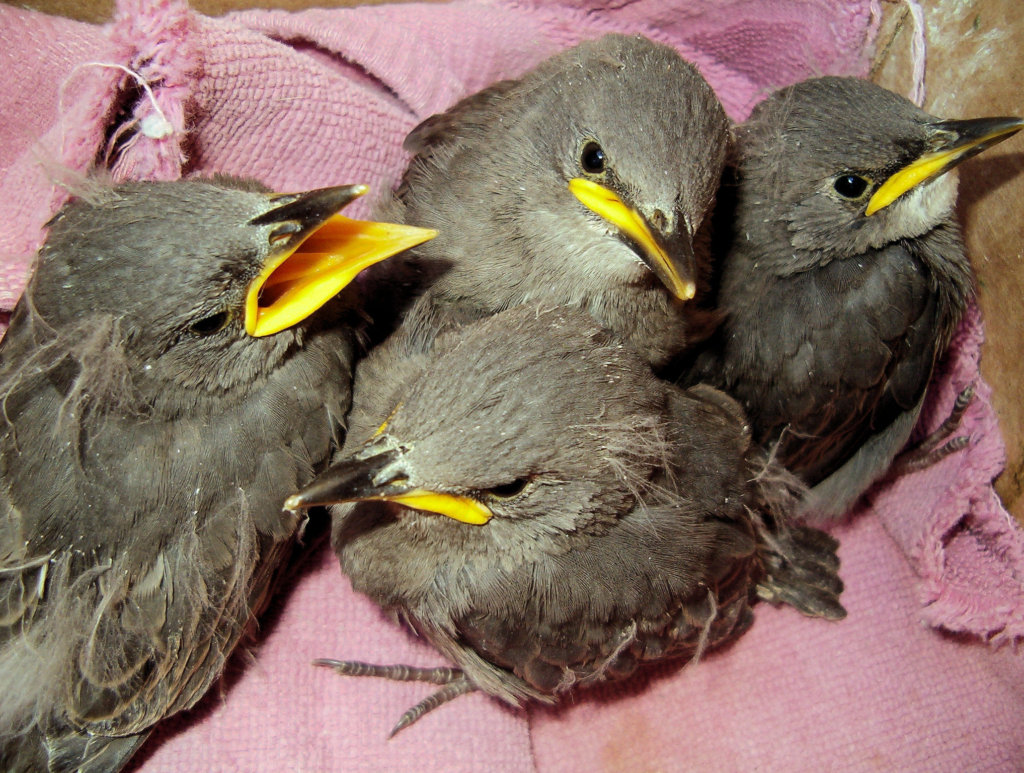
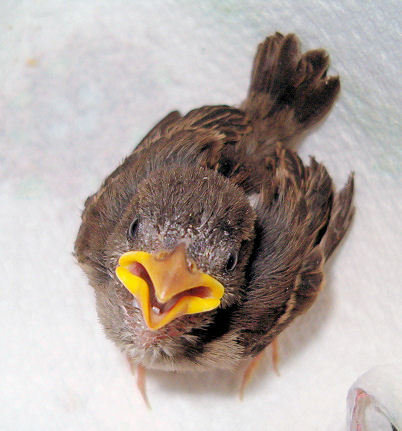
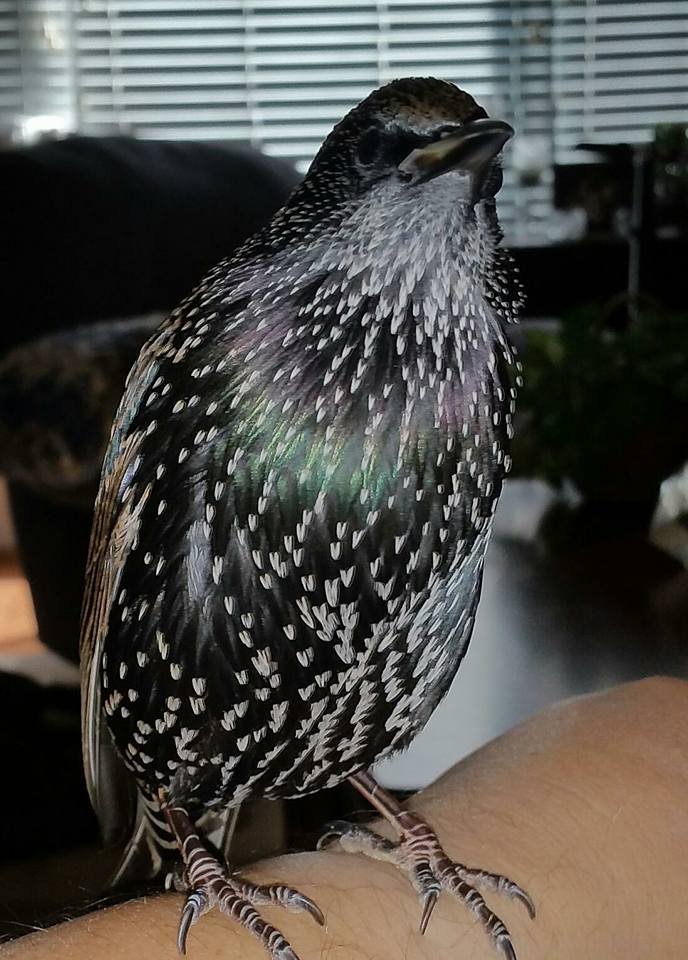
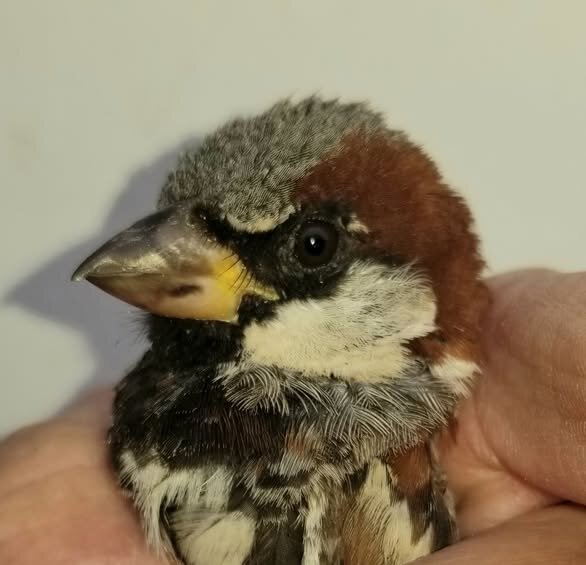
Native VS Non-Native: This could be called “when is a sparrow not a sparrow”. While an English House Sparrow IS a sparrow, it’s a non-native sparrow in the United States. Song Sparrows, White Crowned Sparrows, and others are native species of sparrows. Eurasian Collared Doves are non-native. Mourning Doves are native. It’s crazy and confusing, but it makes a HUGE difference in where these birds can be cared for. Native species have to go to facilities that have the required state and federal permits for them. Non-natives can come to us or to other rescues that do not hold the state and federal permits needed for native birds. How do you know what species of bird and whether the bird is native or non-native? If the bird you are trying to help is a species listed as protected in the Migratory Bird Treaty Act, it’s a native species. There are more than 1000 species of protected birds listed in the MBTA. If you don’t know the species of bird, you can take a picture and use Google Lens or the Merlin Bird ID app to identify it or just send a picture to the rescue you are talking to. It’s a lot easier to know which birds are not protected. Here in Southern California, the commonly found species of wild non-native birds are English House Sparrows, European Starlings, Feral Pigeons, Eurasian Collared Doves, Wild Parrots, Japanese White Eyes, Nutmeg Mannikins, and Pin_Tailed Whydahs.
For native species of wild birds, contact your closest licensed wildlife facility and make arrangements to drop off the bird for care. In the case of non-native wild birds, some licensed wildlife facilities will take them, but most do not. Your local wildlife center should be able to direct you to a rescue in your area that takes non-native wild birds. Your local animal services agency may also be able to aid you with referrals to a local rescue. If you are in Southern California, we (Avian Underdogs Rescue Association), are your friendly, local, non-native wild bird rescue. We also rescue domestic and exotic birds.
Thank you for all your support over the years. We are extremely grateful and hope that you will continue to support us and our efforts.
Project reports on GlobalGiving are posted directly to globalgiving.org by Project Leaders as they are completed, generally every 3-4 months. To protect the integrity of these documents, GlobalGiving does not alter them; therefore you may find some language or formatting issues.
If you donate to this project or have donated to this project, you can receive an email when this project posts a report. You can also subscribe for reports without donating.



Support this important cause by creating a personalized fundraising page.
Start a Fundraiser