By Catherine Hill | Volunteer
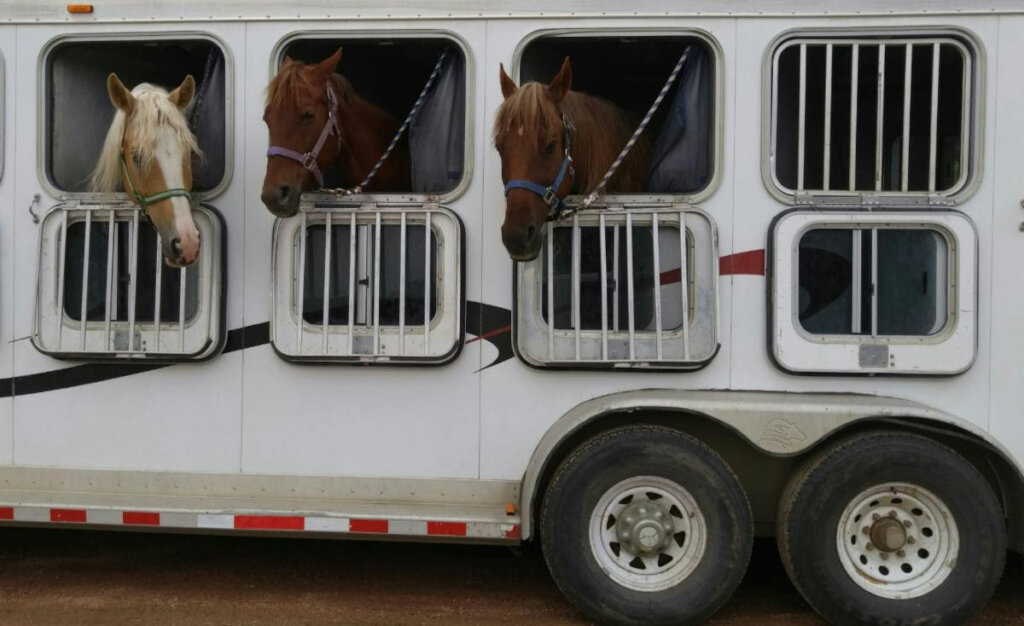
She walked into the trailer because someone she trusted led her there.
But once the doors shut, everything changed.
She was crammed between strangers, unable to turn or lie down.
The trailer did not stop for food, water, or rest.
The heat was suffocating.
Some of the strangers collapsed along the way.
More than 20,000 American horses go through this every year.
They are not heading to new homes.
They are being sent to slaughterhouses across the border, in Mexico or Canada, where they are brutally killed for meat.
And it is still completely legal.
Most of these horses are not sick or dangerous.
They are young and healthy.
Some were beloved companion animals cared for by older adults.
But when their guardians cannot afford to keep them anymore, they end up at auctions.
That is where people called “kill buyers” come in.
They pretend they are giving the horse a second chance, but they sell the horse to be killed for meat in another country.
Horses are wired to flee danger.
In the wild, they survive by running when they sense a threat.
So when they are forced into the kill box, they panic.
The killing method involves firing a metal bolt into the horse’s skull to render them unconscious before they are slaughtered, but it often fails.
That means some horses are still awake when the killing starts.
It is terrifying, and happens every day to horses just like the ones in pastures and family barns across the country.
This is not kindness, it is cruelty.
Right now, it is illegal to slaughter dogs and cats for human consumption in the U.S.
But horses do not have the same protection, even though they are just as beloved by many families.
The Save America's Forgotten Equines (SAFE) Act, a law that would outlaw the slaughter of horses in the U.S. and stop them from being exported for meat, would change that.
But Congress will not act unless we pressure them to.
Help build a future where no horse ends his or her life in fear, pain, or alone on a slaughterhouse floor.
Thank you for taking action for animals.
Links:
Project reports on GlobalGiving are posted directly to globalgiving.org by Project Leaders as they are completed, generally every 3-4 months. To protect the integrity of these documents, GlobalGiving does not alter them; therefore you may find some language or formatting issues.
If you donate to this project or have donated to this project, you can receive an email when this project posts a report. You can also subscribe for reports without donating.



Support this important cause by creating a personalized fundraising page.
Start a Fundraiser