By Kencho Tshering | Programme/Communications Officer
Situation Analysis for Community-Based Integrated Programming in the three districts of Chhukha, Dagana and Samtse
Meet Aruna, an 18-year-old student from Peljorling Higher Secondary School in Samtse District. Like many young people in rural Bhutan, Aruna dreams of a future where her voice matters in shaping her community. Yet, in her school and community, access to essential services like quality education, menstrual hygiene products, clean water, and information on climate resilience is limited. Aruna, like others her age, faces a world full of potential but shadowed by social, economic, and environmental barriers that often go unheard.
BCMD undertook the task of carrying out youth consultations in the three districts of Chhukha, Dagana, and Samtse, which collectively represented 21% of Bhutan’s children, approximately 46,182 individuals who experience diverse vulnerabilities on account of the Multidimensional Poverty Index. The aim was to listen to young people like Aruna, identify issues and challenges faced by young people like her, and provide input to the Government for integrated programming interventions to improve the well-being of children and young people in the identified districts.
Aruna’s goal, like that of her peers, was simple but powerful: to be heard. She wanted decision-makers to know that her community needed more than just schools; it needed safe environments, support for youth who had dropped out, health and hygiene resources, and opportunities for civic participation. She hoped that by speaking up, she could spark change not only for herself but for others in her community.
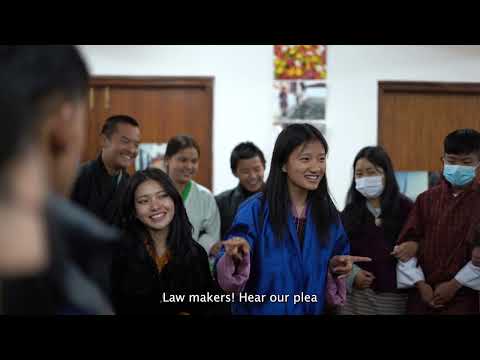
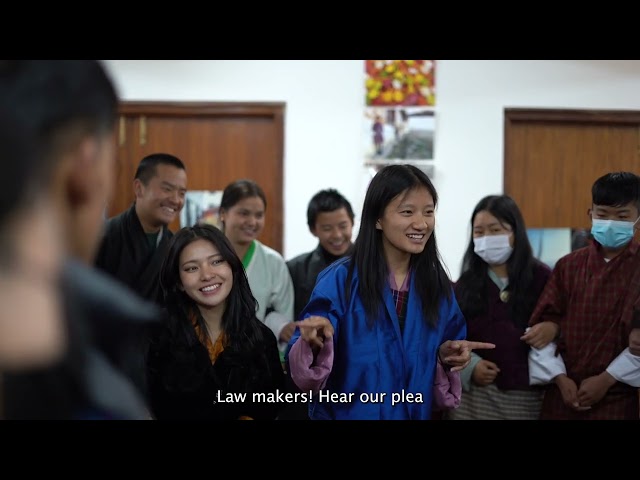
The consultation brought together 37 young people aged 13 to 24 from six gewogs in Samtse, namely Dumtoed, Dophuchen, Tading, Namgaychhoeling, Norgaygang, and Sangngagchoeling, to reflect on their lived realities and propose solutions to the challenges they face. Similarly, in Dagana and Samtse, another 20 young people in each district(review/correct the number of participants) were consulted to understand their lived experiences and that of other young people their age in the six thematic areas of i) education, ii) Health and Nutrition, iii) Poverty, iv) Protection (Social and Sexual Abuse), v) Water, Sanitation and Hygiene (WASH) and Climate Change; and vi) Participation in decision-making.
For Aruna and the others, this was the first time their opinions were sought on the issues, and they were consulted not only as equals but as experts in understanding the root causes of the problems and exploring solutions. Initially hesitant, Aruna gradually found her voice through group discussions and interactive tools like the Problem Tree Analysis and Frequency-Severity Matrix. She later shared, “I didn’t know how to say these things before. But now I feel confident. We never got the platform to share our problems, we feel heard.”
What Aruna and her peers revealed during the consultation was deeply revealing. Under the education theme, shortage of qualified teachers (especially in science and mathematics), teacher attrition, poor school infrastructure and remote and difficult school locations, severe lack of quality learning resources- broken computers, outdated textbooks and textbook shortages, insufficient science lab equipment, limited access to internet and digital learning tools were cited as affecting their learning. One student said, “We don’t have a math teacher this term, so we just sit in class and do nothing.” Poor toilet hygiene and a lack of privacy and safety in hostels necessitate that many students live as paying guests, often without adult supervision, leaving them vulnerable to substance abuse and teenage pregnancy. Students also highlighted discrimination in classrooms, where English-speaking or academically strong pupils were favored, while struggling students faced neglect and ridicule. These inequities eroded confidence and deepened exclusion.
In the area of health and nutrition, adolescents voiced concerns over the poor quality and hygiene of hostel meals, citing frequent use of potatoes, lack of fruits, and even the presence of insects in food. Stress and depression were common, linked to bullying, gossip, academic pressure, and exclusion.
Participants highlighted that financial hardship often resulted in food insecurity and restricted access to education. They described how families in their communities faced difficulties in meeting basic needs, including housing, clothing, food, and school supplies.. Many also lacked access to social protection services, hindered by procedural and language barriers, stigma, and misinformation. Participants further noted that children from impoverished or alcohol-affected households were particularly vulnerable to neglect and abuse.
When it came to child protection, both adolescents and youth shared heartbreaking stories of bullying, online abuse, and verbal harassment, often from teachers. The lack of trusted, confidential reporting mechanisms left students feeling isolated and unprotected. Teenage pregnancy was also a prominent concern, with participants describing a lack of relationship guidance and unsafe environments where abuse could occur. One girl told of early marriages resulting from academic failure or peer pressure. There was also a lack of understanding around consent and gendered expectations that unfairly placed blame on girls for harassment.
Bullying, both online and offline, was a recurring reality for almost all, and increasingly more rampant in the current digital times. Victims were often silenced by fear of retaliation and lack of either the existence of/or trust in counsellors. Sexual abuse, teenage pregnancy, and parental neglect were grave issues, yet reporting remained low due to associated stigma and fear. Gender disparities permeated all spaces, with girls facing harsher scrutiny, lower expectations, and limited agency in school leadership. Inadequate sexual health education and social stigma around teenage pregnancy pushed girls out of school despite policies allowing them to continue.
WASH and climate change issues were pressing for students, particularly for girls in boarding schools. Many reported having no water in the toilets or being forced to use dirty tap water. Students reported skin infections, urinary tract infections, and falling ill frequently from limited access to clean and safe drinking water and poor sanitation. Girls spoke of the difficulties of managing menstruation without proper facilities. Waste management and food insecurity were also common concerns, with climate-related crop failures exacerbating food scarcity, particularly among poorer households.
On their role in participation, most young people had never heard of their right to participate in decision-making. Many assumed, as a culturally ingrained notion, that they were too young to attend community meetings or provide feedback. Even youth leaders described their roles in schools as largely administrative and limited to enforcing school rules and decisions of the school management, indicating inability to exercise agency by the young people. Youths were unaware of local governance structures, for they had never been consulted in matters of participatory mechanisms in their community development, and described civic life as something reserved for adults. They also felt judged, excluded, or unqualified to contribute, reflecting how deeply internalised the culture of adultism is in their lives.
Despite these challenges, the consultations served as a powerful awakening. Youth like Aruna are left with greater awareness, courage, and confidence. Their insights, grounded in lived experience, now documented, will be used to inform the Government in integrated programming and interventions in the communities. Testimonies revealed systemic gaps that disproportionately impacted vulnerable groups, particularly children from low-income families, girls, and children with disabilities. Findings from the consultations have not only surfaced critical issues but also shown the way forward through youth-led dialogue, community-based support, and systemic reforms.
This initiative demonstrates that when children and young people are given the space to speak and the tools to engage, they can be powerful agents of change.
Links:
Project reports on GlobalGiving are posted directly to globalgiving.org by Project Leaders as they are completed, generally every 3-4 months. To protect the integrity of these documents, GlobalGiving does not alter them; therefore you may find some language or formatting issues.
If you donate to this project or have donated to this project, you can receive an email when this project posts a report. You can also subscribe for reports without donating.



Support this important cause by creating a personalized fundraising page.
Start a Fundraiser