By Akshay Gawade | Project Leader
Hello Donors,
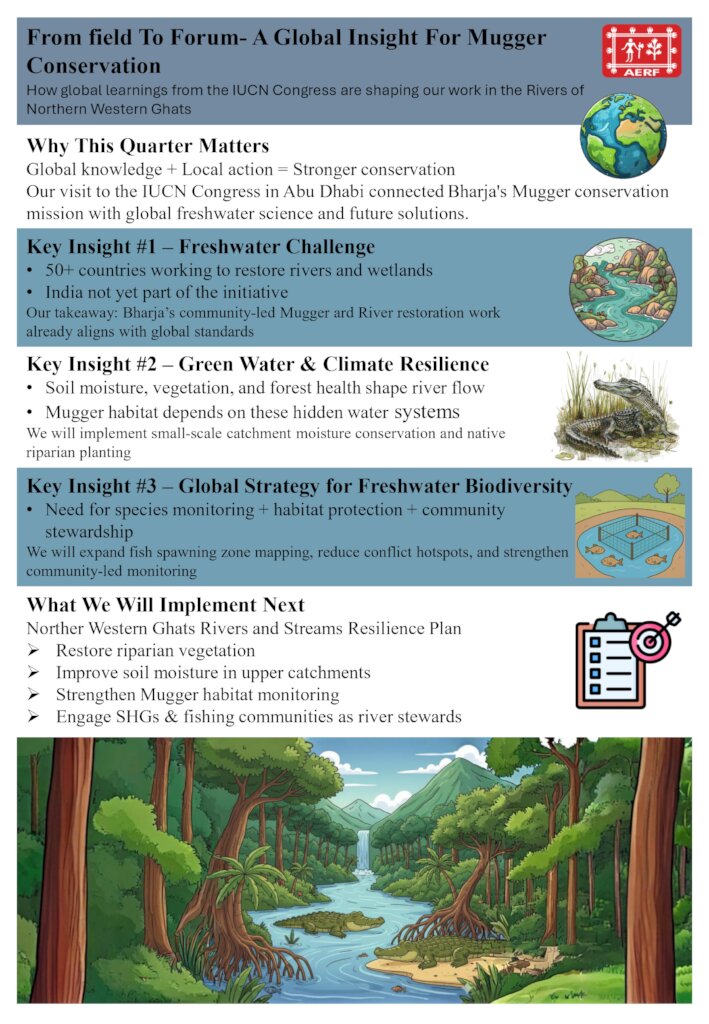
Fresh from the IUCN Congress, our Mugger conservation work in the Rivers of Northern western Ghats has taken on a clearer direction, shaped by global freshwater science and grounded in the realities of our field. This quarter helped us understand not only where our Rivers stands today, but also how we can practically transform our landscape using the strategies discussed at the Congress.
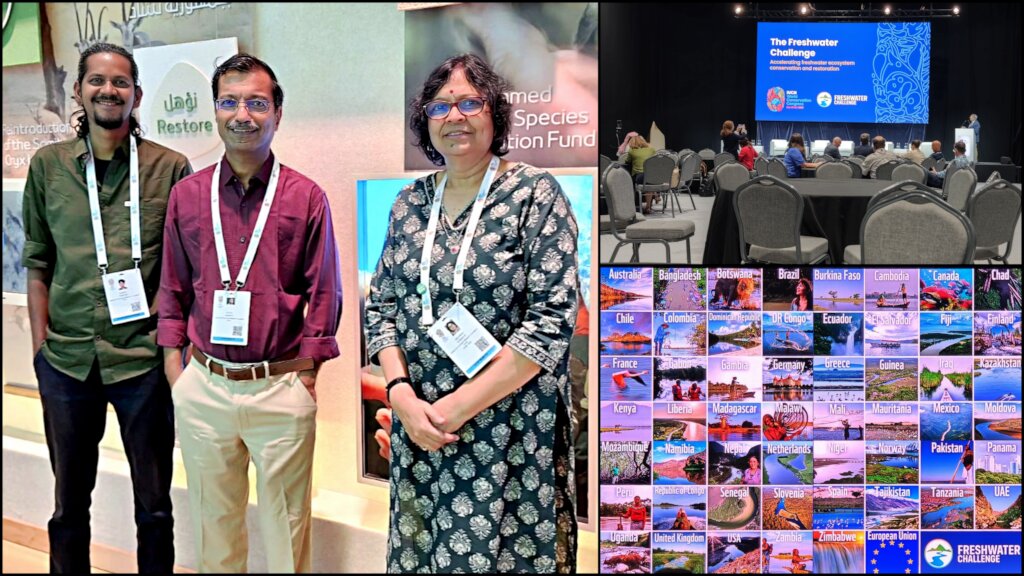
The Global Freshwater Challenge highlighted the urgency and potential for restoring river systems through coordinated action on flows, biodiversity, and community partnership. Although India is not yet a part of this initiative, the methods being promoted internationally mirror much of what we are already doing in or project sites: restoring riparian zones, monitoring freshwater species, and reducing pressures on river flows. This gives us a unique opportunity to position our targeted Rivers as a demonstration landscape. Moving forward, we will begin aligning our monitoring frameworks with global indicators so that our Mugger conservation work can eventually integrate into international freshwater networks.
Insights on Green Water Preservation reinforced the importance of moisture retention in upland forests, soil health, and vegetation structure, all crucial for regulating the microhabitats Muggers rely on. In the coming months, we plan to implement small-scale soil-moisture conservation structures in the upper catchment, combined with native vegetation restoration along riverbanks. These measures will not only stabilise flows for fish and Mugger habitat but also strengthen climate resilience in the entire river corridors.
The IUCN’s Global Strategy for Freshwater Biodiversity reaffirmed that species conservation must be coupled with habitat valuation and community participation. Inspired by this, we will expand our community-led fish spawning zone mapping, develop improved conflict-avoidance guidelines for Mugger sightings, and co-create riparian stewardship tasks with local SHGs and fishing groups. This approach aligns scientific priorities with local ownership, ensuring long-term stability.
The introduction of Biodiversity Credits as a conservation finance tool opened a new horizon for sustaining river restoration efforts. While this mechanism requires careful study, we will begin preparing the baseline ecological data required to make our Rivers “credit-ready” in the future. Establishing standardized monitoring of fish diversity, water quality, and riparian health will be the first step toward exploring whether biodiversity credits can eventually finance Mugger habitat restoration and community stewardship.
Altogether, this quarter marks a shift from learning to implementation. Thanks to the insights gained at the IUCN Congress, we now have a clear pathway: integrate global freshwater frameworks, strengthen catchment-level restoration, build community-driven monitoring systems, and prepare for innovative conservation financing. These steps will help ensure that Mugger conservation in the Rivers of Northern Western Ghats evolves from a focused species mission into a resilient, landscape-wide freshwater restoration model.
None of this would be achievable without your trust and support. Together, let’s keep this campaign moving forward.
Project reports on GlobalGiving are posted directly to globalgiving.org by Project Leaders as they are completed, generally every 3-4 months. To protect the integrity of these documents, GlobalGiving does not alter them; therefore you may find some language or formatting issues.
If you donate to this project or have donated to this project, you can receive an email when this project posts a report. You can also subscribe for reports without donating.



Support this important cause by creating a personalized fundraising page.
Start a Fundraiser