By Kelly Brantner | CEO
Our Acts of Kindness page has been a special place to showcase unique projects over the years. With this update, we are excited to share the completion of the Threads of Transformation program in northern Uganda, which is our final project to be featured on this page.
Threads of Transformation successfully completed its first intake in the Adjumani Settlement in northern Uganda under the guidance of London-based designer Ms. Saskia Lenaerts, the program lead. This intake built on the momentum of the program’s inaugural intake in Goma, Democratic Republic of Congo in 2024.
Designed as a skills-building, creative program, Threads of Transformation explores how materials with painful or complex pasts can be reimagined into items of beauty and healing. The initial intake in Goma demonstrated strong promise, though it was suspended due to an escalation in violence after phase one. Thanks to our donor community, we were able to carry forward the lessons learned and thoughtfully adapt the program to a new context, ensuring the work continued safely while remaining grounded in local realities.
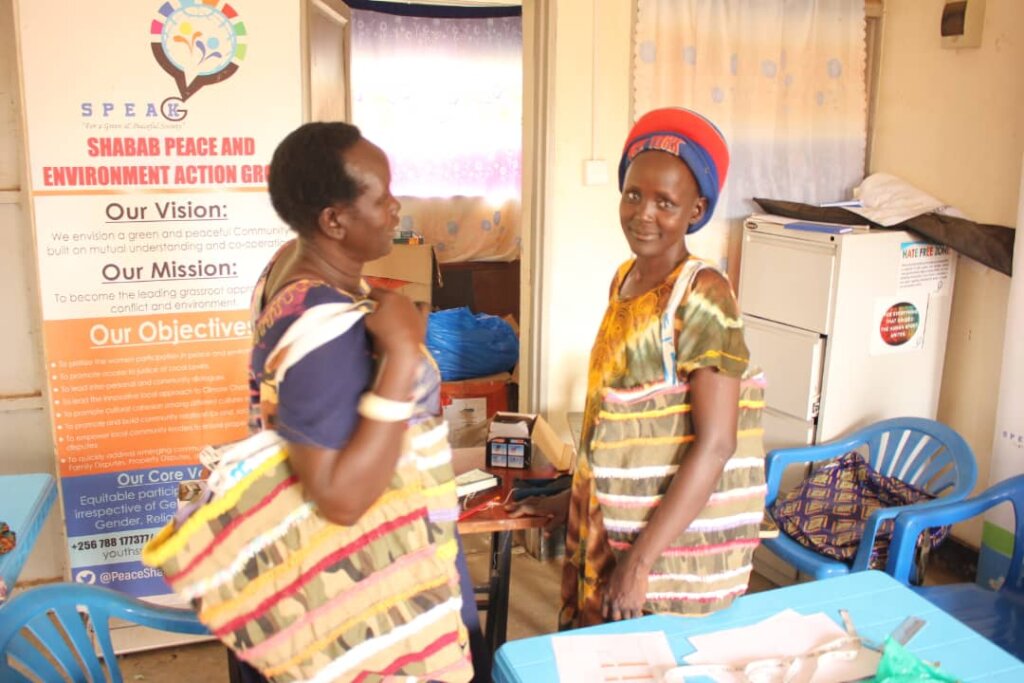
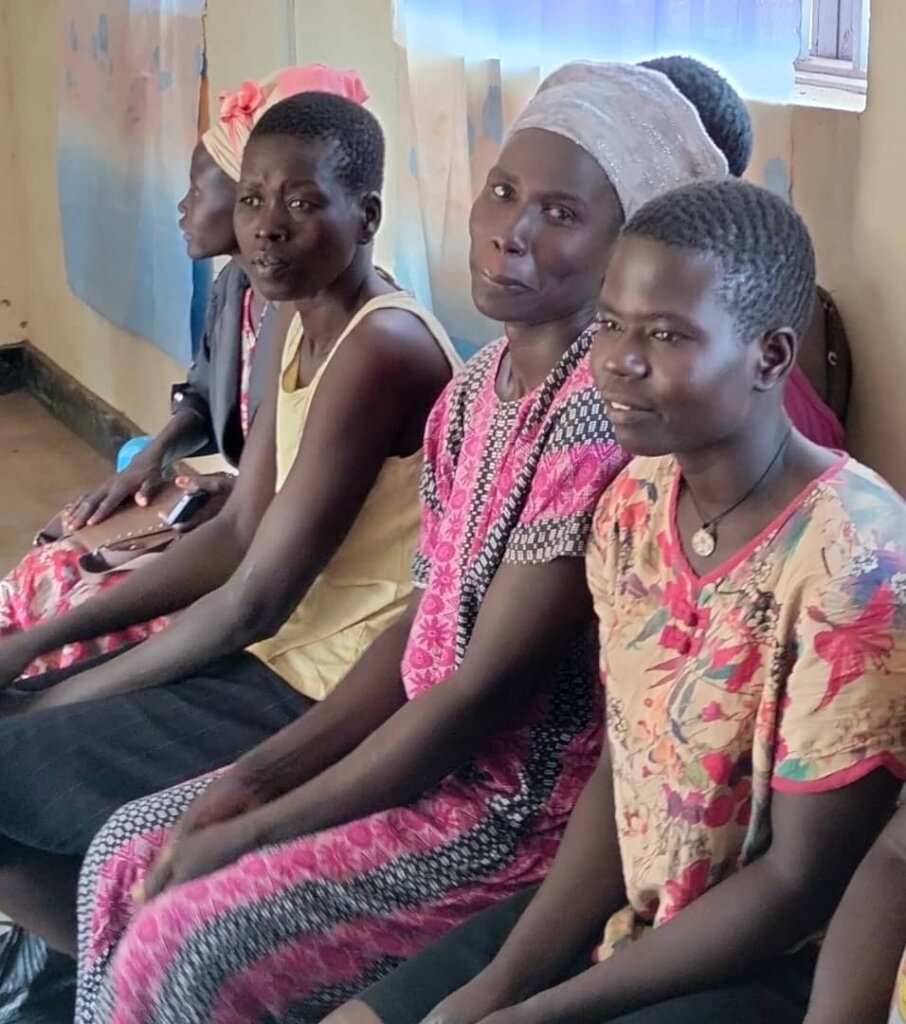
In Adjumani, military garments were repurposed into reusable bags, demonstrating how creativity and craftsmanship can transform symbols of conflict into practical items. Four women from South Sudanese refugee communities participated in intensive training focused on creative production. Working closely together, they shared tools, solved problems collaboratively, and worked toward shared goals. Over the course of the program, this cooperation fostered trust, mutual respect, and strong relationships across tribal lines, illustrating how collaborative livelihoods programming can support social cohesion alongside economic outcomes.
As a result of your support:
Building on the sustainable materials point above, one of our participants shared that she had never previously considered repurposing old or discarded materials to create something new. This reflected a meaningful shift in perspective and seeing waste not as a limitation, but as a resource and opportunity.
Another important outcome was the strengthening of local capacity. Through co-facilitating the program, a local SPEAK Uganda team member developed skills in group facilitation, constructive feedback, adaptive teaching, and inclusive collaboration. This ensures that knowledge and leadership remain within the community, supporting future Threads of Transformation intakes as well as other community based SPEAK Uganda initiatives.
These program achievements provide a fitting conclusion to the purpose of this project page and beautifully highlight the work accomplished through the support of our incredible community. Moving forward in 2026, we will focus on several key projects with dedicated pages on GlobalGiving, allowing you to follow their development closely.
Thank you for helping make these projects such a success. We’re excited to share what’s next!
By Kelly Brantner | CEO
By Kelly Brantner | CEO
Project reports on GlobalGiving are posted directly to globalgiving.org by Project Leaders as they are completed, generally every 3-4 months. To protect the integrity of these documents, GlobalGiving does not alter them; therefore you may find some language or formatting issues.
If you donate to this project or have donated to this project, you can receive an email when this project posts a report. You can also subscribe for reports without donating.