By Pat Craig | Executive Director
As many of our supporters know, international rescues are far more complex than domestic ones. When you add the challenges of an active military conflict, a rescue can become nearly impossible. Far from the freedom and wild spaces they were meant to roam, in this fraught land scape, seven majestic animals remained trapped in a small, privately owned zoo near the Syrian border.
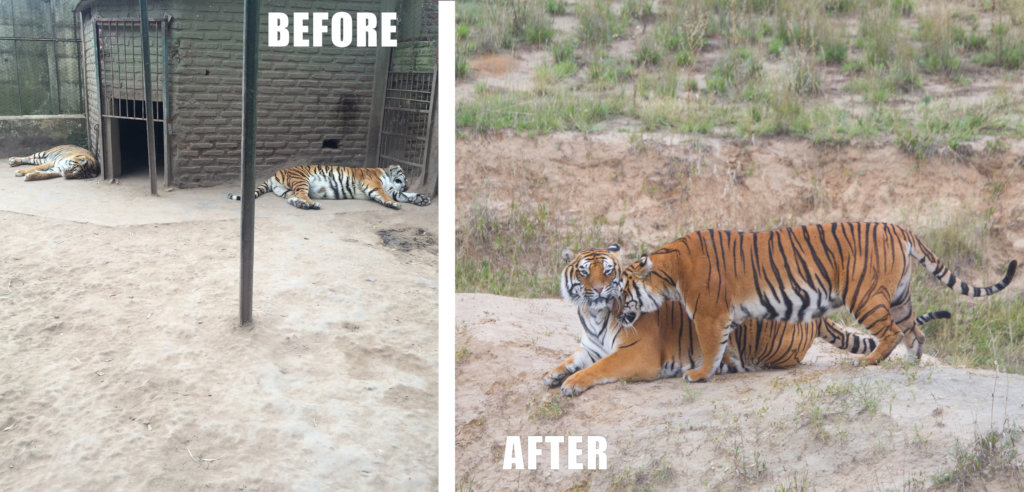
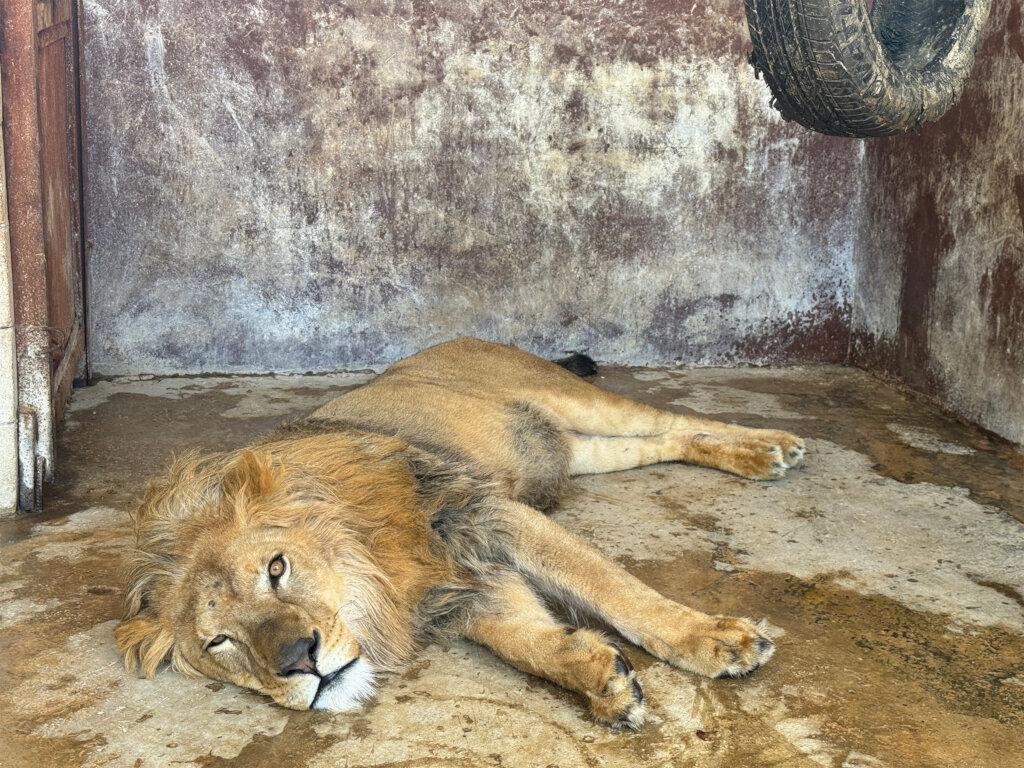
The owner, infamous for breeding, trading, and selling animals, kept them in barren enclosures which never came close to meeting their physical or emotional needs. They had never felt natural ground beneath their paws, only cold cement, and had never experienced the world beyond.
Their world was small and confined, shaped by constant noise, instability, and stress. For years, they waited for someone to step in, for a chance at something more, yet every effort to improve their lives was met with roadblocks at every turn.
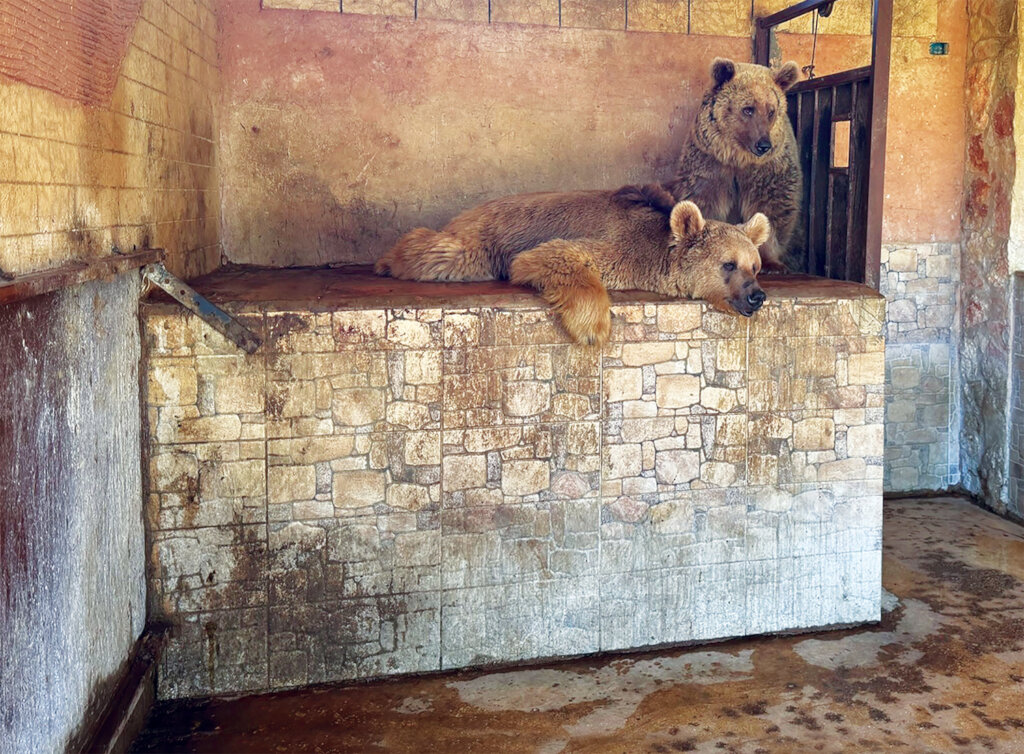
Each animal in this small makeshift zoo was kept inside a sterile concrete cell block. There were very few days, if ever, when the animals were given some sort of enrichment, which left them sitting idle, immersed in a world where nothing existed other than the endless hours of heat during the day and the long frigid nights.
If asked, the owner and his caretakers would tell you their loud demanding calls were part of daily enrichment… or the times when they would spray water into the cages to clean the excess excrement and urine away. They may even consider feeding time to be an enrichment activity, although the animals’ thunderous roars and aggressive actions were purely an instinctive response to feeling half-starved most of the time.
There simply was no way to sugar coat the life these animals were forced to live. With three concrete walls surrounding them, and one set of steel bars to look through, their world was as unnatural as it could get.
With no contraception or birth control management being employed, the owner allowed the animals to breed and would remove any cubs as soon as they were born. Sadly, in a way, it was better to take them away from their mothers than let them waste away in such a harsh and unforgiving environment.
Thankfully, we were contacted about this situation and decided to look into what could be done to help the animals. As expected, the only way for us to help in a meaningful way was for us to find a way to get them removed from the zoo.
We became more involved alongside a rescue organization in Lebanon who encouraged the owner to either upgrade his facility or send the animals to a proper sanctuary. At one point, after many months of negotiations, it seemed an agreement had been reached.
The owner stated he would let the animals go and would close his zoo for good. Encouraged by his willingness to help the animals go to a better life, we agreed to give them a home.
In response, we sent our specialized transport crates to Lebanon and also deployed two members of our team to assess site logistics and gather detailed information on each animal’s health status. After much discussion, a plan was in place for their relocation.
Although many weeks of negotiations were needed to secure flights and ground transportation, as well as to obtain the required international import permits, we were finally ready to begin our rescue operations.
Yet as often happens in these situations, the owner changed his mind at the last minute. Thankfully, with decades of experience having to deal with private owners like this, we knew it was a possibility.
As with the majority of private people who purchase an exotic animal as a pet… as well as those who keep acquiring more until they finally have enough to open their own version of a makeshift zoo… they suddenly realize that once the animals are gone, they will no longer be the center of attention in their community. In response, we have found the best remedy for this kind of situation is to make their last minute decision into a big deal within the community and their own social network.
Doing so causes the owner to receive numerous urgent pleas to reverse their decision, which in an odd way, is perceived as a positive thing by someone who is a narcissist. Rather than be upset by everyone telling him or her what to do – these owners instead become incredibly pleased with all of the attention they are receiving and subsequently let the animals go.
Of course, we were very glad the animals would benefit from this diversionary tactic, but as with so many other rescues, just as we dodge one bullet, there is another one trailing close behind!
Unfortunately, within a very short period, everything became far more complicated.
Unexpectedly, the war between Israel and Hezbollah began to escalate inside of Lebanon. The bombings increased, checkpoints grew unsafe, and airports closed. As a result, our critical permits expired.
Months passed as one delay after another stretched into more than a year - all while the animals remained in limbo with their safety uncertain and their lives on hold. Sadly, as with so many of the animals that had lived in the zoo over the past decade, the female Bear suddenly disappeared.
Of course, there were conflicting reports as to why she was no longer there, which ranged from dying of cancer to being transferred to another zoo somewhere else. This was just another reason why we needed to get them out of there as soon as possible.
Finally, in late 2025 a ceasefire went into place which opened a small window where we were able to get them out of their embattled country.
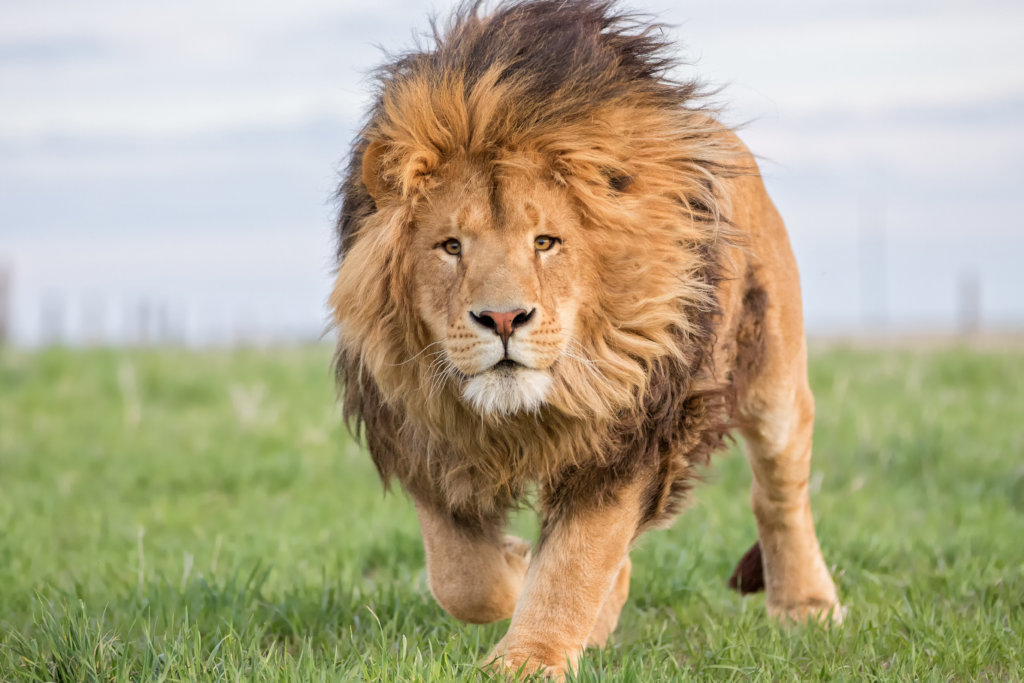
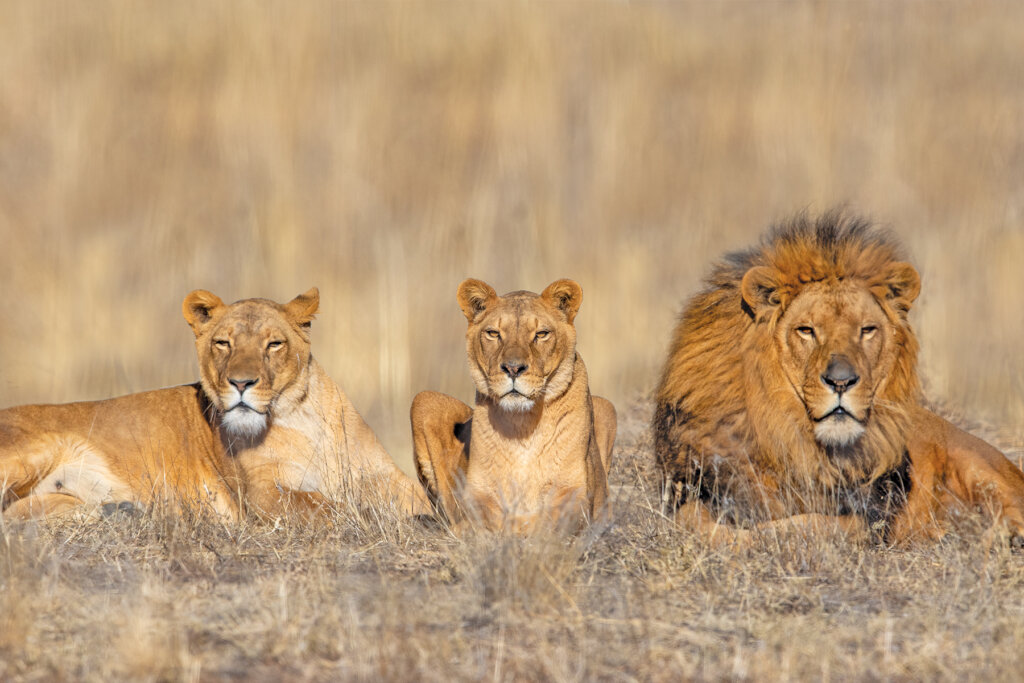
The first group to leave consisted of four adult Lions. Once secured, the animals were flown to the United States where our Sanctuary team met them in Dallas, Texas. They arrived safely before beginning the 12-hour drive to their new home in Colorado.
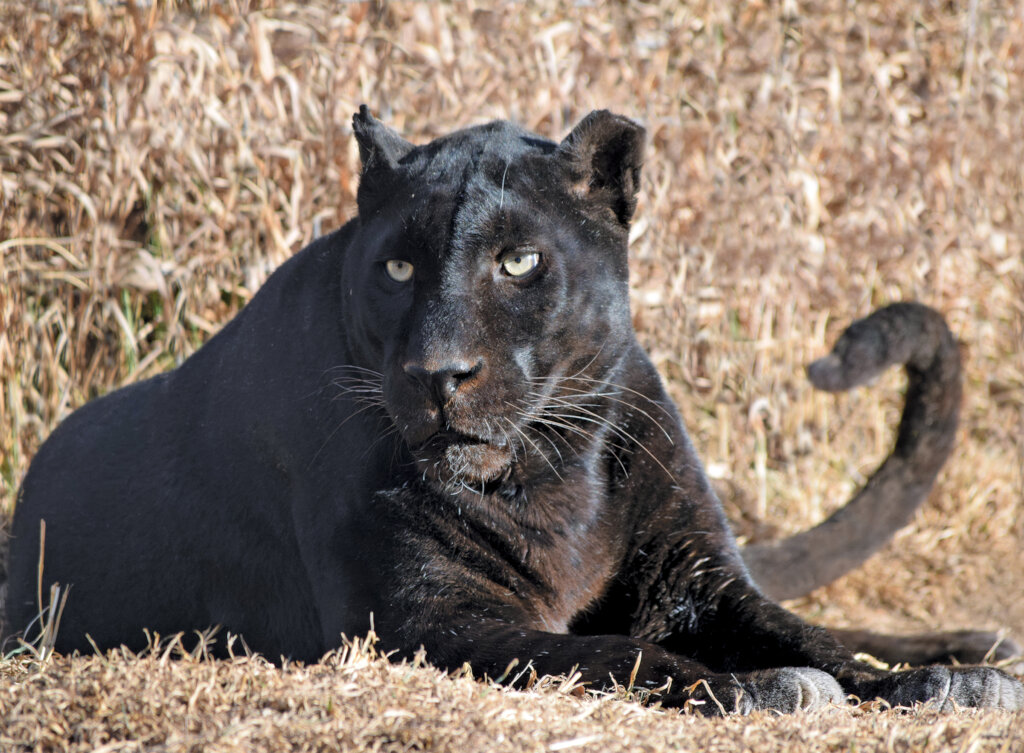
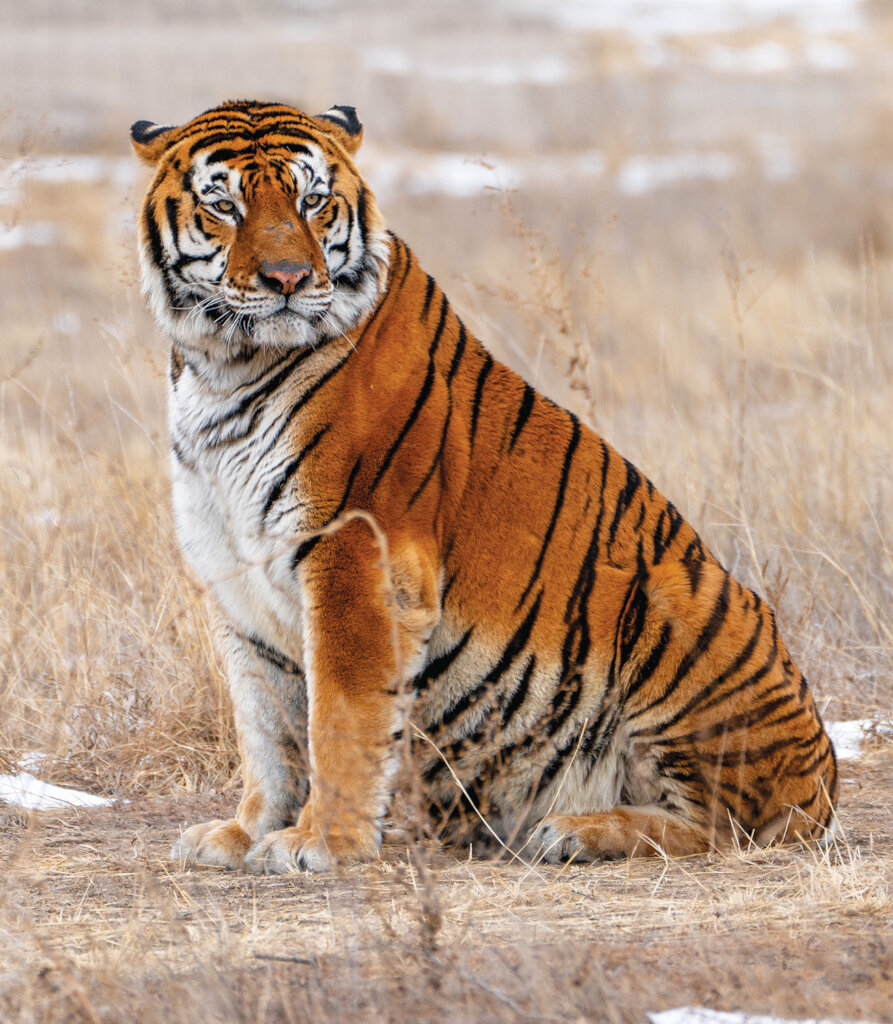
The second group followed approximately seven days later and included a Tiger named Sharkhan, a Jaguar named Bagheera, and a Bear named Gypsy. Our team repeated the process from the week before, once again making the 24-hour round-trip journey to secure the animals.
Four Lions, one Tiger, one Jaguar, and one Bear, all survivors of captivity, broken promises, and war, had finally reached sanctuary.
Upon arrival, the animals were reactive to both sounds and sudden movements, likely the result of living in a war-torn environment.
Daily routines, such as replacing their water, involved careful movements and high value treats to help desensitize them and ease them out of their survival mode.
What started as survival behavior slowly began to shift into something they had never known before: safety.
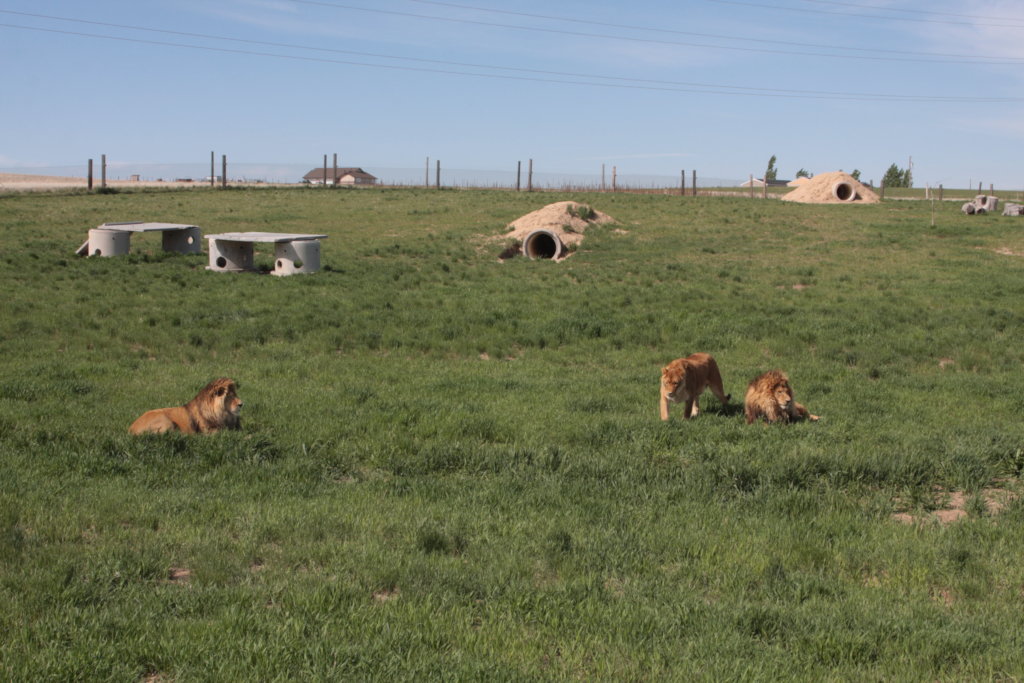
Three of the Lions adjusted surprisingly quickly. Male Laith and females Lala and Lucy have settled into their new surroundings with remarkable ease. Lala - a playful clown of a Lioness - loves rolling in woodchips and showing off her curious, spirited nature.
Laith, who had been previously declawed, immediately showed signs of difficulty when he walked. As most of our supporters know, declawing an animal is an extremely harmful practice.
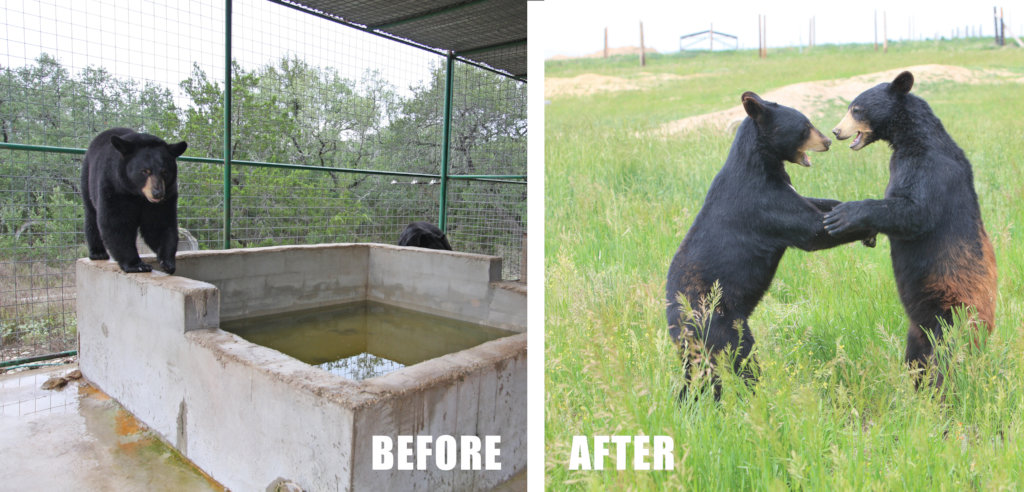
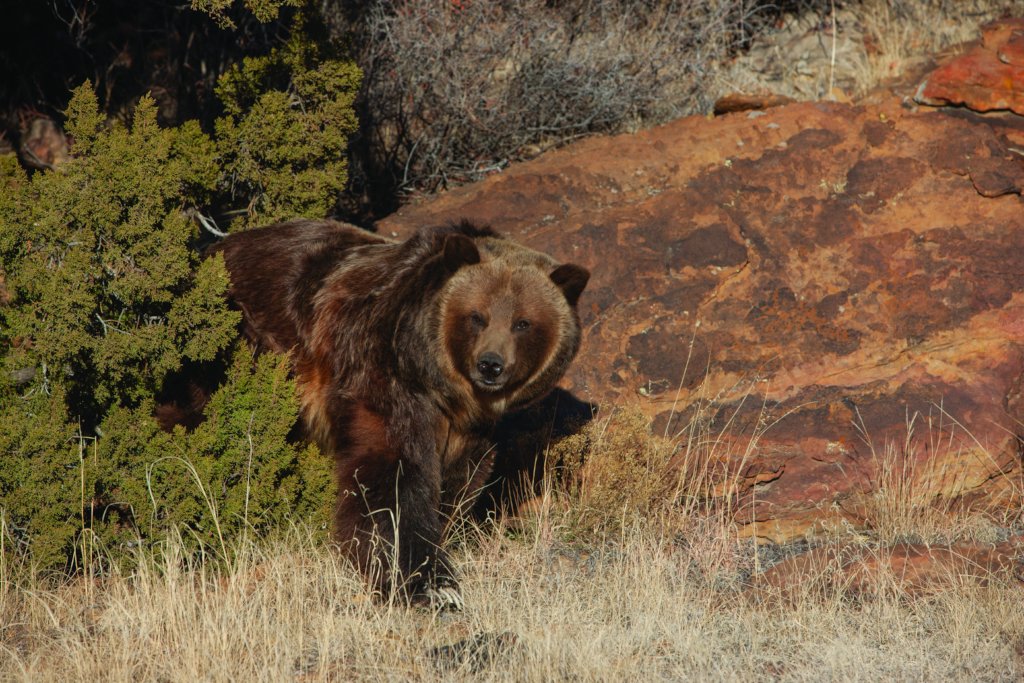
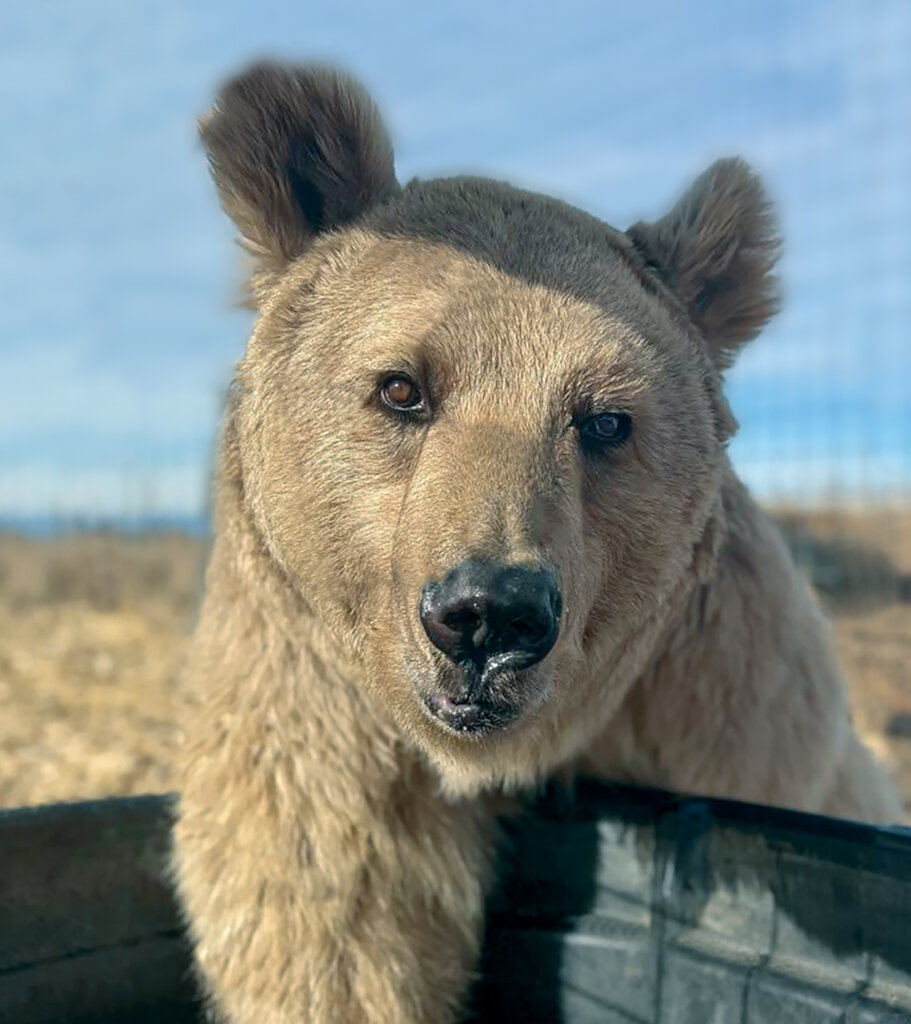
Gypsy, the Syrian Brown Bear, was declawed in the front, which is an extremely harmful practice for Bears since their claws are essential and non-retractable. While we often see this practice being done with big cats by people attempting to keep them as pets, or for public interaction, it is highly unusual with Bears.
Like Laith, this procedure was a cruel attempt to make a 700-pound Bear safer for human contact. Yet, in the end, it does nothing more than leave a lasting challenge that these animals must navigate.
Upon his arrival, Gypsy was immediately fascinated by the endless variety of treats that were given to him. He especially liked the blueberry muffins!
Yet, after eating many large meals filled with mouthwatering food selections, Gypsy is slowly beginning to show signs of being a somewhat picky eater. Like many of his two legged cousins (us), he’s discovering that Salmon, Crab, Lobster and other delicacies are far more exciting than broccoli.
Our hope is that Gypsy will eventually form a bond with a female Brown Bear already living at the Sanctuary - especially since his previous cellmate either died or disappeared just prior to being moved.
When Bagheera first arrived, his head barely lifted even after his transport door was opened. It was painfully clear how little hope he carried with him. He had endured many hardships in life, leaving him cautious and withdrawn. Having seen this many times before, we chose to give him the time and space that he needed to begin feeling secure. In what seems like a remarkably short amount of time, Bagheera has started to rediscover joy. He is be coming more playful and confident, a powerful reminder of what can happen when an animal’s boundaries are honored and their spirit is met with love and respect.
Sharkhan (now nicknamed “Sharkey”) arrived unnaturally thin and showing physical signs that came from a life of harsh confinement. He moves cautiously through his new surroundings, slowly learning to feel safe and confident, much like the other rescued animals.
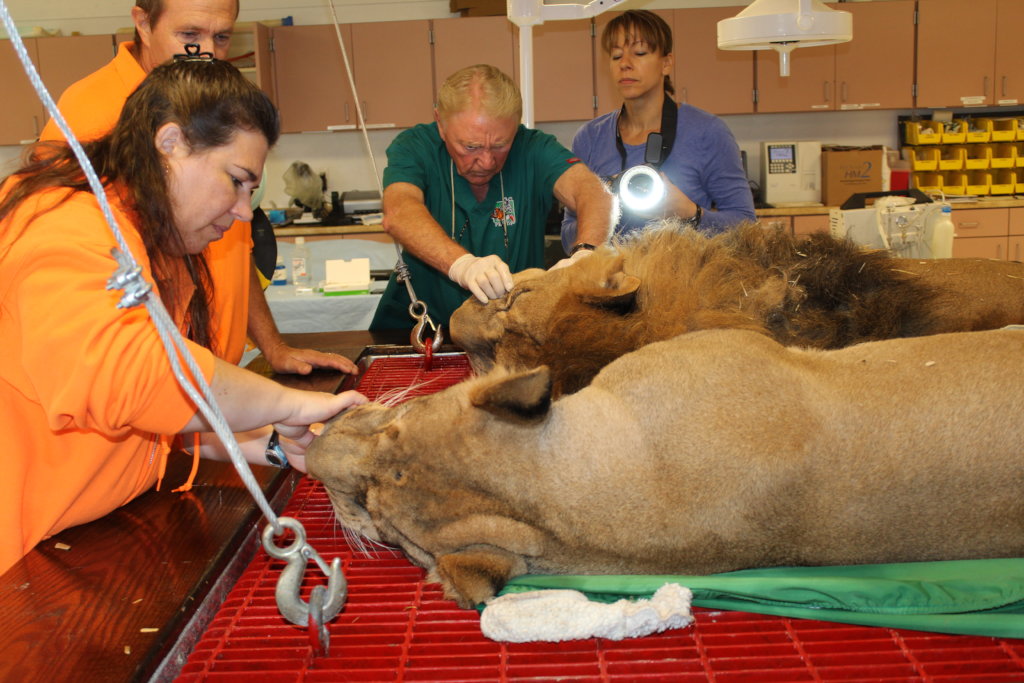
All the animals arrived with noticeable issues, which ranged from being undernourished to having broken teeth and other previously stated deformities. Everything more or less pointed to a lack of proper medical care.
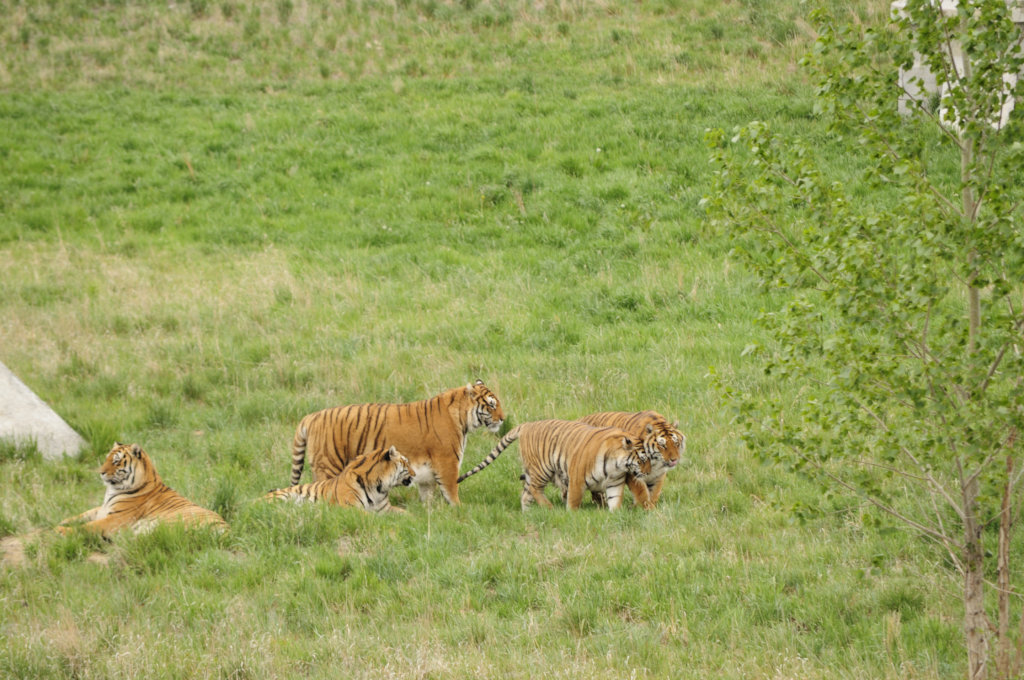
Thankfully, with our Sanctuary’s ongoing veterinary oversight, and their free access to vast open spaces that mimic natural habitats, they will have every opportunity to reverse the many years of decline that had ravaged their bodies.
Adjusting to sanctuary life is a gradual process, and progress can be found in the simplest moments: taking a bite of a blueberry muffin for the first time or feeling the soft grass beneath their paws. Each of these milestones helps them release the fear and tension they have carried for so long and allows them to begin forming the relationships that are central to their healing, and to our mission.
We will be there for them every step of the way, making up for the time where others failed. Behind every moment of progress stands dozens of caring people.
This rescue was far from simple. Every stage required meticulous planning, veterinary checks, permits, and precise timing.
Delays, setbacks, and security risks tested their rescuers team at every turn. Through persistence and coordination, these animals were given the one thing they had never had before: a chance to live free from exploitation, fear, and confinement.
Their journey is a powerful reminder that hope can exist even in the most challenging circumstances. Thanks to your caring spirit and the support of our sanctuary community, these Lions, Tiger, Jaguar, and Bear now have the freedom to simply be themselves.
None of this would have been possible without your support - so every step they take, and every small moment of joy they feel, reflects the care, commitment, and love that you have given so freely! From all of us at the Sanctuary, and from the animals whose lives you have truly transformed, thank you!
Links:
Project reports on GlobalGiving are posted directly to globalgiving.org by Project Leaders as they are completed, generally every 3-4 months. To protect the integrity of these documents, GlobalGiving does not alter them; therefore you may find some language or formatting issues.
If you donate to this project or have donated to this project, you can receive an email when this project posts a report. You can also subscribe for reports without donating.



Support this important cause by creating a personalized fundraising page.
Start a Fundraiser