By Konrad Suder Chatterjee | Communications Manager and Resource Developer
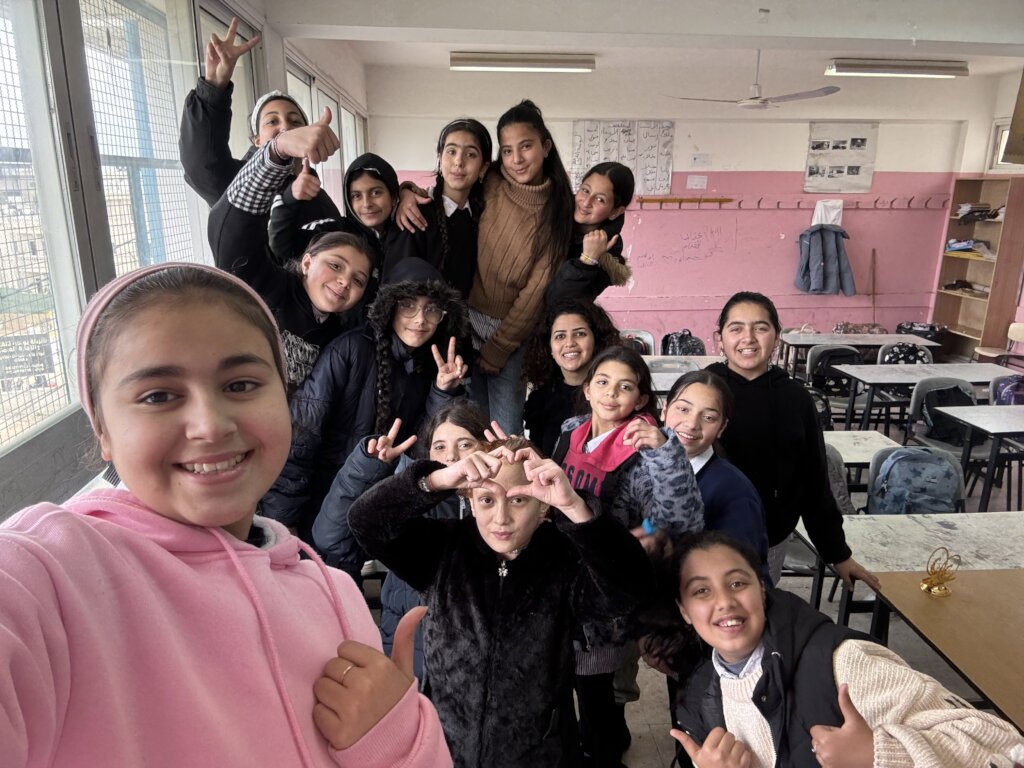
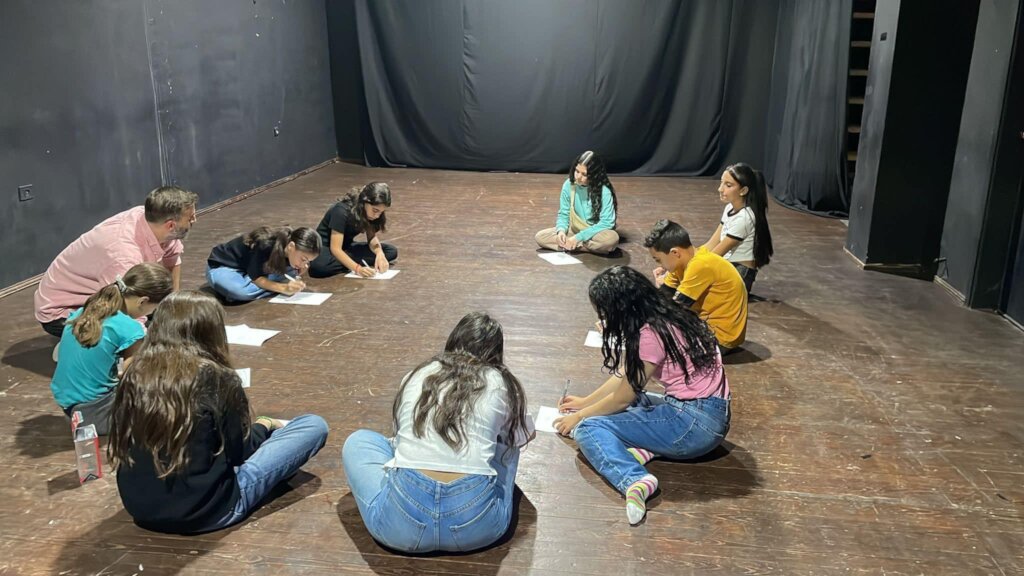
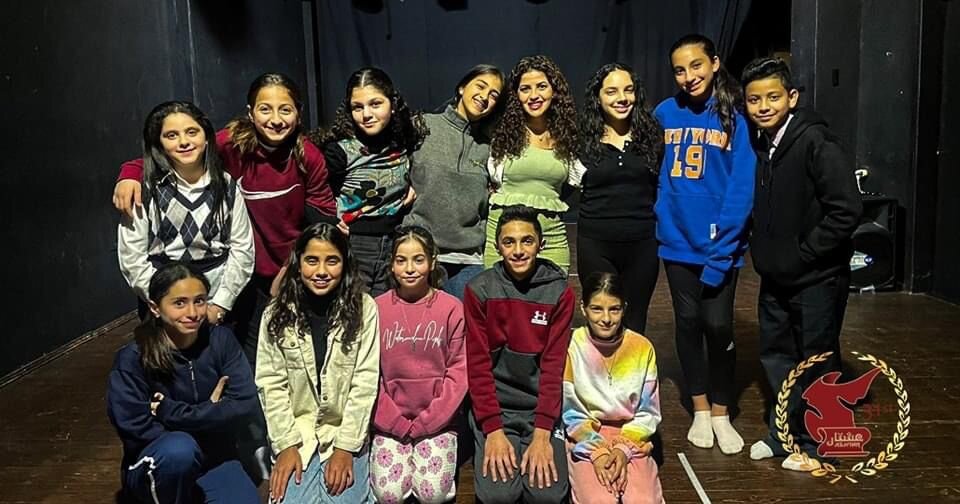
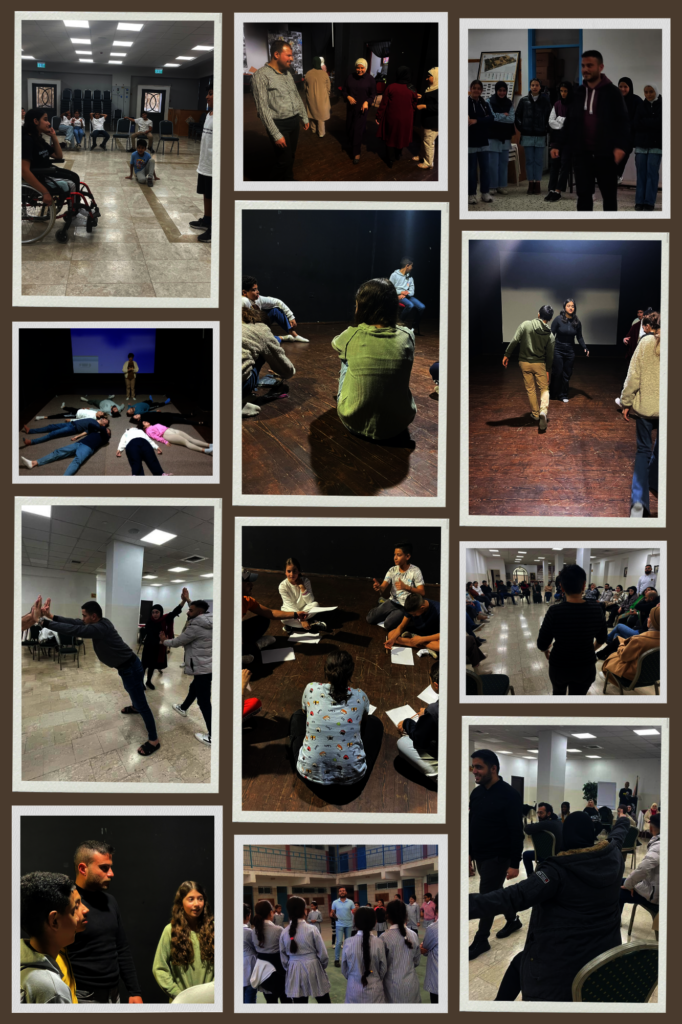
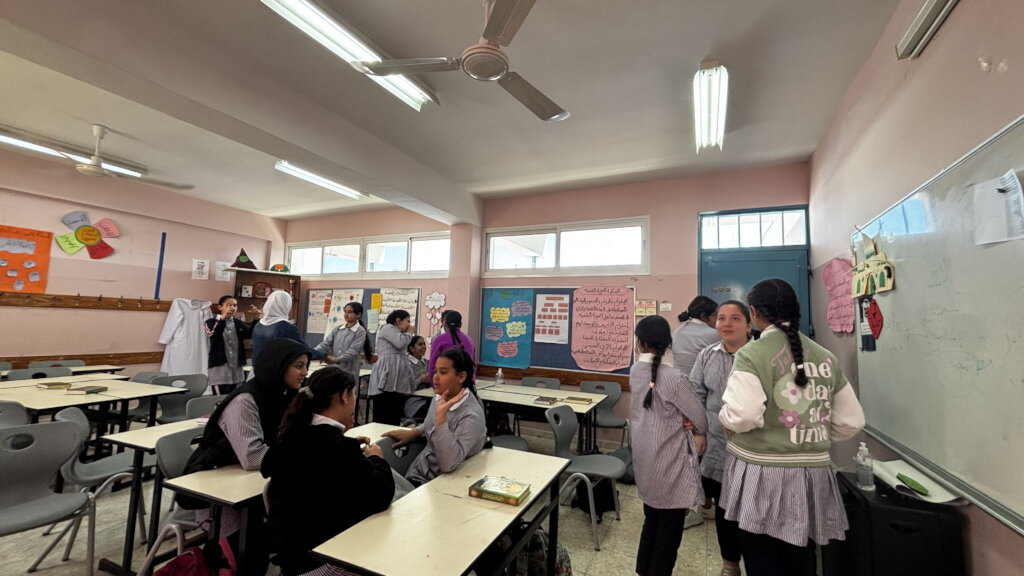
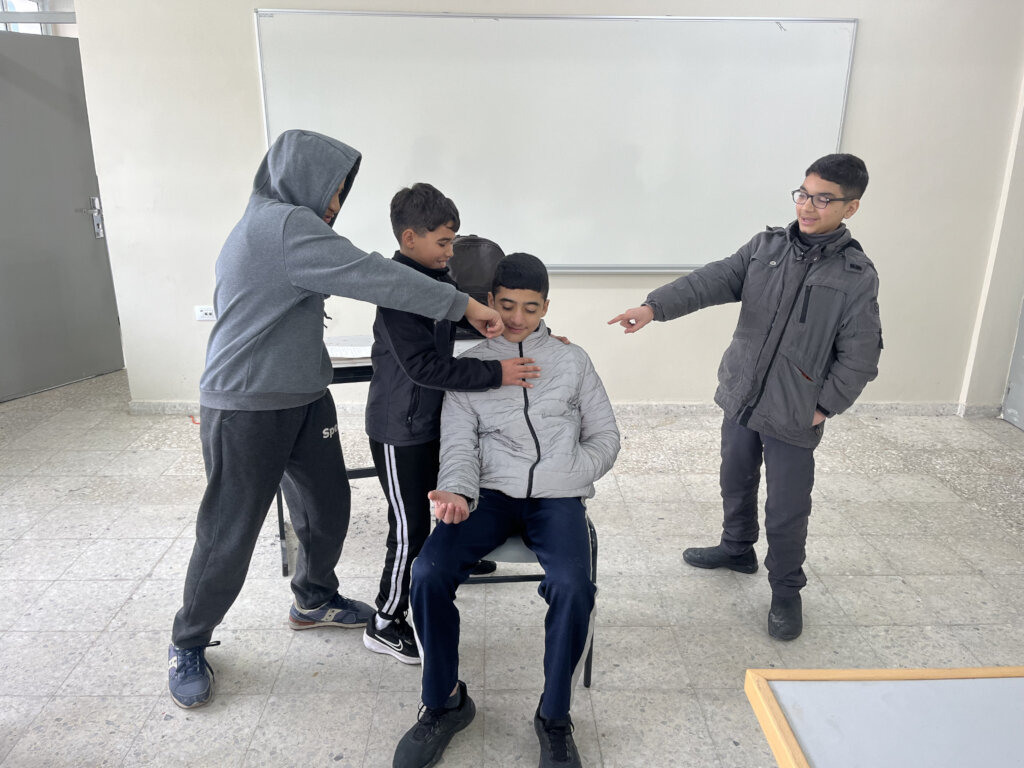
Over the past few months, ASHTAR Theatre has brought its theatre-based psychosocial intervention to Amari Refugee Camp in Ramallah, Palestine, working with 6th and 7th grade students at the UNRWA Boys and Girls Schools. These workshops are more than play, they are spaces for students to express, process, and begin to heal from the daily pressures of life under occupation, displacement, and social marginalisation as well as addressing issues associated with drop out rates and abstenteeism.
In the boys’ school, the sessions focused on emotional expression through storytelling and team challenges. One student shared: “The games made me feel like I belong in the group. Like I have something to give.” Another said: “I didn’t want to talk at first, but then I saw others laughing and joining. So I tried.”
Our trainers picked up on quiet but powerful transformations. “There was one boy who had just arrived from Gaza,” a trainer wrote. “He was isolated. By the third session, he was helping organise his group and even laughing during the theatre games. He found his voice.” Another facilitator added: “Some boys started calling out bad behaviour in their group, asking others to let people speak. That didn’t happen in the first sessions.”
The girls’ school offered just as much depth, and at times, heartbreak. Many students used theatre exercises to reveal stories they had not been able to share anywhere else. “One girl wrote a letter to herself saying she didn’t want to be alive anymore,” one facilitator recalled. “Another told me I reminded her of a mother she doesn’t have. She held my hand and asked me not to leave.”
Yet even in that vulnerability, there was light. As one girl said after acting in a role-play: “I felt like I could finally say something without fear. I was someone else, but I was also myself.”
Another session focused on periods and puberty, topics usually shrouded in taboo. “They were so nervous,” the trainer said, “but after we talked about how the body works, they opened up. They even started asking questions about religion, politics, everything. They were eager to understand the world.”
Our trainers repeatedly noted signs of emotional distress, withdrawal, bullying, anxiety, but also moments of leadership, peer support, and spontaneous kindness. “After just three sessions,” one trainer reflected, “students were apologising to each other after conflicts. One girl who used to bully others came up to me to ask for help resolving a fight, not to cause one.”
Teachers and school staff played a vital role. In nearly every session, they briefed us on student needs, supported interventions, and encouraged a positive environment. One teacher filled out a post-session survey saying: “We are proud to work with you. The girls feel safe, and that is the most important thing.”
Thanks to your support through GlobalGiving, over 100 students participated in these transformative workshops. They laughed, cried, played, and reflected. Many learned for the first time that “the person in front of us may be fighting a battle we know nothing about,” as one trainer reminded their class. And for a few hours each week, they were not just students in a refugee camp. They were artists, dreamers, writers, leaders.
From all of us at ASHTAR Theatre, and from the brave young people of Amari, thank you for making this possible. Your support is a quiet act of resistance, reminding these children that they matter.
Links:
Project reports on GlobalGiving are posted directly to globalgiving.org by Project Leaders as they are completed, generally every 3-4 months. To protect the integrity of these documents, GlobalGiving does not alter them; therefore you may find some language or formatting issues.
If you donate to this project or have donated to this project, you can receive an email when this project posts a report. You can also subscribe for reports without donating.



Support this important cause by creating a personalized fundraising page.
Start a Fundraiser