By Dr. Corinne Taylor-Smith | Project Leader
It’s hard to believe that it is just over 6 months since we finally got permission to start our landmark reforestation project which had been five and a half years in the making. Without your generosity and loyal support, none of this would have been possible. That said, this project is a long-term solution for wild tiger conservation and needs to be done right to ensure sustainability of the reforested areas.
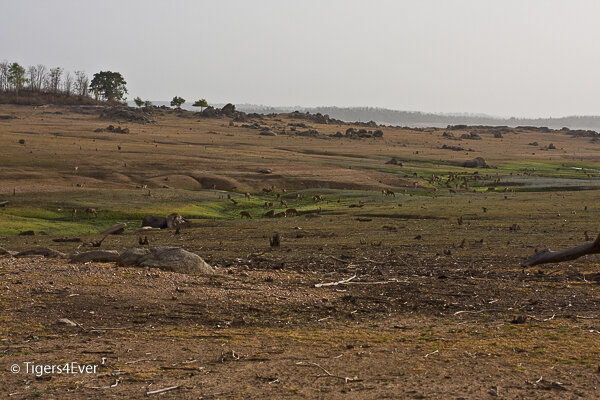
With more than 38 mammals including wild tigers, elephants and pangolins; over 15 species of reptile including king cobras; more than 240 species of bird including 5 types of endangered vultures; countless insects and over 34 species of native trees and shrubs, it is essential to get each stage of the project right so that the diversity of the ecosystem is maintained and all species can thrive in the reforested areas. Thus, our Reforestation project is a long-term solution to restoring lost wildlife habitat for not just wild tigers but for all these other precious species which form the diverse ecosystems which will keep the forest alive.
Creating Employment and Wildlife Habitat
With two 125-acre sites we have the potential to plant up to 100,000 trees and native grasses to ensure that wildlife doesn’t just return, it stays and thrives. At each stage of the project, we want to see key milestones, especially signs that native seed dispersers have returned and enabled plant species which are difficult to cultivate to thrive too. But alien species and encroachment are challenges we must address too as these both threaten the success of our long-term project. It would be easy to install fencing around the reforestation sites, but these prevent natural migration and recently 3 wild tigers have been electrocuted by electrified boundary fencing set to deter elephants around farm crops. Our solution must be both environmentally friendly and wildlife friendly to ensure sustainability and success.
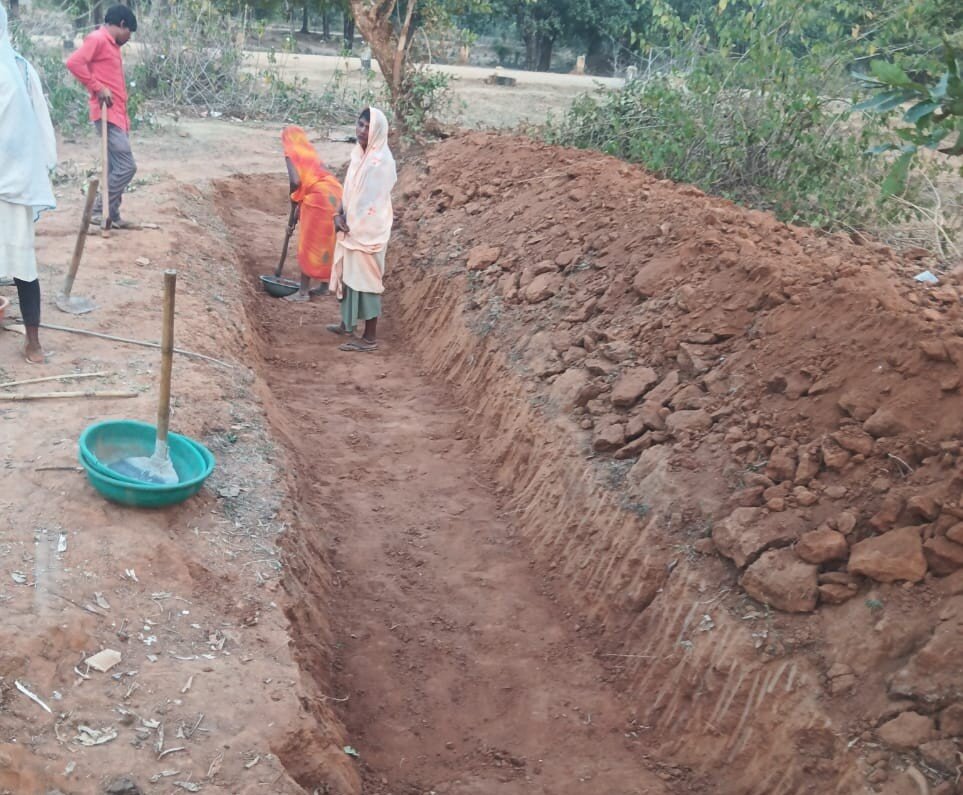
We opted for manual construction of Cattle Proof Trenches (CPTs) around each site because this has provided local employment for 40 people. This alongside the clearance of the invasive and destructive alien lantana (Lantana Camara) species which not only spreads like wildfire, it also releases destructive chemicals which hamper the growth of native species and are toxic to some wildlife. Uprooting lantana is labour intensive and has provided local employment for 40 people. We are exploring the possibility of using uprooted lantana for biomass purposes and discussions continue with the local Eco-Development Committees and Forest Department as to how such a scheme might benefit the local communities. In the meantime, the priority is to curb the spread of this invasive species and ensure that all existing plants are uprooted before they can strangle or poison newly planted trees, shrubs and grasses.
The prolonged 2025 monsoon season and the shortened drier spell leading to the colder winter season, somewhat hampered the rate of progress which we had hoped to achieve by now, however, work is back on track and with 6 months of warmer drier weather ahead and longer daylight hours we hope to make significant strides in the coming months.
Intact Forest Habitat will help to Ensure Tiger Survival
Although it will take more than four years for new saplings to establish themselves as viable trees, we will be phasing each planting phase to maximise the return of native species and the seed dispersers which are essential for long-term sustainability. In addition, any isolated living native trees and native plants which have survived previous forest fires, invasive lantana and other deforestation threats, will be protected and sustained within our reforestation plans. These trees and plants have shown us that they can survive in the face of adversity so it instils confidence that planting more trees of the same species will benefit habitat restoration by resilience and sustainability. As we have said previously, Reforestation is a long-term solution to restoring lost wildlife habitat and can rebuild diverse ecosystems via the creation of a network of interacting species, both plants and animals, which are essential for ecosystem health and biodiversity.
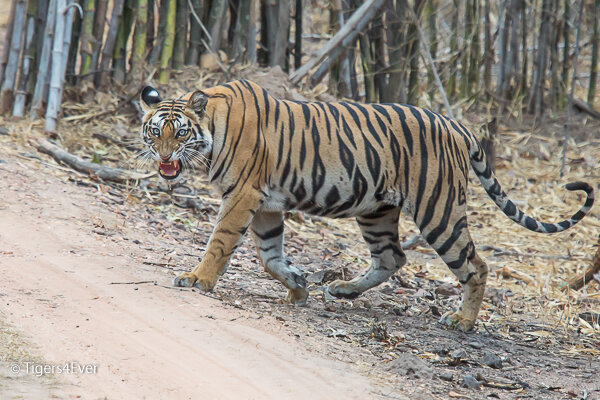
As mammalian grazers and browsers like deer, monkeys and nilgai return to the reforested areas, they will provide prey for wild tigers and other predators, facilitating their dispersal into new safer protected territories and enhancing their longer-term survival chances.
You’ve Helped us to Start but More Help is Still Needed
It has been a major challenge for a small charity like Tigers4Ever to provide wild tiger habitat and more wildlife waterholes when they are most needed, something which would be impossible without your help. We would like to take this opportunity to thank everyone who supported our Giving Tuesday fundraising campaign and our friends at Typical Tigers NFT who have ensured that we can keep working on our reforestation project whilst we fundraise for each of the next phases.
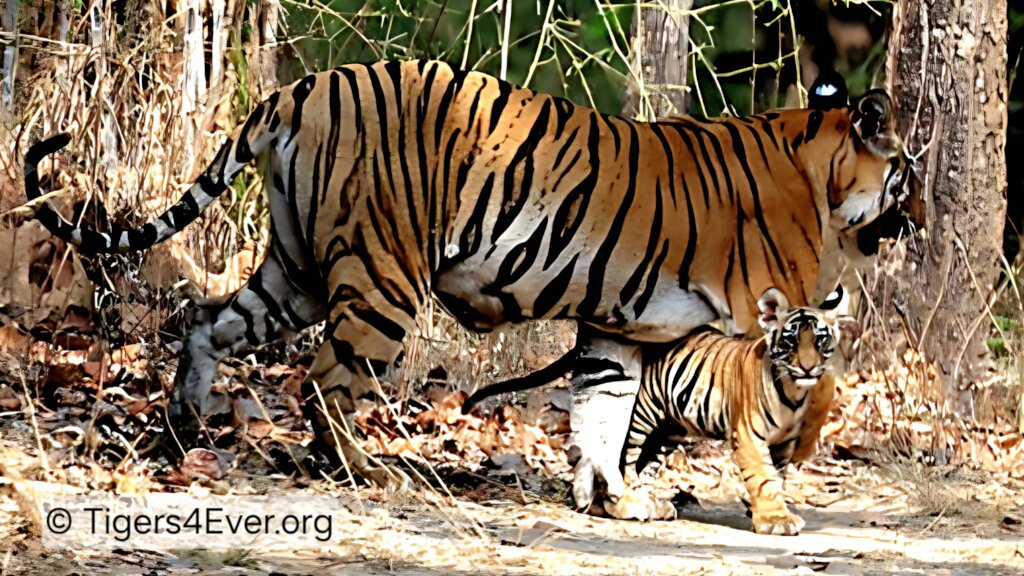
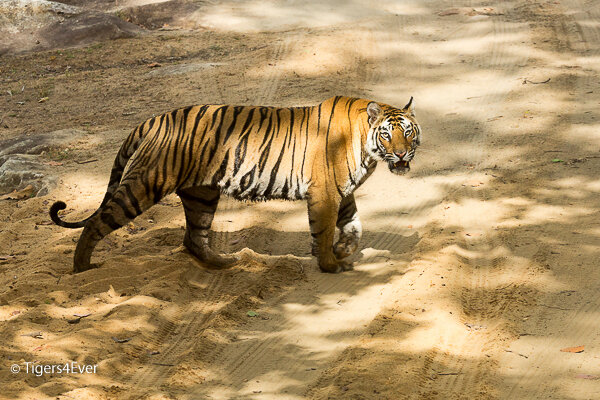
Your support and donations are vital to ensuring that we can successfully plant up to 100,000 trees and provide enough wildlife waterholes so that the remaining 91 wild tigers which don’t currently have access to a Tigers4Ever permanent wildlife waterhole will do so soon. We NEED to raise £45250/US$61100 to cover the next 12 months of Forest Rehabilitation costs without which we would need to delay the work which be unwise as dispersing wild tiger cubs need safe habitat NOW! With funding we can continue to mobilise local labour and restore habitat in denuded forest, but without funding it will be impossible leading to the deaths of more wild tigers and elephants.
If 300 people read this report and each donate £20 ($28) monthly it would ensure that we have enough funds to regenerate 125 acres of wild tiger habitat which wild tigers desperately need: (https://www.globalgiving.org/projects/wild-tiger-habitat-restoration-project-in-india/?show=recurring. It would be amazing; however, all donations will help however large or small.
As we restore these critical habitats, we will provide space and territory for many native plant and animal species, which in turn will help to prevent species extinction and support genetic diversity. Healthy forests provide essential services like clean air, fresh water and soil stabilisation, which are crucial for the well-being of all living things.
We need to keep wild tigers safe every day. Our anti-poaching patrols are tripled right now to counter the risks of retaliatory poisoning and poaching. If, with your help we can regenerate 125 acres of wild Tiger habitat sooner it will help us to keep at least 16 more wild tigers and cubs safe.
Your donations will help us to save wild tigers by funding the following:
- £11 ($14) per month for a year will help to plant 120 tree saplings to restore native forest
- a £26 ($30) gift will plant a mix of 20 tree saplings to help restore the diversity of the ecosystem.
- a £41 ($47) gift will help to clear 10sq.metres (108 square feet) of invasive lantana.
- £111 ($127) can provide enough grass seed to plant 2 acres of wildlife habitat.
- £600 ($685) can cover the cost of labour and preparation of 200 metres (657 feet) of 2 metre wide by 2-metre-deep cattle proof trench to protect the new habitat from livestock grazing.
Every donation, no matter how large or small, helps to increase and protect the wild tiger population. Thank you on behalf of the wild tigers, which you help us to keep safe; and on behalf of the wider tiger community in Bandhavgarh, which benefits from providing equipment and labour for our projects. We couldn’t do this without you, thanks to you, the wild tigers can live peacefully and those who live beside them can protect their livelihoods.
All donations are welcome https://goto.gg/70006. If you can’t afford to donate perhaps you could become a Tigers4Ever fundraiser, here: https://www.globalgiving.org/dy/v2/fundraisers/start/?fundraiser.projids=70006 and ask your friends, colleagues and family to donate to your fundraiser to help us keep wild tigers safe.
Links:
By Dr. Corinne Taylor-Smith | Project Leader
Project reports on GlobalGiving are posted directly to globalgiving.org by Project Leaders as they are completed, generally every 3-4 months. To protect the integrity of these documents, GlobalGiving does not alter them; therefore you may find some language or formatting issues.
If you donate to this project or have donated to this project, you can receive an email when this project posts a report. You can also subscribe for reports without donating.



Support this important cause by creating a personalized fundraising page.
Start a Fundraiser