By Peter Yeung | Contributing Editor at Reasons to be Cheerful
Centuries-old burial sites are being transformed into organic nurseries, fighting rural poverty and climate change while reviving a historic interfaith bond.
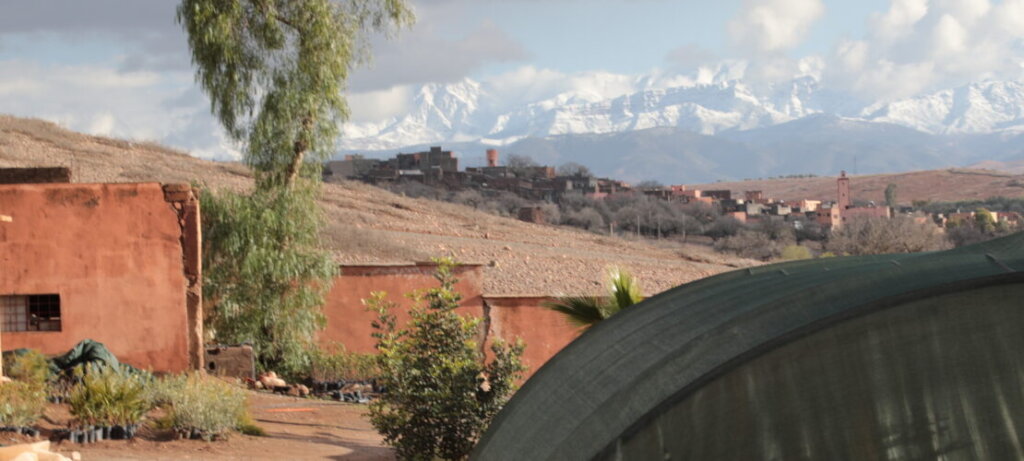
Something special is taking place in Akrich, a typical rural village in Morocco backed by a breathtaking view of the snow-capped Atlas Mountains. Here is a compelling showcase of interfaith harmony, reinvigorated in recent years but dating back centuries.
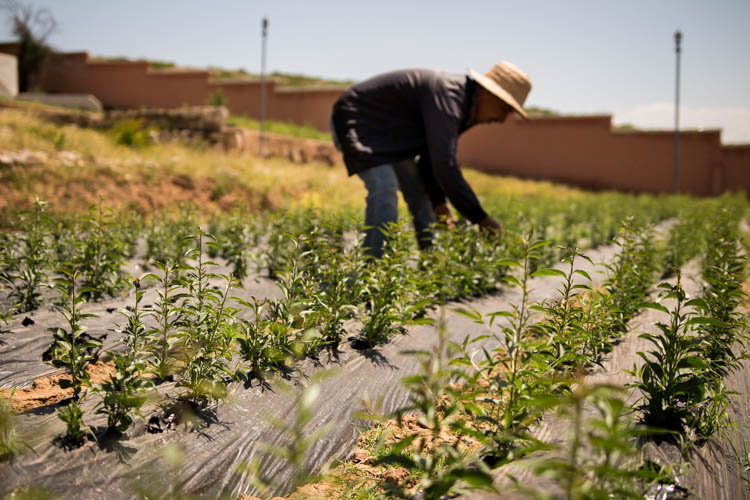
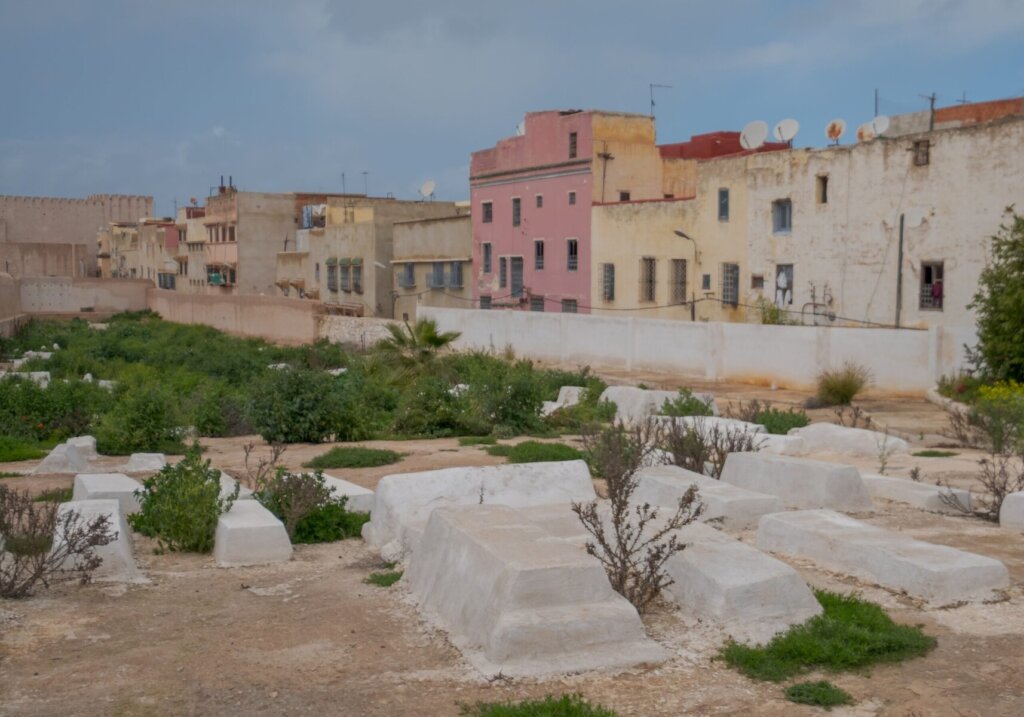
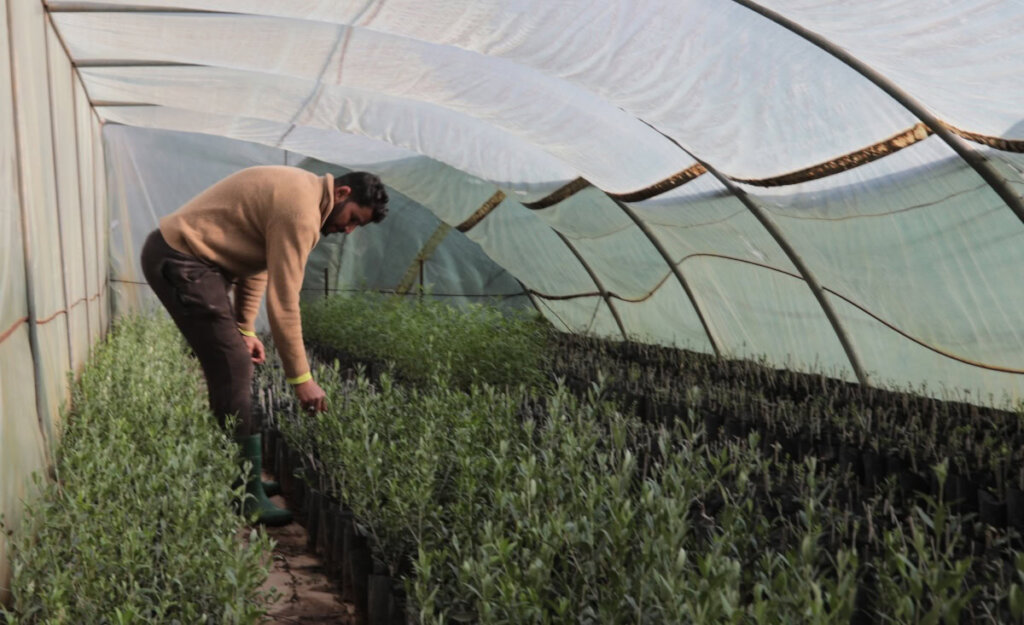
Today, the village’s sacred 700-year-old Jewish cemetery is home to a plant nursery run by local Muslims that provides fruit and nut tree saplings to the community here and to many others across the region. As well as nourishing the land, this space is nourishing religious co-existence.
“Before, there were no plants or water — it was abandoned,” says 36-year-old Abderahim Baddah, one of two full-time staff tending to the cemetery grounds and nursery within.
But in 2012, Baddah, with the blessing of the Moroccan Jewish community, began to use the land adjacent to the Jewish cemetery to cultivate crops while restoring the religious site.
It’s an initiative that is spreading across Morocco, which was once home to a quarter of a million Jews, who arrived in the 15th century following their expulsion from Spain by Catholic leaders.
Now that harmonious heritage is being used to help rural Muslim communities get out of poverty while preserving holy Jewish sites and boosting interfaith bonds. At a time when religious polarization and conflict is at a high, proponents say this is an example of another way, one where those with different beliefs can thrive together.
Under the project known as the House of Life, a traditional name for a Jewish cemetery, land in Jewish burial sites is being lent for free to establish organic fruit tree and medicinal plant nurseries for the benefit of Muslim villagers. The only requirement is that those tending the sites don’t work the land on Saturdays, the Sabbath.
The High Atlas Foundation, a Marrakesh-based nonprofit set up by former Peace Corps volunteers, has facilitated the turning of these lands into nurseries by training locals and helping to construct water wells.
Once matured, the young trees are distributed to small-scale farmers and schools each year during the planting season in Morocco, where food insecurity is a serious issue in rural areas. Extremely vulnerable to climate change, Morocco needs to plant millions of trees to ward against deforestation, erosion, and food and water shortages.
Since 2012, nearly 300,000 tree saplings, including almond, fig, pomegranate, olive and carob, have been grown and supplied to 1,500 farming families. The Akrich nursery, packed with flourishing greenhouses, now produces about 46,000 saplings a year.
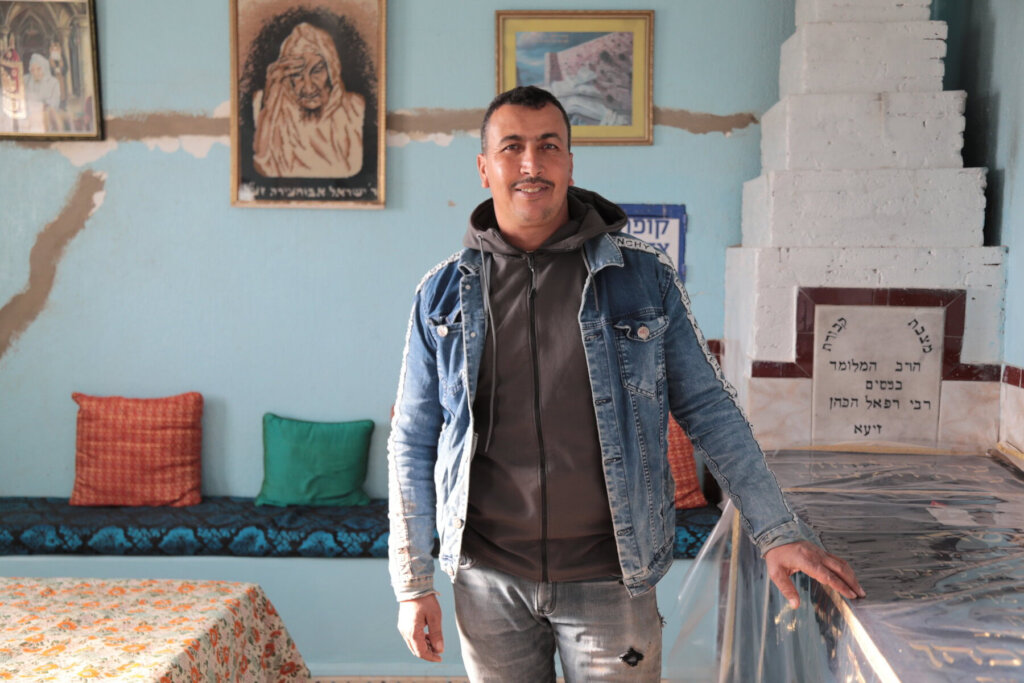
In turn, the Moroccan Jews benefit from having their deteriorated sites restored. The Akrich cemetery, which houses the tomb of venerated rabbi Raphael Hacohen, even had to undergo repairs after a deadly earthquake struck the region in 2023. Cracks in the walls, now filled in, are visible all over the site, which is visited by huge numbers of Jews every year, not least during the annual gathering celebrating the life of Rabbi Hacohen, who is believed to have had healing powers. Some 600 rabbis, known as tzadikim, are buried in sites throughout Morocco.
“We are pairing cultural integration with livelihood development,” says Yossef Ben-Meir, president of the High Atlas Foundation. “And it really works. There’s respect for one another. The mixing, the experience is changing people’s points of view.”
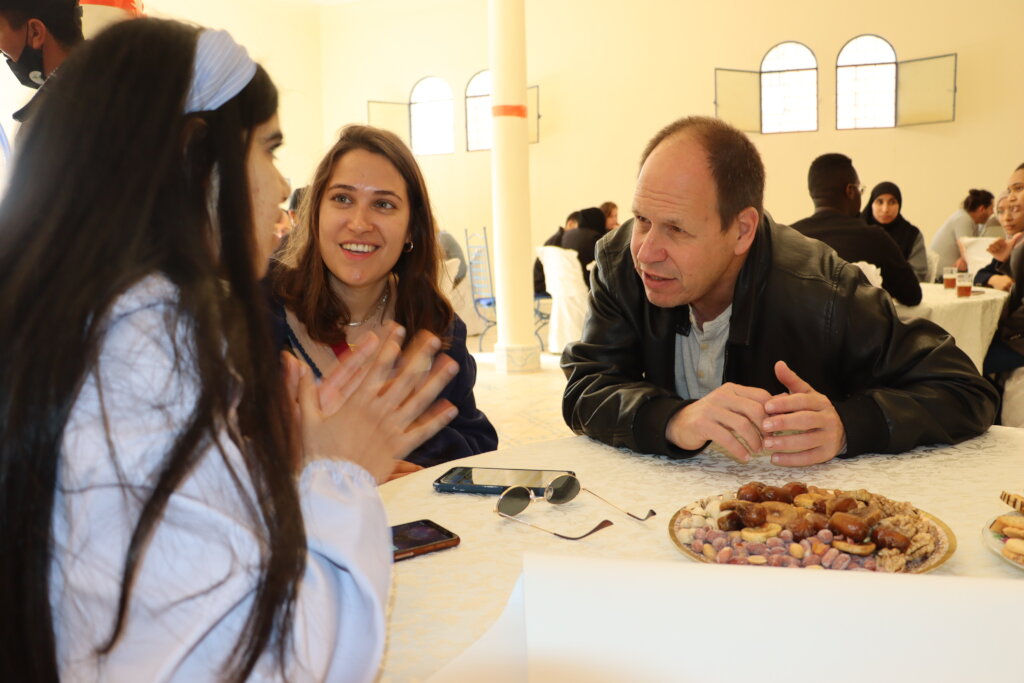
Meanwhile, Marrakesh Jewish representatives, who gave permission for the site to be used, have come to Akrich from the capital to hold interfaith dialogues.
“This project is opening hearts between Jewish and Muslim people around these cemeteries,” says Jacky Kadosh, president of the Jewish community in Marrakesh. “It’s a genius idea. It used to be like this for centuries and centuries.”
The opening of the Akrich nursery has also brought wider benefits to the community, such as the installation of solar panels and the construction of a water well. The greater influx of visitors, many of whom are Jewish tourists, has additionally led to the opening of a women’s weaving cooperative, empowering nearly 30 female workers.
Here, they use lavender grown in the nursery to dye their wool. And these Muslim women have even begun to incorporate Jewish symbols, such as the Star of David and candelabras, into their carpet designs, recognizing that interfaith relationship.
Following the progress of the House of Life project, the initiative now receives modest funding from the Moroccan government — “an important enabler to secure all necessary authorizations and further replication,” according to Yossef.
In November 2020, the High Atlas Foundation opened the second House of Life interfaith nursery near the town of Agouim on land lent in kind by the Moroccan Jewish community. Two further nurseries have been inaugurated since then. Potentially hundreds of the Jewish burial sites in Morocco could be used, says Yossef, allowing those seeds of progress to be sown across the nation.
Jaume Flaquer, a professor at the faculty of theology at the Universidad Loyola, Granada, Spain, praises this approach to interfaith relations since it is supported both on the political and institutional level while fostering real-world relationships on the ground.“
Those two things must be connected,” he says. “The state is saying to the population that we have to live together. But there are also day-to-day, personal relationships between people of different faiths that are developing.”
Flaquer points to other examples of religious coexistence in Muslim-majority countries, such as the Emirates, whose population is more than 85 percent foreigners. There, he says, the state has built temples for many different faiths.
Looking ahead, the High Atlas Foundation has conducted assessments of over a dozen other spaces to expand the project. With additional funding, Ben-Meir says millions of seeds can be raised and tree saplings transferred to agricultural fields and schools in all 12 regions of Morocco. These trees, he adds, can also be monitored for carbon offsets, whose value can be reinvested into community projects.
Yet one obstacle for a further roll-out is land rights. For many of these hundreds of burial sites, it’s not clear who the owners of the land are, says Yossef. Sometimes they are privately owned. Other times, it’s not clear whose jurisdiction they fall under.
And there are limits to what these kinds of projects can achieve without broader political will and in the face of the complexities of geopolitics.
“But we are working community by community,” says Ben-Meir. “And we are seeing the impact it is having.”
By Kaitlyn Waring | Program Manager
By Souad Agnaou | Program Director
Project reports on GlobalGiving are posted directly to globalgiving.org by Project Leaders as they are completed, generally every 3-4 months. To protect the integrity of these documents, GlobalGiving does not alter them; therefore you may find some language or formatting issues.
If you donate to this project or have donated to this project, you can receive an email when this project posts a report. You can also subscribe for reports without donating.



Support this important cause by creating a personalized fundraising page.
Start a Fundraiser